National Museum in Wroclaw - Raclawice Panorama
Muzeum Narodowe we Wrocławiu - Panorama Racławicka
867 m from the Market Square in Wroclaw See museums near the Market Square in Wroclaw
- Besides Polish, the commentary to the screening can be given in English, German, French, Ukrainian, Russian and other languages, as well as in Polish Sign Language and with audio description.
- Every ticket is for a set screening: its start time is printed on the ticket, and up to 85 people go in to each screening.
- Within 3 months of the day of your Panorama visit, the same ticket also admits you to the permanent exhibitions of the National Museum in Wroclaw, the Ethnographic Museum and the Four Domes Pavilion.
- You may take photographs and film on the viewing platform, but without a tripod or flash.
Location
What to expect
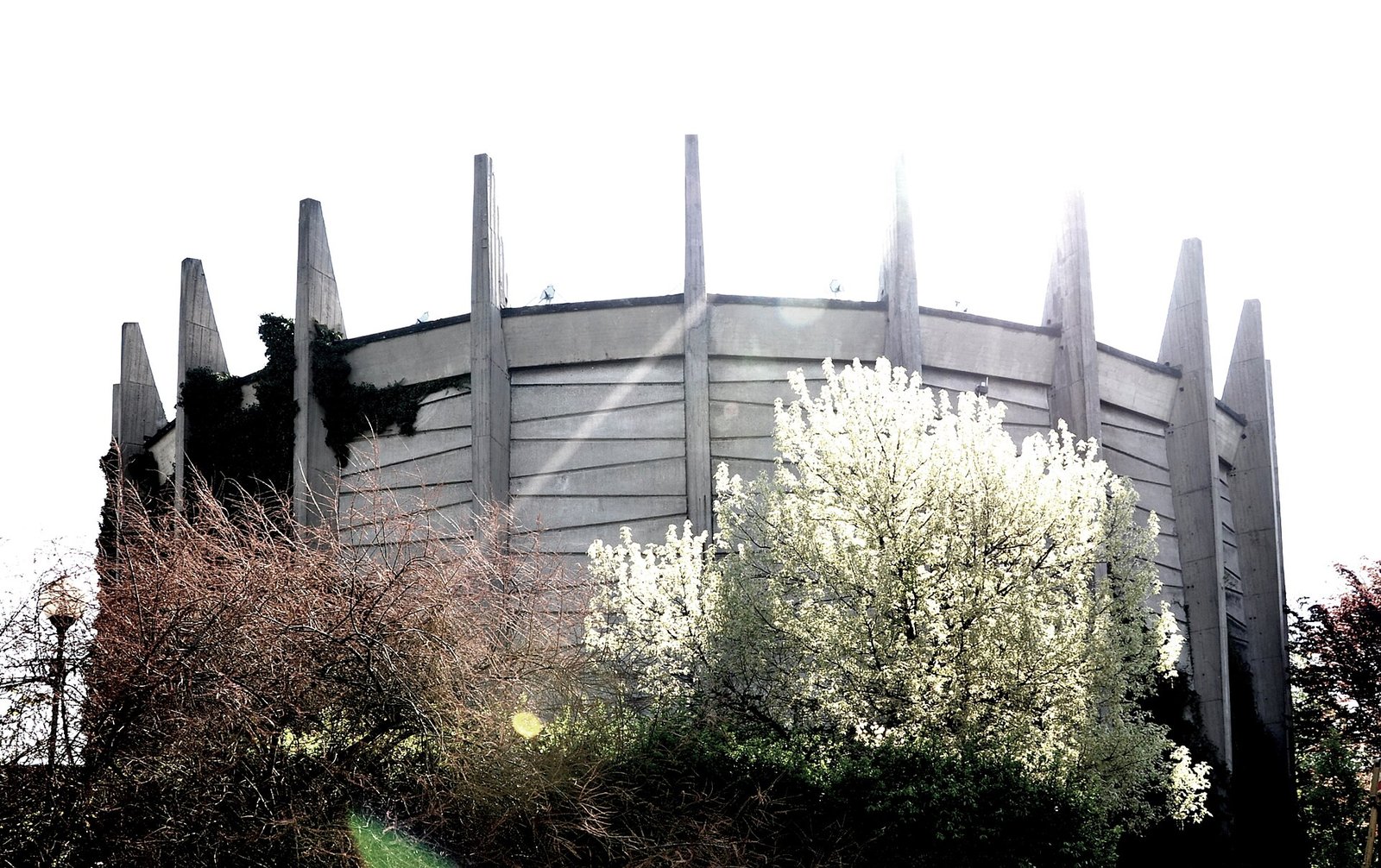
The Raclawice Panorama (Panorama Racławicka) in Wroclaw is a museum of a single painting: a canvas measuring 15 by 114 metres, conceived by Jan Styka and painted by him together with Wojciech Kossak. You see it in the rotunda at ul. Purkyniego 11, a branch of the National Museum in Wroclaw, and not on a free walk through galleries but during a screening at the time printed on your ticket.
A screening lasts 30 minutes, and you view the painting from a viewing platform. At most 85 people go in to each screening, and a new one starts every half hour. The commentary on the painting can be given in Polish, English, German, French, Ukrainian, Russian and other languages, as well as in Polish Sign Language (PJM) and with audio description.
The painting has come a long way: it was made in Lviv in 1893-1894, was shown in a rotunda in Stryjski Park until 1944, came to Wroclaw in 1946, and was opened to visitors here only in 1985. The details are in the Background section.
Visitors rate the screening very highly: on Google Maps the Panorama has 4.8 out of 5 from 28,409 reviews (read on 25 October 2026), and the 200 most recent reviews dated from the previous three weeks.
Who it suits: anyone who wants to see the joint work of Jan Styka and Wojciech Kossak. It also works well for families with school-age children, as the museum has a family ticket for children aged 7-18. Visitors from abroad benefit, since the commentary is sometimes given in several languages, as do deaf and blind visitors, thanks to the commentary in PJM and the audio description.
Who should skip it: anyone who likes to explore at their own pace and go back to favourite rooms. Here you look at one painting, in a group of up to 85 people, for the length of the screening.
How long: the screening itself lasts 30 minutes. The museum does not say how long a whole visit takes, so this is our estimate: allow about 45 minutes, because the ticket is for a specific screening and it is best to reach the rotunda a few minutes before it starts.
A good order: if the National Museum is also on your plan, start with the Panorama. With its ticket you can see the permanent exhibitions of the National Museum in Wroclaw, the Ethnographic Museum and the Four Domes Pavilion within 3 months of the day of your visit without buying further tickets.
Tips
- A ticket for a set screening. You can buy tickets on the day of your visit or in advance, always for a specific screening; advance sales open 7 days ahead and run until the tickets sell out. As at most 85 people go in to each screening, it is safer to buy your ticket in advance if you plan on a particular time.
- One ticket, four museums. Ticket prices: standard ticket 50 PLN (about 11 EUR), reduced 35 PLN (about 8 EUR). For 3 months from the day of your visit to the Panorama, the same ticket also opens the permanent exhibitions of the National Museum, the Ethnographic Museum and the Four Domes Pavilion, so keep it after the screening.
- Families and seniors. The museum has a family ticket for 1-2 parents or carers with children aged 7-18, priced per person, and people aged 65 and over are entitled to the reduced ticket. The amount of the family ticket is in the museum’s price list.
- Groups book a screening. Organised groups of 11 people or more must book the day and time of their screening in advance, on any date. The booking office phone numbers are 501 59 88 32 and 71 344 23 44.
- Photos without flash. You may take photographs and film on the viewing platform, but without a tripod and without flash.
- Accessibility. The museum states that it offers partial access for people with disabilities: the building has a ramp and adapted toilets, there are parking spaces by the main entrance, and there is an induction loop at the ticket desk. You can borrow a wheelchair, noise-cancelling headphones and a guide in PJM or with audio description, but there is no tactile map and no tactile or voice information system.
- Hours depend on the season. The museum has separate hours for the winter season, from November to March, and the summer season, from April to October; the winter-season hours are in the practical information box. The museum is also closed on selected days of the year; it publishes the list on its website.
Getting there
The Panorama stands at ul. J. E. Purkyniego 11, 50-155 Wrocław. The stops and lines below come from the timetable in the City of Wroclaw’s open data (downloaded in October 2026), and the distances are in a straight line from the museum to the nearest post of each stop.
- Tram: the “Urząd Wojewódzki (Muzeum Narodowe)” stop, about 218 m away, is served by lines 2 and 10. About 380 m away is the “Pl. Nowy Targ” stop with lines 6, 8, 9, 11, 17 and 23, and about 385 m away “Urząd Wojewódzki (Impart)” with lines 4, 12, 13 and 16.
- Bus: lines 914, 924, A and N stop at “Urząd Wojewódzki (Muzeum Narodowe)”. About 229 m away is the “GALERIA DOMINIKAŃSKA” stop with lines 110, 112, 113, 114, 120, 914, 920 and 924, and about 264 m away “Poczta Główna” with lines 145, 146, 149, 914, 924, A, D and N.
- Verdict on getting there: the simplest way is tram 2 or 10, or bus A or N, to the “Urząd Wojewódzki (Muzeum Narodowe)” stop, just over 200 m from the museum. Trams 6, 8, 9, 11, 17 and 23, as well as 4, 12, 13 and 16, stop less than 400 m from the rotunda.
- By car: there is a paid car park right next to the museum. The museum also lists the underground car park beneath pl. Nowy Targ, the car park in the Galeria Dominikańska arcade, the Radisson Blu hotel car park and spaces along ul. Purkyniego.
Nearby
All three places are within a short walk (distances in a straight line):
- National Museum in Wroclaw - Main Building, pl. Powstańców Warszawy 5 - about 180 m. The most obvious pairing: the Panorama ticket covers the Main Building’s permanent exhibitions, and its collections are above all painting and sculpture, with a particular emphasis on the art of Silesia as a whole.
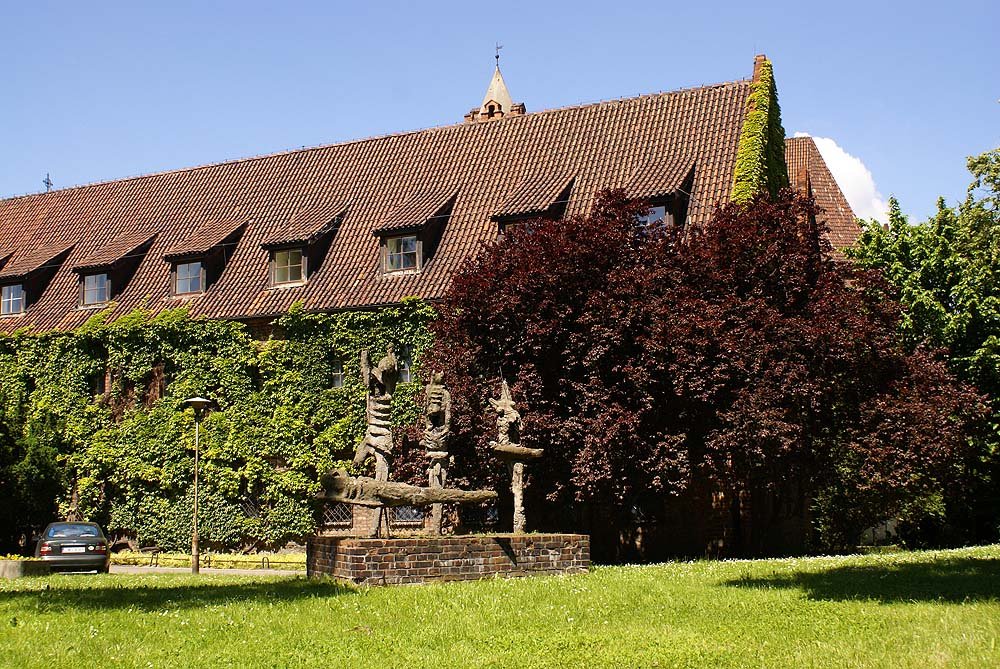
- Museum of Architecture in Wroclaw, ul. Bernardyńska 7 - about 210 m. According to the English Wikipedia, it is housed in a 15th-century former Bernardine complex with a church and a cloister garth, so after the rotunda you can see the interiors of a former monastery here.
- Archdiocesan Museum in Wroclaw, pl. Katedralny 16 - about 500 m. Among its most important objects the museum lists the mummy of a boy from the Ptolemaic period and Lucas Cranach the Elder’s “Madonna under the Fir Trees” of 1510.
Background
The canvas you look at from the platform was made more than ninety years before the Wroclaw rotunda opened. The idea came from the Lviv painter Jan Styka, who invited the battle painter Wojciech Kossak to work with him. According to the museum, the painting was made in just nine months, between August 1893 and May 1894, and it was ceremonially opened in Lviv on 5 June 1894.
Culture.pl states that from 1894 to 1944 the painting was shown in a rotunda in Stryjski Park in Lviv, and that in 1946 it was moved to Wroclaw. Here it waited almost forty years to be shown: the Panorama was ceremonially opened in the rotunda on ul. Purkyniego on 14 June 1985.
The building has a history of its own, too. According to the Polish Wikipedia, it was built in 1961-1985 to a design by Ewa and Marek Dziekoński, and in 1991 it was entered in the register of monuments.
Temporary exhibitions on now in Wroclaw
RMX. Wroclaw Drawing Triennial 2026
23 October 2026 - 15 December 2026
The Wroclaw Drawing Triennial 2026 "RMX" at the Museum of Architecture: 18 finalists, drawing, video and installations in the age of artificial intelligence.
Anna Bujak. Sub rosa
31 July 2026 - 30 December 2026
Anna Bujak's Sub rosa: a monumental cast-aluminium sculpture in the courtyard of the Four Domes Pavilion in Wroclaw, a Gothic cathedral of rose stems.
All Directions of Wandering
25 September 2026 - 30 December 2026
All Directions of Wandering at Wroclaw Contemporary Museum: new acquisitions and core works of the DTZSP art collection, 23 artists, after Byung-Chul Han.
Willmann Wanted
25 September 2026 - 30 December 2026
"Willmann Wanted" at the National Museum in Wroclaw: nearly 30 paintings by art school pupils after Michael Willmann's works lost in the Second World War.
The Centenary. On the Anniversary of the Great Exhibition of Silesian Medieval Art
31 July 2026 - 30 December 2026
The Centenary at the Four Domes Pavilion, Wroclaw: Silesian medieval art a hundred years after the great exhibition of 1926, in the same building.
Early Modern Treasures from the Silesian Churches of Peace
1 October 2026 - 30 December 2026
Baroque silver from the Churches of Peace in Świdnica and Jawor at the National Museum in Wroclaw: a baptismal bowl of 1694 and Wendrich's altar cross.
Nearby
 Art
National Museum in Wroclaw - Main Building: Art of Silesia, Poland and Europe
pl. Powstańców Warszawy 5, 50-153 Wrocław
National Museum in Wroclaw, Main Building: five permanent exhibitions of Silesian, Polish and European art. What you will see, who it suits, …
 Art
Museum of Architecture in Wroclaw, in a former Bernardine monastery
ul. Bernardyńska 7, 50-156 Wrocław
Museum of Architecture in Wroclaw: the only architecture museum in Poland, in a 15th-century Bernardine monastery. What to see, who it …
 History
Archdiocesan Museum in Wroclaw, on Cathedral Square
Plac Katedralny 16, 50-329 Wrocław
Archdiocesan Museum in Wroclaw: a Ptolemaic-era mummy, a bell of 1300 and a Cranach in three historic buildings. What to see, who it suits, …