Centennial Hall Visitor Centre
Visitor Centre w Hali Stulecia
3.1 km from the Market Square in Wroclaw See museums near the Market Square in Wroclaw
- Tours in English: Guided tours are available in English as well as Polish, for an extra fee on top of the admission tickets, higher for English than for Polish.
- The Visitor Centre entrance is marked D9 and is on the ul. Wróblewskiego side, to the right of the hall's main entrance.
- The venue asks visitors to check the hall's availability calendar on its website before a visit.
Location
What to expect
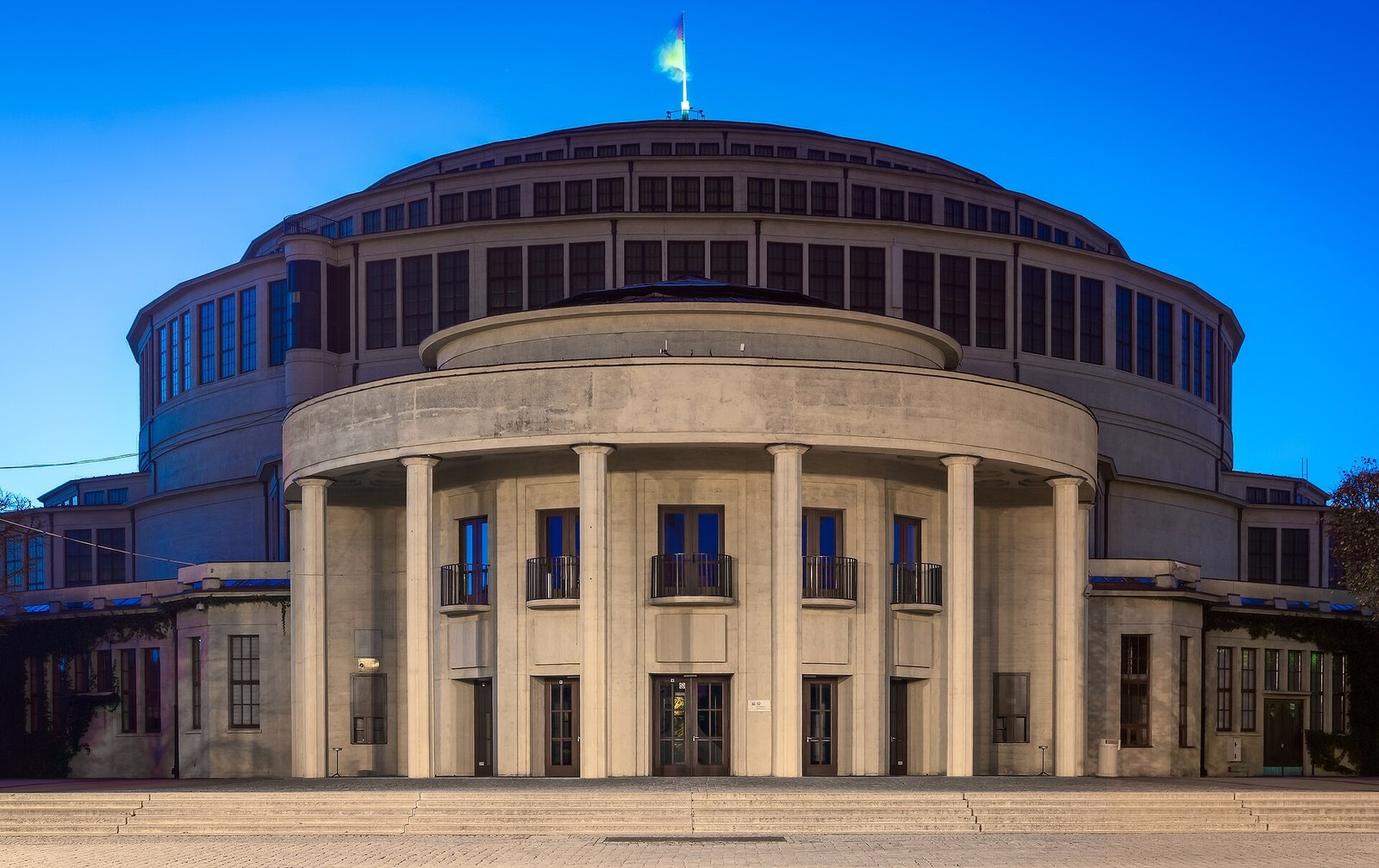
The Centennial Hall Visitor Centre (Visitor Centre w Hali Stulecia) is an exhibition about a single building, seen inside the building itself: a multimedia display in Wroclaw that explains the history of Max Berg’s hall, a monument on the UNESCO World Heritage List. The venue calls it the tourist gateway to the hall, and with a combined ticket you can also see the interior of the Centennial Hall.
The exhibition is made up of touch screens and maps, film and sound recordings, and two virtual-reality tours. On them you meet the architect himself, Max Berg, and rise high above the hall and the Iglica (the Spire).
This is not the first version of the exhibition. It opened in February 2012 as the Centrum Poznawcze (Discovery Centre), and the city portal Nasz Wrocław describes today’s Visitor Centre as a permanent exhibition that has been modernised and enriched with new content.
On Google Maps the Visitor Centre has a rating of 4.1 out of 5 from 100 reviews (read on 4 November 2026). The three reviews shown on the card are one to two years old, so this is a general picture rather than an account of the last few weeks.
Who it suits: anyone who wants to understand the Centennial Hall before going under its dome or looking at it from outside, and families. As early as the opening in 2012, Gazeta Wrocławska wrote that the exhibition was aimed at whole families, children included, and at tourists. Who should skip it: anyone looking for a collection of artworks or historical objects; the exhibition is only about the history of the hall.
How long: the venue gives no visiting time, so this is our estimate: allow about an hour for the exhibition alone with its two VR tours, and correspondingly more with the hall interior on a combined ticket. Gazeta Wrocławska wrote in 2012 of several dozen minutes, but that referred to the first version of the exhibition.
Tips
- Check the availability calendar. The venue asks visitors to look at the Centennial Hall’s availability calendar on its website before a visit. On days marked blue the hall may be closed for part of the day, and on yellow days you cannot go under the dome, but in both cases the Visitor Centre can be visited; on red days both the exhibition and the hall are closed.
- Hours depend on the season. The Visitor Centre is closed on Mondays, and on the other days it closes earlier in winter than in summer; details are in the practical information box.
- Entrance D9. You enter the Visitor Centre through the entrance marked D9, on the ul. Wróblewskiego side, to the right of the hall’s main entrance.
- Two kinds of ticket. Prices of a ticket for the multimedia exhibition alone: standard ticket 25 PLN (about 6 EUR), reduced 20 PLN (about 5 EUR). The second kind covers the exhibition and the interior of the Centennial Hall; its prices, as well as the prices of family and group tickets, are in the price list on the venue’s website. The family ticket is for two adults and at most three children under 16.
- Queues in high season. In the high tourist season the number of visitors sometimes exceeds the exhibition’s capacity limit, so the venue warns of queues. If you can choose when to go, come outside the peak season.
- Groups book ahead. Organised groups of 10 or more people must book their visit in advance. A guided tour, in Polish or in English, costs extra on top of the admission tickets; the prices are in the venue’s price list.
- Accessibility. All entrances to the hall building are at ground level, without steps, and toilets for people with reduced mobility are in the main corridor, on level 0. Stairs with no lift lead to the stand used for visiting the hall interior; on request the venue offers wheelchair users another route, without barriers. For help with overcoming barriers the venue gives the number +48 785 999 036.
- Assistance dogs are welcome. With an assistance dog or a guide dog you may enter the buildings and all their rooms. There is no induction loop in the building.
Getting there
- Address: ul. Wystawowa 1, 51-618 Wrocław; entrance D9 on the ul. Wróblewskiego side.
- Tram: the venue directs visitors to the “Hala Stulecia” and “ZOO” stops. According to the timetable in the City of Wroclaw’s open data, “ZOO” is about 152 m from the hall in a straight line and “Hala Stulecia” about 225 m; trams 1, 2, 4, 10 and 19 stop at both every day. Tram 0, which the venue also lists, runs there only on part of the week, and tram 17 leaves from the “Mickiewicza” stop, about 301 m from the hall.
- Bus: the venue lists buses 145 and 146 to the “Hala Stulecia” stop; according to the timetable, line 151 also stops there every day. The venue directs visitors to the “Mickiewicza” stop by bus 115, but according to the timetable that line stops there only on request.
- By car: right next to the hall there is a paid underground car park, open 24 hours, with more than 800 spaces, 20 coach spaces and spaces for people with disabilities.
Nearby
You can add one of these places to your visit to the Visitor Centre (distances in a straight line):
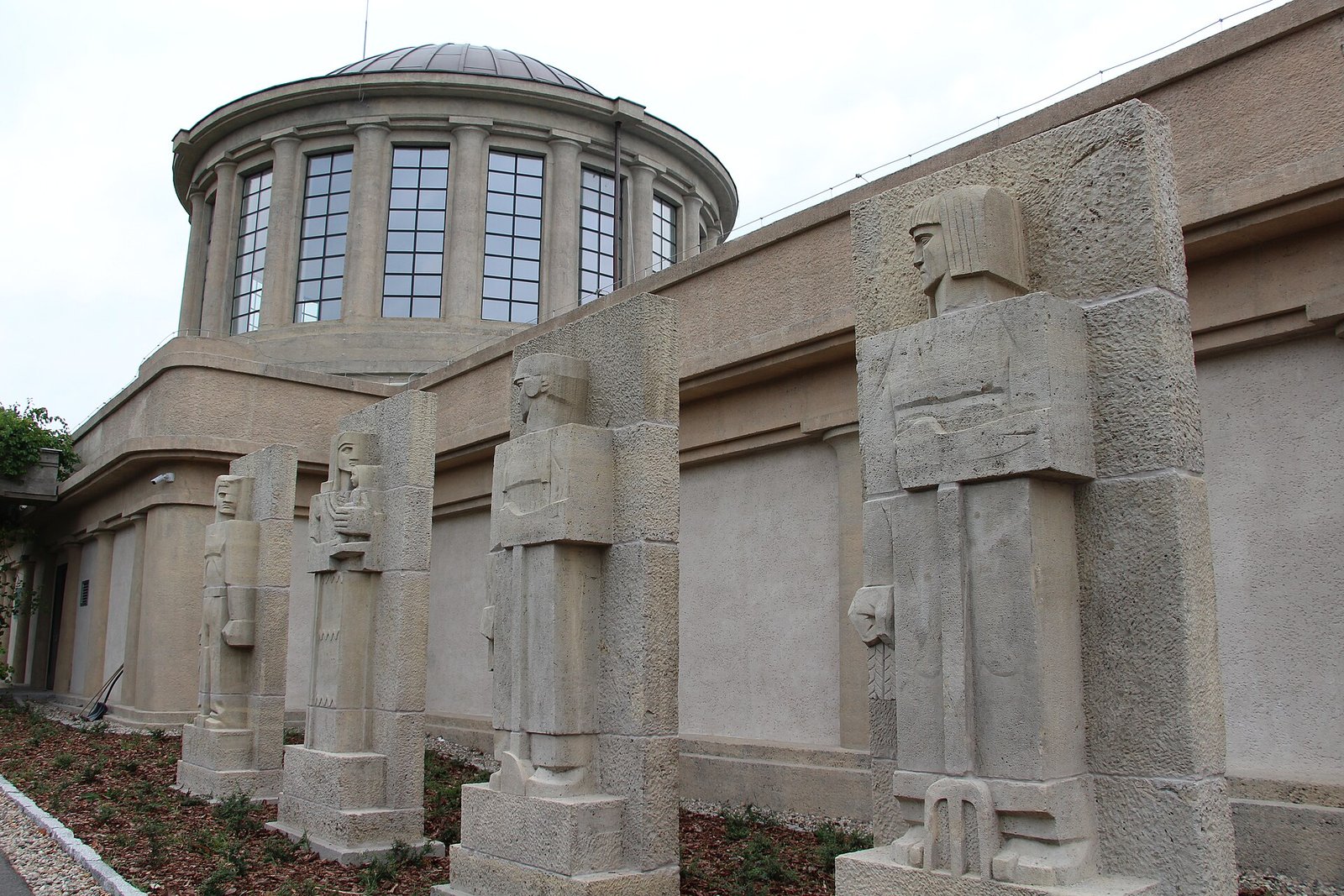
- Four Domes Pavilion - Museum of Contemporary Art, ul. Wystawowa 1 - about 140 m. According to culture.pl, it is the second-largest building, after the Centennial Hall, of the exhibition grounds laid out for the Centennial Exhibition of 1913; today it houses a permanent collection of Polish art of the second half of the 20th and the 21st century, so after the exhibition on Berg’s building you can see art here.
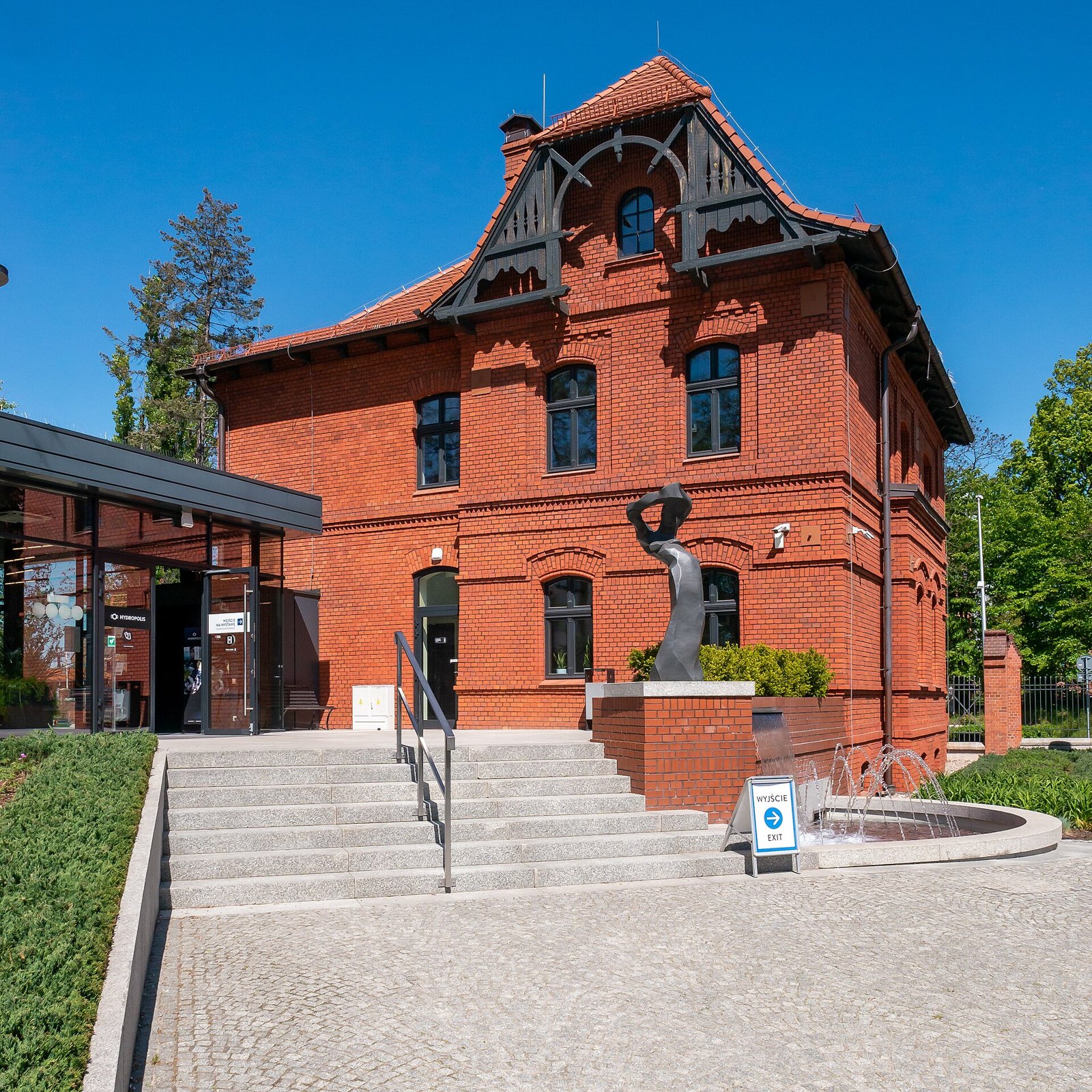
- Hydropolis, ul. Na Grobli 17 - about 1.4 km. It also relies on multimedia: the visit begins with a 360-degree film on a 65-metre screen, and the whole centre is housed in a 19th-century underground water reservoir.
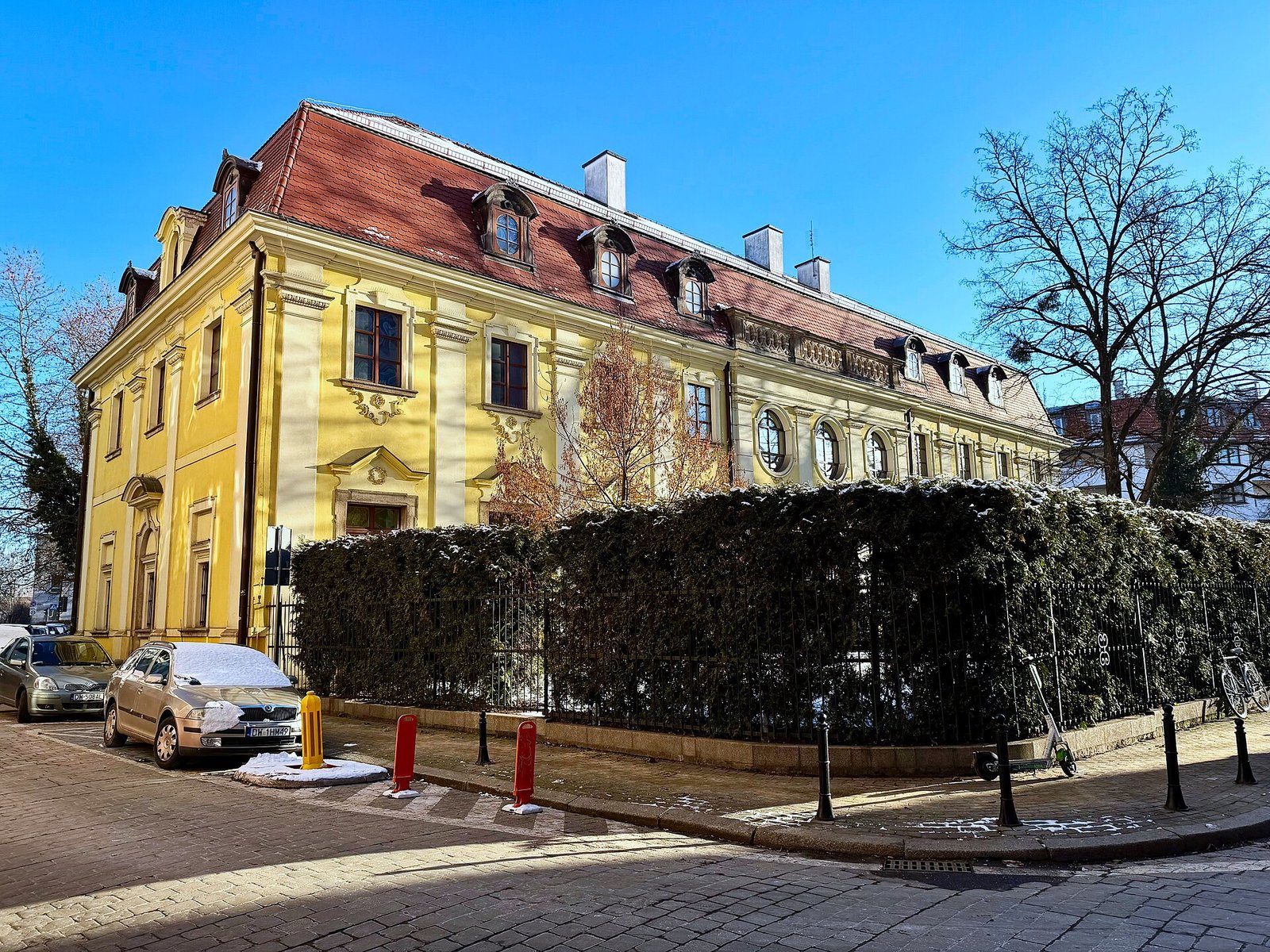
- Ethnographic Museum, ul. R. Traugutta 111-113 - about 1.8 km. A good complement by contrast: instead of a single building, it shows life in the Lower Silesian countryside from the 17th century to the present day.
Background
The hall that the Visitor Centre’s screens tell you about was built in 1911-1913 to the design of Max Berg, as the Polish and English Wikipedia state. The hall’s operator writes that it came into being in 1913 as the Jahrhunderthalle, and culture.pl states that Berg designed it in 1911 and that it was completed in 1913.
According to culture.pl, the completed hall was the largest reinforced-concrete structure in the world and had the largest free-standing dome built until then. In April 2005 it was designated a Historic Monument, and in 2006 it was inscribed on the UNESCO World Heritage List.
The exhibition on its history opened in February 2012 under the name Centrum Poznawcze; Gazeta Wrocławska described it at the time as a permanent multimedia exhibition devoted to the history of the building. Today’s Visitor Centre is its modernised and enriched version.
Temporary exhibitions on now in Wroclaw
RMX. Wroclaw Drawing Triennial 2026
23 October 2026 - 15 December 2026
The Wroclaw Drawing Triennial 2026 "RMX" at the Museum of Architecture: 18 finalists, drawing, video and installations in the age of artificial intelligence.
Anna Bujak. Sub rosa
31 July 2026 - 30 December 2026
Anna Bujak's Sub rosa: a monumental cast-aluminium sculpture in the courtyard of the Four Domes Pavilion in Wroclaw, a Gothic cathedral of rose stems.
All Directions of Wandering
25 September 2026 - 30 December 2026
All Directions of Wandering at Wroclaw Contemporary Museum: new acquisitions and core works of the DTZSP art collection, 23 artists, after Byung-Chul Han.
Willmann Wanted
25 September 2026 - 30 December 2026
"Willmann Wanted" at the National Museum in Wroclaw: nearly 30 paintings by art school pupils after Michael Willmann's works lost in the Second World War.
The Centenary. On the Anniversary of the Great Exhibition of Silesian Medieval Art
31 July 2026 - 30 December 2026
The Centenary at the Four Domes Pavilion, Wroclaw: Silesian medieval art a hundred years after the great exhibition of 1926, in the same building.
Early Modern Treasures from the Silesian Churches of Peace
1 October 2026 - 30 December 2026
Baroque silver from the Churches of Peace in Świdnica and Jawor at the National Museum in Wroclaw: a baptismal bowl of 1694 and Wendrich's altar cross.
Nearby
 Art
Four Domes Pavilion in Wroclaw - Museum of Contemporary Art
ul. Wystawowa 1, 51-618 Wrocław
Four Domes Pavilion in Wroclaw: Polish post-war and contemporary art in Poelzig's building by the Centennial Hall. What to see, who it …
 Science
Hydropolis, Wroclaw - a water science centre in a 19th-century underground reservoir
ul. Na Grobli 17, 50-421 Wrocław
Hydropolis in Wroclaw: an interactive exhibition about water in a neo-Gothic underground reservoir on ul. Na Grobli. What to see, who it …
 Culture
Ethnographic Museum in Wroclaw - Lower Silesian village life since the 17th century
ul. R. Traugutta 111-113, 50-419 Wrocław
Ethnographic Museum in Wroclaw: Lower Silesian village life from the 17th century to today. What to see, who it suits, how long to stay and …