Wesoła Immersive
Wesoła Immersive
968 m from Rynek Główny in Krakow See museums near Rynek Główny in Krakow
- Tickets are sold online or on site at the café-bar; a ticket is valid for a single entry.
- The time of entry on the ticket is indicative: you need not arrive exactly at it on the chosen day, and once inside there is no time limit until the exhibition closes.
- Children under 4 enter the exhibition at no charge.
- Children under 13 visit with an adult; visitors aged 13-17 may come alone with the written consent of a legal guardian.
- The exhibition uses intense, flashing and rapidly changing light effects and sound effects.
- The café-bar at the same address needs no exhibition ticket and keeps its own opening hours.
- There is a ramp at the main entrance from ul. Kopernika; the toilets are not adapted for people with disabilities. For other access questions the museum asks visitors to write before the visit.
Location
What to expect
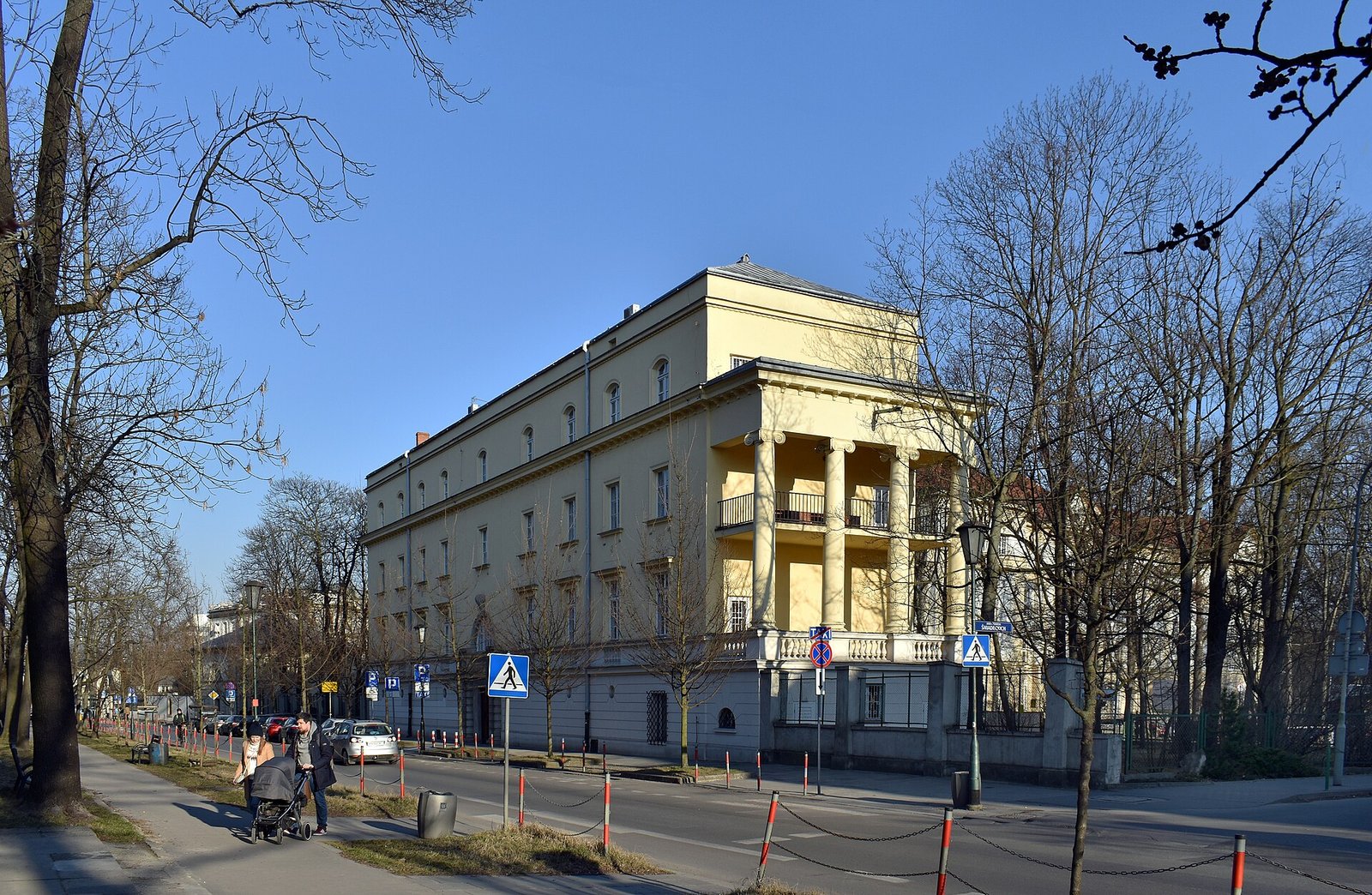
Wesoła Immersive in Krakow is not a museum of display cases but a new media art space in the Wesoła district: an immersive exhibition and a café-bar under one address, at ul. Kopernika 17A. It is all housed in the Old Kitchen (Stara Kuchnia) of 1879, linked to the history of the St Lazarus Hospital.
The core of a visit is the immersive exhibition, which needs a ticket. The In Your Pocket Kraków guide (undated) describes it as installations in which visitors control the light and sound themselves, and calls it highly interactive and “Instagrammable”. Radio Kraków presented Wesoła as a culture centre where art meets technology and artificial intelligence.
On Google Maps the place has 4.7 out of 5 from 227 reviews (read on 4 November 2026). Google describes the oldest of them as a year old, so the rating covers the short history of a venue that opened in autumn 2025.
Who it suits: teenagers, who according to In Your Pocket find this exhibition particularly absorbing, and adults curious about where art, technology and artificial intelligence meet. Visitors aged 13-17 may come on their own with the written consent of a legal guardian; younger children visit with an adult.
Who should skip it: people sensitive to intense, flashing light and sound effects, because the whole exhibition is built on them. Skip it too if you are after a collection of objects and historical captions: here you look at new media installations, not collections.
How much time: allow about an hour, which is the average visit according to In Your Pocket. There is no time limit once you are in, so you can stay longer, right up to the exhibition’s closing time.
Tips
- Mornings at the weekend only. On weekdays the exhibition opens only in the afternoon (on Tuesdays 15:00-21:00), at the weekend already in the morning (on Saturdays 10:00-21:00); otherwise it is closed on Mondays. For a visit before noon, the weekend is your only option.
- Don’t leave your visit to the end of the day. Remember: last entry at 20:30, and the exhibition closes not long after that. If you want the average hour with the installations, arrive well before then.
- The time on the ticket is indicative. You can buy a ticket online or on site, at the café-bar, and it is valid for a single entry. The date on the ticket must match, but on the chosen day you do not have to arrive at exactly the time shown on it.
- The café-bar keeps its own hours. You can enter the café-bar without an exhibition ticket, but its opening hours differ from the exhibition’s. The hours panel in Google search shows the café-bar’s hours, not the exhibition’s, so check the exhibition hours in the practical box or on the museum’s website.
- Concessions and the youngest. The reduced ticket (39 PLN (about 9 EUR)) is for pupils, students up to 26, seniors 65+, pensioners, and people with disabilities and their carers; you show the document proving your entitlement at the entrance. The museum’s FAQ gives a separate admission rule for children under 4, so check it before buying tickets for the family.
- Light and sound warning. The exhibition uses intense, flashing and rapidly changing light effects as well as sound effects. If someone in your group copes badly with such stimuli, ask the museum before buying a ticket or choose another venue.
- Accessibility. There is a ramp at the main entrance from ul. Kopernika, and the place’s Google Maps card also lists a hearing loop. The toilets are not adapted for people with disabilities; for getting around the venue, the museum asks visitors to enquire by e-mail before the visit.
- In summer, check the museum’s profile. For summer 2026 the museum announced a break: the exhibition was to be closed in July, August and at the beginning of September, and at the end of September it announced on Facebook that it was open again. If you plan a visit in the summer holidays, look at the museum’s profile beforehand.
Getting there
- Address: ul. Mikołaja Kopernika 17A, 31-501 Kraków, in Krakow’s Wesoła district; the exhibition and the café-bar share this address.
- Tram: the museum itself names the Lubicz and Hala Targowa stops. The closest, about 290 m in a straight line, is the “Lubicz” 02 stop, served all day on the checked days of 6-8 November 2026 (Friday-Sunday) by trams 5, 12, 14, 72, 74 and 78. From the “Lubicz” 01 stop, about 320 m in a straight line, trams 5, 12, 14, 74 and 78 run.
- Tram to Hala Targowa: the “Hala Targowa” stop, about 440 m in a straight line, was served on all three checked days by trams 1, 17, 22 and 70.
- Bus: day bus 125 runs from the “Lubicz” 01 and 03 stops, about 330 and 360 m in a straight line, and the “Teatr Słowackiego” 01 stop, about 440 m away, is served by day bus 502. The other bus lines at the Lubicz stops run only at night, and the only line calling at Hala Targowa is night bus 605.
- Our pick: the tram to the Lubicz stop is the easiest, because six lines run there all day, weekends included, and on the checked days trams 12 and 14 kept running long after the exhibition closed. The sources give no walking time, and the route will be longer than the straight line.
Nearby
The three nearest museums are on the same street, ul. Kopernika. The closest, about 0.28 km in a straight line, at ul. Kopernika 25, is the Nursing History Parlour of the Jagiellonian University Medical College: a single former room with a fireplace, holding documents, photographs, albums and the uniforms of the nursing school’s pupils. It makes a strong contrast with Wesoła’s digital installations, but the visit has to be arranged by phone in advance.
About 0.35 km in a straight line, at ul. Kopernika 12, is the Museum of Anatomy, and about 0.39 km in a straight line, at ul. Kopernika 27, the Botanic Garden Museum of the Jagiellonian University.
Background
The building that now houses the installations and the café-bar is the Old Kitchen of 1879, linked to the history of the St Lazarus Hospital. Radio Kraków simply called it the former hospital kitchen on ul. Kopernika. The exhibition and the café-bar now share the same address, so in the old hospital kitchen you can now sit down over a coffee.
In an article published on 26 September 2025, Radio Kraków reported that Wesoła Immersive, a new culture centre combining art with technology and artificial intelligence, had opened in this kitchen. Today the venue presents itself as a new media art space in Krakow’s Wesoła district. The building’s hospital past stays in the background, and light, sound and technology take centre stage.
Temporary exhibitions on now in Krakow
Tomasz Górnicki and Igor Dobrowolski. Underneath
24 October 2026 - 29 November 2026
Sculpture and painting on homelessness and depression in abandoned palace cellars at Piłsudskiego 4: Bunkier Sztuki, from 24 Oct 2026, booking, adults only.
New Forms, Old Inspirations - An Exhibition of Ceramics and Linocuts
30 October 2026 - 30 November 2026
Ceramics and linocuts by art therapy group participants, inspired by old and contemporary masters. A free exhibition at Krzysztofory Palace, Krakow.
Polish Design: Object Biographies / Designer Biographies
23 September 2026 - 13 December 2026
Sixteen Polish designers and studios, their work shown next to the personal things they live and work with. Bunkier Sztuki, Krakow, until 13 December 2026.
Zofia Kulik. Instead of Sculpture. Footnotes
3 October 2026 - 20 December 2026
Zofia Kulik's 1971 diploma: nearly 500 slides instead of a sculpture, shown in a Polish museum for the first time. MuFo Rakowicka, 3 Oct - 20 Dec 2026, 5 PLN.
Vincent van Gogh: Country Cottages Among the Trees
29 January 2026 - 31 December 2026
The only van Gogh in a Polish public collection: a small 1883 landscape in the National Museum in Krakow, on view until 31 December 2026, on the branch ticket.
In the Paris Atelier of Stanisław Wyspiański and Józef Mehoffer
26 June 2026 - 31 December 2026
Wyspiański and Mehoffer drawing each other in 1890s Paris, plus a pastel of their studio: a small display at the Wyspiański Museum, 18 PLN, until 31 Dec 2026.
Nearby
 Science
Nursing History Parlour, Krakow - nursing history museum of the Jagiellonian University Medical College
ul. Kopernika 25, 31-501 Kraków
Nursing History Parlour in Krakow, a nursing history museum: documents, photographs and uniforms of Krakow's nurses in one room. How to …
 Science
Museum of Anatomy
ul. Kopernika 12, 31-034 Kraków
Museum of Anatomy Krakow - over 2000 specimens at the Jagiellonian University. Pre-registered secondary school classes only, ages 16+, …
 Science
Botanic Garden Museum of the Jagiellonian University
ul. Kopernika 27, 31-501 Kraków
Botanic Garden Museum Krakow: four rooms of seeds, timber and specimens from Java, Africa and the Arctic, free with the garden ticket. Tips, …