Anna Jagiellon. All the Faces of the Queen
23 October 2026 - 14 February 2027
Wawel Royal Castle shows Anna Jagiellon through her own decisions, letters and foundations, not only as the daughter, sister and wife of kings. Six rooms on the first floor bring together every known historical portrait of her. The exhibition is open until 14 February 2027.
Wawel Royal Castle on the exhibition (the castle’s own English text):
For centuries, she was seen as the daughter of Sigismund the Old, the sister of Sigismund Augustus and the wife of Stefan Batory. But what was she like?
She had to fight for her place, even though her lineage was sought after by those who were vying for the Polish throne. This autumn at the Wawel Castle, we will take a closer look at her own story - the decisions she made, the relationships she built and the legacy she left behind.
What to expect
The exhibition fills six rooms in the west wing of the castle’s first floor, according to the castle’s press release of 22 October and the list of the Ministry of Culture and National Heritage. According to a PAP news agency report in January on the castle’s plans, it is the largest of the four temporary shows then planned for 2026. The curatorial team is Marta Golik-Gryglas, Dariusz Nowacki, Magdalena Ozga, Dr Magdalena Piwocka and Dr Joanna Winiewicz-Wolska. The castle has not yet given the number of objects.
The exhibition follows her life in order: from childhood at Wawel, through the interregnum after her brother’s death and her marriage to Báthory, to her campaign to put her nephew on the throne. Among other things, the castle’s page lists:
- Miniatures from the workshop of Lucas Cranach the Younger - portraits of Sigismund the Old’s family, in which the three youngest princesses can be told apart only by medallions bearing their initials.
- Letters between Anna and Stephen Báthory - correspondence from which the castle draws a picture of a marriage built on cooperation rather than coldness.
- A jewel with Báthory’s profile - a keepsake of her husband, recovered from the queen’s grave.
- Gifts to the Sigismund Chapel - goldsmiths’ work and textiles she donated.
- Portraits of the queen - every known historical likeness, including those linked to Marcin Kober. Some are shown after conservation under a programme launched by the Museum of King Jan III’s Palace at Wilanów.
The castle’s press release of 22 October names these lenders: Wawel Cathedral, the Jagiellonian Library, the Museum of Warsaw, the Princes Czartoryski Museum (National Museum in Krakow) and the National Museum in Warsaw. From abroad, the lenders are the Kunsthistorisches Museum in Vienna, the Uffizi Galleries, the Grünes Gewölbe in Dresden and Patrimonio Nacional in Madrid.
The individual foreign objects appear on the Ministry of Culture and National Heritage’s list of 6 August 2026, which grants them legal protection; neither the Uffizi nor Patrimonio Nacional is on it. From Vienna they are Stephen Báthory’s half-armour and portraits of Báthory, Sigismund III Vasa and Ernest of Habsburg, from Dresden two jewels with a figure of St George. The list also gives the Society of Antiquaries of London (the case of Queen Bona’s clock, 1525) and the Herzog August Bibliothek in Wolfenbüttel (the printed “Statuta y przywileie koronne” of 1570). According to the list, portraits of Anna and Sigismund Augustus from around 1600 come from the Kulturstiftung Dessau-Wörlitz.
The castle’s press release also reports a conservation discovery: a 16th-century portrait long regarded as a 19th-century copy has turned out to be a genuine likeness of Anna Jagiellon.
The first of two artistic interventions accompanying the exhibition is Ewa Juszkiewicz’s “Bez tytułu / według Rogiera van der Weydena” (Untitled / after Rogier van der Weyden, 2012), from Galeria Bielska BWA’s collection. It hangs where the castle normally shows a portrait of Anna Jagiellon, which has now moved to the exhibition. According to the intervention’s page (in Polish), you see the painting with the “Castle Second Floor” ticket, not as part of the exhibition itself. The second intervention is a necklace by Anna Orska inspired by the queen’s jewellery.
Context
Anna Jagiellon (1523-1596) was born in Krakow, the daughter of Sigismund the Old and Bona Sforza. After her brother Sigismund Augustus died without an heir and Henry of Valois fled, the nobility proclaimed her king of Poland on 15 December 1575. The condition was marriage to Stephen Báthory: the coronation and the wedding took place at Wawel on the same day, 1 May 1576.
After Báthory’s death she backed her nephew Sigismund III Vasa, son of her sister Catherine, in the election of 1587. She died in Warsaw in 1596 and lies in the Sigismund Chapel, whose dome still carries the gilded covering she paid for. The year 2026 marks the 450th anniversary of her coronation and the 430th of her death.
Marcin Kober, Báthory’s court painter, portrayed her in coronation robes and in widow’s dress, among other likenesses. Ewa Juszkiewicz, born in Gdańsk in 1984, paints versions of old portraits of women in which the face is replaced by folds of fabric, flowers or shells. The painting at Wawel repeats van der Weyden’s “Woman in a White Veil” of around 1440, but a draped cloth covers the woman’s face. The exhibition’s title speaks of faces; the painter is known for covering them.
Tickets and time
A ticket for the exhibition alone costs 47 PLN, reduced 35 PLN. You get in at no extra charge with the “Castle First Floor” ticket at 57 PLN (reduced 43 PLN), which also covers the private royal apartments, the porcelain cabinet and the “Wawel Odzyskany” (Wawel Recovered) exhibition. For 10 PLN more you therefore get the apartments and, until 6 January, the other temporary exhibition, “Lares and Penates”; outside November that is the better buy. Tickets are sold at the ticket offices and in the online shop at bilety.wawel.krakow.pl ; prices are on the castle’s What to see page (in Polish).
Open Tuesday to Sunday, 9:00-17:00 (9 AM-5 PM), last entry 30 minutes before closing. Closed on 1 and 11 November, 24-26 and 31 December. It is closed on Mondays, so the castle’s free Monday passes do not cover it. The English version of the exhibition page gives the hours as 9 am-7 pm and adds 1 January to the closing days; the Polish version and the What to see page give 9:00-17:00. If you plan to visit on 1 January, check the What to see page.
November works differently. Under the “Free November” scheme, Tuesday to Sunday, you enter on a free pass for the castle’s second floor that also covers this exhibition; last entry 16:00. Passes are issued at the ticket offices on the day of the visit (8:45-16:00) and released online one week ahead; one person can collect them for at most five people. Details are on the castle’s What to see page (in Polish).
Allow 45-60 minutes for the six rooms. The exhibition suits anyone interested in women in power, the Jagiellon dynasty and early portraiture, and, with the workshop on 15 November, families with children too. If you have one hour at Wawel and it is your first visit, choose the royal chambers instead. The castle has published an English version of the exhibition page, but does not say whether the labels in the rooms are bilingual.
Events
- 27-29 Oct 2026 - national academic conference “Anny Jagiellonki. Relacje kobiet i władzy” (The Anna Jagiellons: Women and Power). Sessions on 27 October are in the Audience Hall (Sala Poselska) on the castle’s second floor (entrance by the Audience Staircase). On 28 October they are in the Exhibition and Conference Centre, on 29 October in the Sigmund Hall (Sala Sigmunda) in building no. 5. Held in Polish, no conference fee. Listeners sign up for individual sessions through forms on the programme page, and seats are few: on 24 October the morning session of 29 October was already full - programme and sign-up (in Polish).
- 28 Oct 2026, 16:30-18:00 - as part of the conference, the debate “Syndrom Anny Jagiellonki. Czy kobiety w kulturze wciąż muszą czekać w kolejce do tronu?” (The Anna Jagiellon Syndrome: do women in culture still have to queue for the throne?), Audience Hall on the castle’s second floor. Chaired by Dr Jacek Stawiski, editor-in-chief of the weekly Tygodnik Powszechny; the speakers are Magdalena Biniaś-Szkopek, Anna Jankowiak, Agnieszka Jankowiak-Maik and Michał Sawczuk. Sign-up through a separate form - programme and sign-up .
- 5 Nov 2026, 18:00-19:00 - online lecture “Królowa z wyboru, a bez władzy? Anna Jagiellonka na tle europejskich królowych XVI wieku” (A queen by election, yet without power? Anna Jagiellon among the European queens of the 16th century), given by Dr Dominik Kadzik of the Institute of History, Jagiellonian University. On MS Teams, free of charge; the exhibition page gives no link to the meeting (as of 24 October) - exhibition page (in Polish).
- 15 Nov 2026, 11:00-13:00 - family workshop “Czy kobieta mogła zostać królem?” (Could a woman become king?) in the Nasz Wawel Rodzinny series: a visit to the exhibition, then oak-gall ink and some calligraphy. 60 PLN per participant, accompanying adult free; meeting point by the model of Wawel outside the Reservations Office building - tickets (in Polish).
- 19 Nov 2026, 18:00-19:00 - online lecture “Między tronem a codziennością. Anna Jagiellonka w zwierciadle korespondencji” (Between the throne and everyday life: Anna Jagiellon in the mirror of her letters), given by Dr Agnieszka Pawłowska-Kubik, editor of the first volume of the queen’s correspondence (2024). On MS Teams, free of charge; the exhibition page gives no link - exhibition page (in Polish).
- 17 Dec 2026, 18:00-19:00 - online lecture “Wawelski portret Anny Jagiellonki i inne wizerunki królowej” (The Wawel portrait of Anna Jagiellon and other likenesses of the queen). The speaker is Dr Joanna Winiewicz-Wolska, head of the castle’s Collections Department and one of the exhibition’s curators. The subject is the Wawel portrait attributed to Marcin Kober and the question of whether Kober really painted it. On MS Teams, free of charge; the exhibition page gives no link - exhibition page (in Polish).
What the press says
PAP, reprinted by dzieje.pl (1 Jan 2026): presenting the castle’s plans for 2026, its director Prof. Andrzej Betlej described the exhibition as a sequel to “Obraz Złotego Wieku” (The Image of the Golden Age) of 2023 - link (Polish-language source). He says: “This is a strictly Wawel exhibition, tied to this place, tied to one of the most important figures in the politics, but also the culture, of the late 16th century” (our translation).
No coverage of the press conference of 22 October or of the opening, and no reviews, were found (as of 24 October 2026).
Updates
- 2026-10-24 - the exhibition page and the What to see price list give the price: 47 PLN regular, 35 PLN reduced, or entry with the “Castle First Floor” ticket, in November with the pass for the castle’s second floor (until 13 October the exhibition page gave 5 PLN and 3 PLN). The exhibition page announces three online lectures, and the conference page has opened sign-up for listeners and gives the Audience Hall as the venue of the debate. The castle has published an English version of the exhibition page (source: exhibition page , in Polish).
- 2026-10-22 - the castle’s press release after the press conference named the lenders, a conservation discovery (a 16th-century portrait regarded as a 19th-century copy turned out to be a likeness of Anna) and a second artistic intervention, a necklace by Anna Orska. On that day the exhibition page no longer gives a ticket price (source: exhibition page , in Polish).
See also
- Lares and Penates. On Building a Sense of Security in Architecture - the other current temporary exhibition at Wawel, until 6 January, for 5 PLN or included in the “Castle” and “Castle First Floor” tickets. You can see both in one visit.
- Warrior Women: Japanese Herstories - at the Manggha Museum until 11 November. Stories of women who led and fought, told through Japanese woodblock prints.
- Czartoryski Museum - one of the lenders, according to the castle’s press release. It is home to Leonardo da Vinci’s “Lady with an Ermine”, his only painting in Poland.
- All the Faces of the Queen - Intervention - Ewa Juszkiewicz’s painting in the place where the Wawel portrait of Anna Jagiellon usually hangs. You see it with the “Castle Second Floor” ticket, not with the ticket for this exhibition.
Tickets, opening hours, and current details are on the Wawel Royal Castle website .
Museum profile: Wawel Royal Castle .
Curator
Marta Golik-Gryglas, Dariusz Nowacki, Magdalena Ozga, Dr Magdalena Piwocka, Dr Joanna Winiewicz-Wolska
Tickets and access
47 PLN regular, 35 PLN reduced, or at no extra charge with the "Castle First Floor" ticket (57/43 PLN). In November, Tuesday to Sunday, entry is on a free pass from the "Free November" scheme, together with the castle's second floor. Last entry 30 minutes before closing.
Nearby
 History
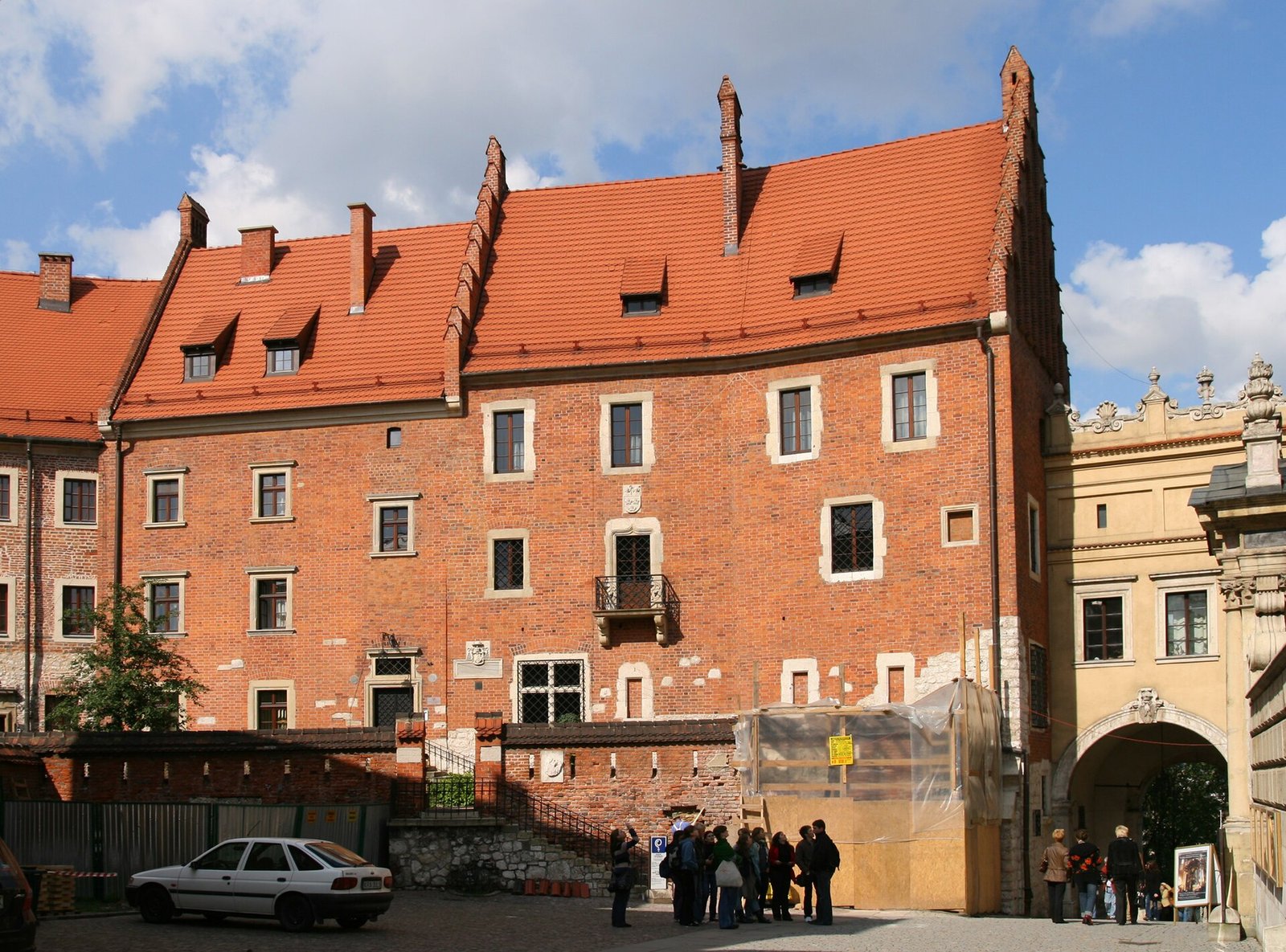
John Paul II Cathedral Museum on Wawel Hill
Zamek Wawel 3, 31-001 Kraków
Wawel Cathedral Museum in Krakow - the cathedral treasury on Wawel Hill, distinct from the Royal Castle. Polish regalia, open Mon-Sat 9-17 …
 History
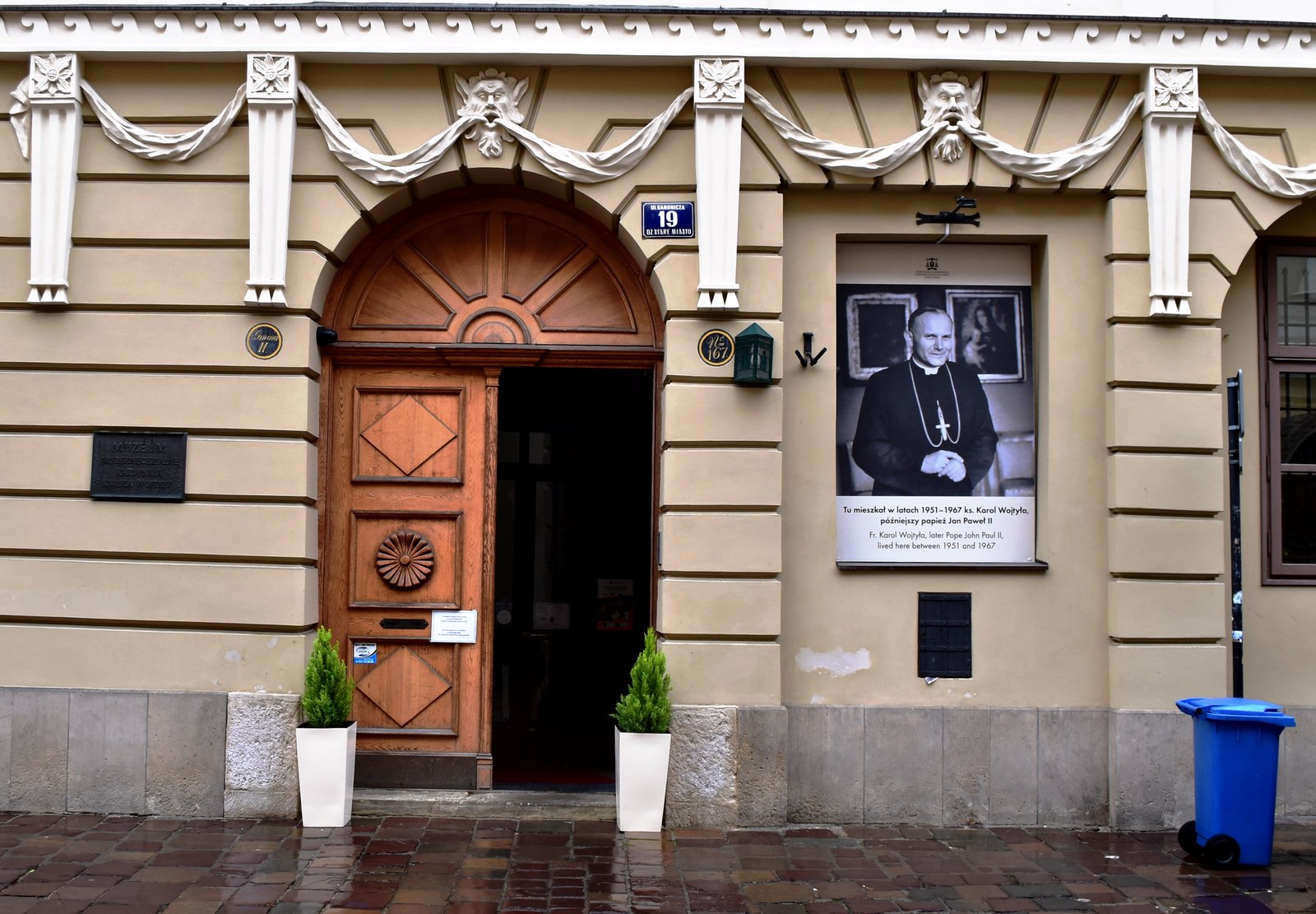
Archdiocesan Museum in Krakow
ul. Kanonicza 19-21, 31-002 Kraków
Archdiocesan Museum Krakow on Kanonicza Street - sacred art and Karol Wojtyla's former home. Tickets 10/6 PLN, Tue-Sun 10:00-17:00.
 Art
Bishop Erazm Ciołek Palace
ul. Kanonicza 17, 31-002 Kraków
Bishop Erazm Ciolek Palace - medieval Polish art and icons near Wawel. Hours, tickets 18/14 PLN, free Tuesdays, directions.
 History
Historical and Missionary Museum of the Congregation of the Mission in Krakow
ul. Stradomska 4, 31-058 Kraków
Mission history museum Krakow on Stradom - China mission relics and the story of the Vincentians. Opening hours, how to visit, near Wawel.
 Science
Krakow Pinball Museum
ul. Stradomska 15, Kraków
Krakow Pinball Museum - play vintage pinball and arcade machines in a 15th-century cellar near Wawel. Unlimited free play, open 7 days a …
 Science
Geological Museum of the Institute of Geological Sciences PAS
ul. Senacka 3, 31-002 Kraków
Geological Museum of the ING PAS in Krakow - minerals, one of Poland's largest meteorite collections and fossils in the Old Town, near the …
Temporary exhibitions on now in Krakow
Nowa Huta - Dimitrovgrad
10 September 2026 - 10 November 2026
An open-air show by the Nowa Huta Museum on Aleja Róż sets Nowa Huta beside Dimitrovgrad in Bulgaria, a town built from 1947. Until 10 November 2026.
Akitsushima. The Island of Dragonflies
19 July 2026 - 11 November 2026
The dragonfly in Japanese culture - from the country's oldest name to samurai symbolism - told through a collection of Japanese armour at the Manggha Museum.
Warrior Women: Japanese Herstories
19 July 2026 - 11 November 2026
Onna bugeisha - women trained in martial arts - in Japanese ukiyo-e prints. An exhibition at the Manggha Museum on strength, strategy and collective memory.
Tomasz Górnicki and Igor Dobrowolski. Underneath
24 October 2026 - 29 November 2026
Sculpture and painting on homelessness and depression in abandoned palace cellars at Piłsudskiego 4: Bunkier Sztuki, from 24 Oct 2026, booking, adults only.
Girls from the Clouds - 95th Anniversary of the 1st Women Aviators’ Rally around Poland
7 March 2026 - 30 November 2026
The 1931 rally of four women pilots around Poland: photographs and Maria Wardasówna's keepsakes in Hangar 5 of the Polish Aviation Museum, until 30 November.
Polish Design: Object Biographies / Designer Biographies
23 September 2026 - 13 December 2026
Sixteen Polish designers and studios, their work shown next to the personal things they live and work with. Bunkier Sztuki, Krakow, until 13 December 2026.