Podgórze Museum
Muzeum Podgórza
2.7 km from Rynek Główny in Krakow See museums near Rynek Główny in Krakow
Location
What to expect
If you are standing on Ghetto Heroes Square or walking out of Schindler’s Factory, this is the museum that explains the ground under your feet. Podgórze was not a Krakow suburb. Emperor Joseph II granted it municipal privileges on 26 February 1784, along with the status of a free royal city. Austria then built it up as a trading rival on the opposite bank of the Vistula.
It stayed a separate town for 131 years and merged with Krakow only on 1 July 1915.
The permanent exhibition, “The City beneath Krak’s Mound”, fills about 294 square metres: four rooms and a hall on the ground floor plus one room on level -1. It runs chronologically - from the geology and earliest settlement of the river bank, through the Austrian free city, through 1918 and independence, to the twentieth century and the district as it looks today. The curator is Elżbieta Firlet. Recorded commentary and witness accounts sit alongside the objects.
The war is present but it is not the subject. The Germans sealed the Krakow ghetto here in March 1941 and built the Płaszów camp just beyond the hill, and this museum shows why a district with that geography existed in the first place. For the occupation itself, go to Schindler’s Factory. Come here for the other 150 years - the customs town, the factories, the multi-ethnic population that filled them.
The building has a biography too. Put up between 1780 and 1798, later a merchant’s house, a military hospital and artillery barracks, it was the place where Polish soldiers disarmed the Austrian garrison on 31 October 1918.
It is traditionally called the inn Pod św. Benedyktem, though that name only caught on in the 1960s and the museum does not claim the inn attribution is certain. The branch opened on 26 April 2018.
Tips
- Allow an hour, ninety minutes with children. The permanent exhibition is compact and does not exhaust anyone; the temporary show - currently one on the Hotel Forum, Krakow’s famous brutalist landmark (checked 14 September 2026) - adds about fifteen minutes.
- Thursday is free, permanent exhibition only. It is also a 10:00 opening day, which makes a Thursday morning at the ghetto sites plus an afternoon here the cheapest way to do right-bank Krakow.
- Check the weekly rhythm before you cross the river. Closed Monday and Tuesday. Wednesday 11:00-19:00 is the only late day and the quietest slot is after 17:00. Thursday to Sunday 10:00-17:00, last entry 30 minutes before closing.
- No booking, unlike its famous neighbour. Buy at the desk or through the Museum of Krakow online ticket service: 22 PLN standard, 16 PLN reduced, 44 PLN family, 280 PLN for a guided tour of the permanent exhibition.
- Label languages are not published. The museum lists a Polish audio guide, audio description and a Polish Sign Language version, but says nothing about the wall texts. Ask at the desk before you buy if reading everything matters to you.
- The step-free entrance is from the courtyard, not from the street. The Limanowskiego door has several steps with a handrail. Inside there is a lift with Braille buttons, an induction loop at the ticket desk, accessible toilets and one disabled parking space in the courtyard.
- Good with children aged roughly 6 to 12. Objects that may be touched carry a hand icon, and there is a sliding model of the mound with footstools, magnetic puzzles and illuminated outlines of Poland’s changing borders.
- Walk uphill afterwards. Lasota Hill with the small St Benedict church rises directly behind the museum, and beyond it stands Krakus Mound, the largest prehistoric mound in Poland. An hour inside and fifteen minutes of climbing buy the best view on this side of the river.
Getting there
By tram from the centre: cross the Vistula to the stops around Limanowskiego street - Korona or Limanowskiego - then walk a few minutes east. The tracks on Limanowskiego were being rebuilt until the end of August 2026 and several lines were rerouted, so check the current number with MPK on the day.
On foot from Kazimierz: cross the Bernatek footbridge, continue through Rynek Podgórski and head east along Limanowskiego. About 1.3 km, roughly 20 minutes at an easy pace (our estimate from the map, not a museum figure). The walk previews much of what the exhibition covers.
On foot from Zabłocie: about fifteen minutes from Schindler’s Factory via Ghetto Heroes Square and Rynek Podgórski.
By car: the museum runs no visitor car park; the courtyard has one space for disabled drivers. The surrounding streets are inside the paid parking zone.
Nearby
Schindler’s Factory is fifteen minutes away in Zabłocie and covers Krakow under German occupation - book a timed ticket for that one, which you do not need here. The Eagle Pharmacy on Ghetto Heroes Square shows the ghetto from inside a single chemist’s shop and, paired with this museum, turns a walk past monuments into a chronology.
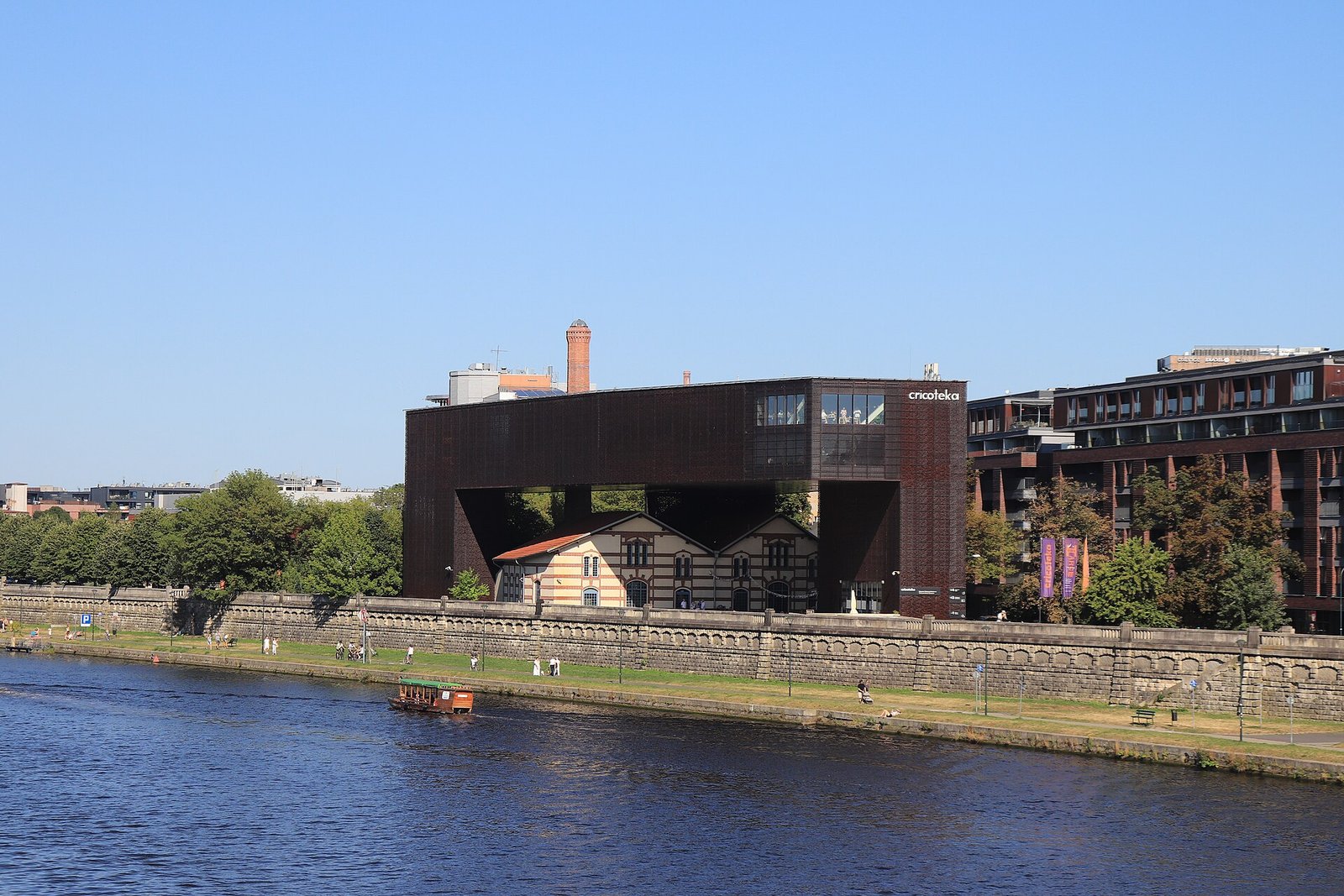
On the way back along the river, Cricoteka , the centre devoted to the theatre-maker Tadeusz Kantor, is the antidote for anyone who does not want a whole afternoon of wartime history.
Temporary exhibitions here
Hotel Forum
29 May 2026 - 10 January 2027
Krakow's brutalist Hotel Forum seen through its former staff: the guest book, a waiter's notebook, uniforms and recorded memories, at the Podgórze Museum.
Nearby museums
 History
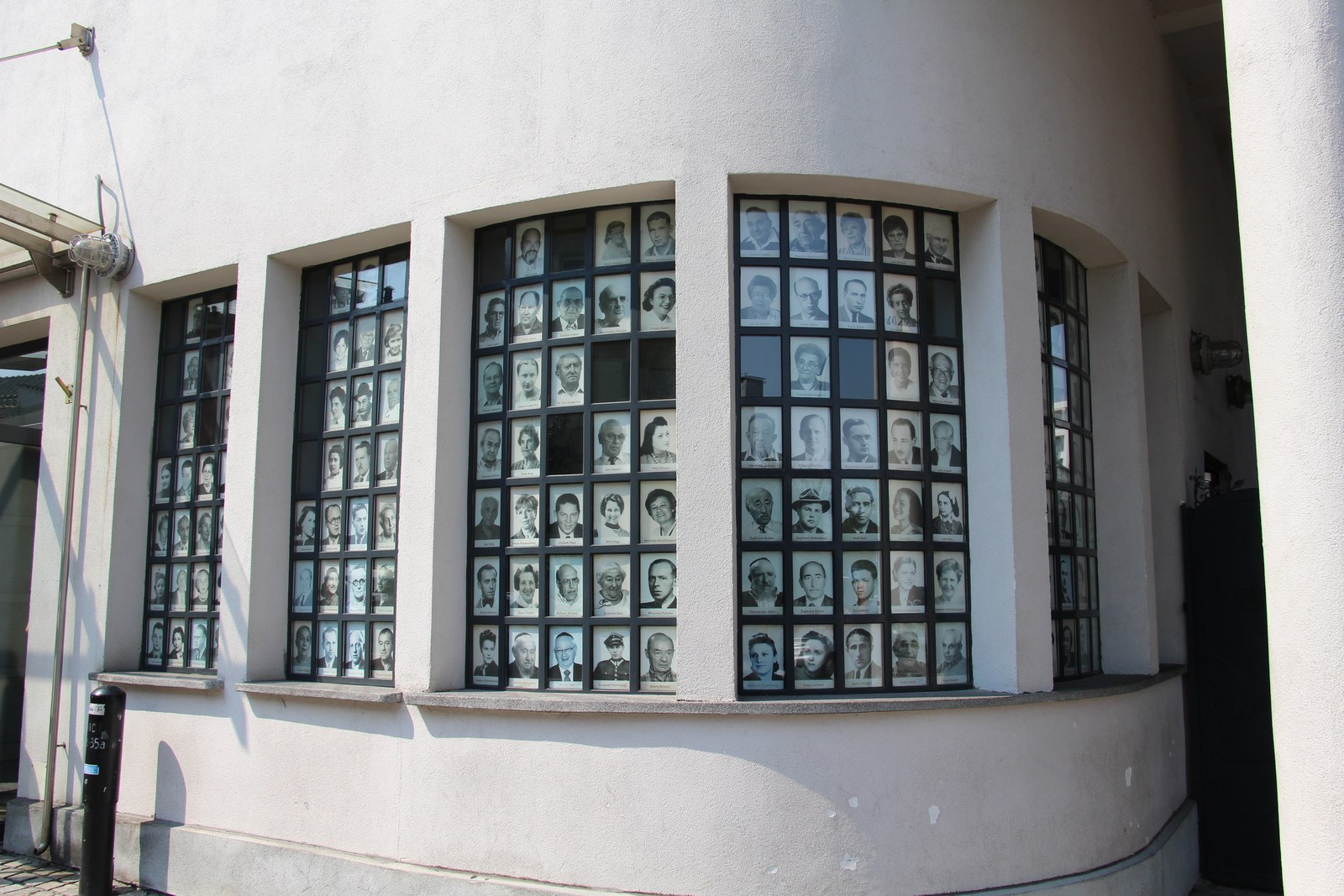
Oskar Schindler's Enamel Factory
ul. Lipowa 4, 30-702 Kraków
Schindler's Factory in Krakow - the story of the city under occupation 1939-1945. Opening hours, tickets 60/45 PLN, free Mondays, book timed …
 History
Eagle Pharmacy
plac Bohaterów Getta 18, 30-547 Kraków
Eagle Pharmacy in Krakow - museum of Tadeusz Pankiewicz's pharmacy in the Podgórze ghetto. Opening hours, tickets 22 PLN, free entry on …
 Art
ArtCricoteka - Centre for the Documentation of the Art of Tadeusz Kantor
ul. Nadwiślańska 2-4, 30-527 Kraków
Cricoteka Krakow: Tadeusz Kantor's stage machines and archive on the Vistula in Podgórze. Hours Tue-Sun 11-19, tickets PLN 25/15, free …