Jan Matejko House
Dom Jana Matejki
360 m from Rynek Główny in Krakow See museums near Rynek Główny in Krakow
- Wheelchair: No
- Elevator: No
Location
What to expect

Set your expectation before you pay: the famous paintings are not in the Jan Matejko House in Krakow. Jan Matejko (1838-1893) is the artist who fixed Polish history in the national imagination: battles, kings, coronations, canvases the size of a wall. They hang ten minutes away, in the Gallery of 19th-Century Polish Art in the Sukiennice . Floriańska 41 is the house itself, the one he was born in and died in.
You walk upwards along a single fixed route. The first floor holds the salon and the bedroom known as the room under the stars, after its blue star-painted ceiling; the neo-Renaissance furniture was bought in Venice. One floor up: the room where he was born, copies of King Kazimierz the Great’s crown and sceptre, textiles, costumes, documents and family photographs.
The third-floor studio, added in 1872-1873, is what people remember. Easels, palette, paint chest - and beside them the props Matejko assembled Polish history from: a life-size taxidermied horse he used as a model for the monumental canvases, with armour and weapons around it. The museum’s collection pages put the branch holdings at over 8,000 objects, while its English branch page says about 6,000; either way, only a fraction is on show, densely.
Best for visitors who already know who Matejko is and want the workshop rather than the finished work, and for anyone curious about how a well-off 19th-century Krakow household actually lived. These interiors are original, not reconstructed from photographs. Children under about ten get fifteen minutes out of the horse and the armour and then run out of interest.
Tips
- You may already own the ticket. A ticket to the Sukiennice gallery, the Czartoryski Museum or the National Museum’s Main Building includes free entry to this branch’s permanent exhibition. Show it at the desk instead of paying twice.
- Watch the 16:00 close. Tuesday is the only day open until 18:00; Wednesday to Sunday the museum closes at 16:00, and last entry is 20 minutes earlier. It’s an easy trap to fall into.
- Free Tuesday, with a limit. Free admission covers permanent exhibitions only, not temporary ones - and expect Tuesday to be busier, since entry is free.
- Allow 60 to 90 minutes. The route alone takes about 40 minutes. Read the labels and look at the drawings and two hours goes easily.
- Take the audio guide, 10 PLN. The branch page lists it in Polish only. Most of the objects only make sense with the story attached.
- Temporary show until 31 January 2027. “Satire and Comics by Jan Matejko” puts his caricatures and family cartoons on display - the lightest thing in the house, and not covered by the free Tuesday.
- Three flights of stairs, no lift. The branch is not accessible to wheelchair users, and the studio is at the very top. With a pushchair, expect to carry it.
- Family rates. A family ticket for up to four people is 36 PLN, pupils and students under 26 pay 1 PLN with a valid ID, and children under 7 enter free.
Getting there
On foot: from the Main Square walk up Floriańska towards St Florian’s Gate - three minutes, with number 41 closer to the gate. From Kraków Główny railway station it is under ten minutes through the Planty park and the gate.
Tram: lines 2, 3, 4, 8, 10, 14, 19, 20, 24 and 52 run the ring road around the Old Town. The nearest stop is Teatr Słowackiego; from there enter Floriańska through St Florian’s Gate.
Bus: 124, 152, 304, 424 and 502, on the same ring.
By car: Floriańska is pedestrianised, so there is no door-to-door access. Leave the car outside the Old Town ring - in the paid parking zone or at a Park & Ride site - and walk in.
Nearby
A dozen doors down at Floriańska 25, the Pharmacy Museum in Krakow offers the same format: a historic townhouse, narrow stairs, period rooms instead of screens. Two minutes north on ul. Pijarska stands the Czartoryski Museum with Leonardo’s “Lady with an Ermine” - its ticket also covers entry here, so the order you visit in affects what you pay. Across the Planty park on pl. Sikorskiego, the Wyspiański Museum in Krakow shows how far Matejko’s own student moved from him in a single generation.
Background
The townhouse dates from the 16th century. Matejko bought it in 1871 and spent two years rebuilding it; Tomasz Pryliński added the top-floor studio in 1872-1873. He had been born in the house in 1838, in a second-floor room later marked with a plaque. Its Latin line, “Saepe providet Deus, ut magna claudantur parvis”, says that God often arranges for great things to be enclosed in small ones.
After the painter’s death, the critic Marian Sokołowski argued in print that Krakow should have a house-museum on the model of the Raphael and Michelangelo memorials. The Jan Matejko Society, with a fundraising drive led by Prince Eustachy Sanguszko, bought the house back from the family on 7 November 1895. The salon and bedroom opened to visitors on 1 May 1896 and the full museum in 1898.
In 1904 the society handed the house to the city, and it has been a branch of the National Museum in Krakow ever since - the oldest biographical museum in Poland. It was thoroughly restored in 1953 and again in 2009.
Temporary exhibitions here
Satire and Comics by Jan Matejko
15 May 2026 - 31 January 2027
Jan Matejko's satirical drawings and caricatures, shown in his own house on Floriańska. Until 31 January 2027, included in the 18 PLN branch ticket.
All temporary exhibitions at this museum, past ones included
Temporary exhibitions on now in Krakow
Nowa Huta - Dimitrovgrad
10 September 2026 - 10 November 2026
An open-air show by the Nowa Huta Museum on Aleja Róż sets Nowa Huta beside Dimitrovgrad in Bulgaria, a town built from 1947. Until 10 November 2026.
Akitsushima. The Island of Dragonflies
19 July 2026 - 11 November 2026
The dragonfly in Japanese culture - from the country's oldest name to samurai symbolism - told through a collection of Japanese armour at the Manggha Museum.
Warrior Women: Japanese Herstories
19 July 2026 - 11 November 2026
Onna bugeisha - women trained in martial arts - in Japanese ukiyo-e prints. An exhibition at the Manggha Museum on strength, strategy and collective memory.
Tomasz Górnicki and Igor Dobrowolski. Underneath
24 October 2026 - 29 November 2026
Sculpture and painting on homelessness and depression in abandoned palace cellars at Piłsudskiego 4: Bunkier Sztuki, from 24 Oct 2026, booking, adults only.
Girls from the Clouds - 95th Anniversary of the 1st Women Aviators’ Rally around Poland
7 March 2026 - 30 November 2026
The 1931 rally of four women pilots around Poland: photographs and Maria Wardasówna's keepsakes in Hangar 5 of the Polish Aviation Museum, until 30 November.
Polish Design: Object Biographies / Designer Biographies
23 September 2026 - 13 December 2026
Sixteen Polish designers and studios, their work shown next to the personal things they live and work with. Bunkier Sztuki, Krakow, until 13 December 2026.
Nearby
 Science
Pharmacy Museum of the Jagiellonian University
ul. Floriańska 25, 31-019 Kraków
Pharmacy Museum Krakow at Floriańska 25 - historic apothecary interiors from cellar to attic. Hours (Tue-Sat), tickets 16/10 PLN.
 Art
Czartoryski Museum
ul. Pijarska 15, 31-015 Kraków
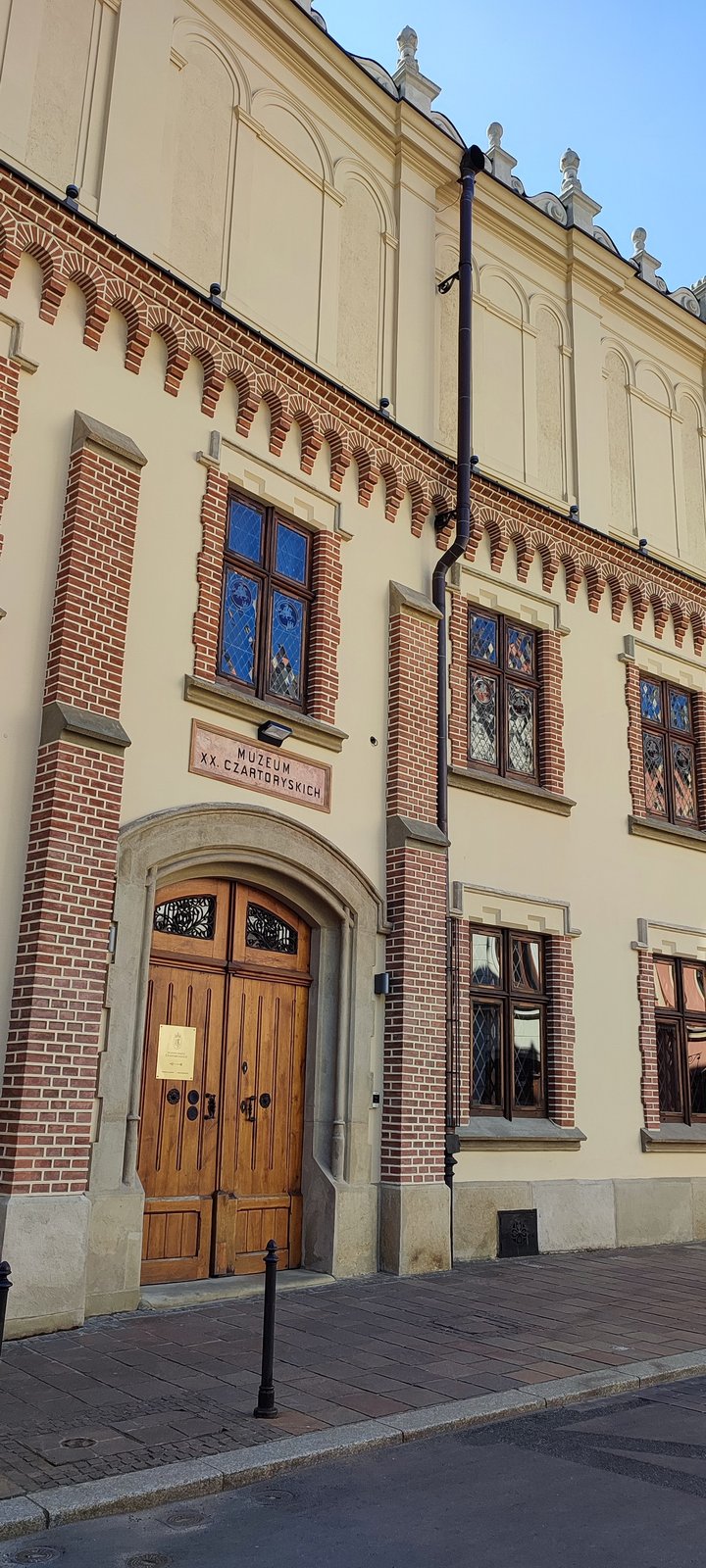
Czartoryski Museum in Krakow - Leonardo's Lady with an Ermine. Open Tue-Sun 10:00-18:00, tickets 65/50 PLN, free entry on Tuesdays.
 Art
Stanisław Wyspiański Museum
pl. Sikorskiego 6, 31-115 Kraków
Wyspiański Museum Krakow - the world's largest collection of his art. Hours (Tue, Thu-Sun), tickets 18/14 PLN, free Tuesdays.