Jagiellonian University Astronomical Observatory (Fort Skała)
Obserwatorium Astronomiczne UJ (Fort Skała)
7.9 km from Rynek Główny in Krakow See museums near Rynek Główny in Krakow
- Every evening needs a reservation through a form on the Observatory's website; the form appears only during a short registration period and only for the next evening.
- The Observatory's English page says space at the evenings is limited.
- The observation domes are not heated and the Observatory asks visitors to dress warmly.
- The Observatory recommends bus 102 to the "Obserwatorium" stop, 50 m from the entrance gate.
- According to the UJ accessibility statement, a wheelchair user can enter by a ramp at one of the two entrances; there are no lifts and no toilet for people with disabilities.
Location
What to expect
The Jagiellonian University Astronomical Observatory in Fort Skała is not a museum with a ticket desk and fixed opening hours but a working research institute that opens to the public for evenings with compulsory registration. It is an institute of the Faculty of Physics, Astronomy and Applied Computer Science of the Jagiellonian University, bears the name of Nicolaus Copernicus and is housed in a former fort about 10 km west of the centre of Krakow.
An evening of the “Wieczory z gwiazdami” (Evenings with the Stars) series consists of a popular-science lecture, a question session (“astronomia w pytaniach”, astronomy in questions), the permanent meteorite exhibition and a tour of the Observatory. In suitable weather there are also observations through a 35 cm Maksutov telescope or a 20 cm Grubb refractor, so on a cloudy evening you are left with the indoor part only.
On Google Maps the Observatory has 4.7 out of 5 from 118 reviews (read on 31 October 2026), and the reviews read are mostly about the open evenings and the lectures.
Who it is for: anyone curious about astronomy who wants to hear a lecture and, if the sky allows, look through a professional telescope, and also families, as Google Maps describes the place as suitable for children. Schools and preschools can arrange a separate daytime visit, combined in clear weather with a show of the active Sun through a telescope.
Who should skip it: anyone who wants to drop in on the spur of the moment, because without a reservation through the form you will not get in, and the form is available only during a short registration period and only for the next evening. Skip it too if you are looking for a museum with a half-day exhibition: the meteorite exhibition is one item of the evening, not a separate attraction.
How long: allow about two hours on site. This is our estimate, based on the programme of the evening, which has five parts: the lecture, the questions, the meteorite exhibition, the tour and, in good weather, the observations.
Tips
- Watch for the booking window. Every evening requires a reservation through the form on the Observatory’s website, available only during a registration period that is usually very short and only for the next evening. Confirmation arrives within 24 hours, and the dates of the evenings and the start of registration are given in the schedule on the same page.
- Dress as for outdoors. The observation domes are not heated and observations are made in the conditions outside, so the Observatory itself asks you to dress warmly.
- The weather decides on the telescopes. Observations take place only in suitable weather; on a cloudy evening you still get the lecture, the questions, the exhibition and the tour.
- Admission and places. According to the Observatory’s website admission is free. There are few places, though: the English version of the site warns that space is limited.
- A separate phone line for the evenings. For questions about the evenings the Polish page gives the number +48 12 623 8637; the Observatory’s main number is in the practical box.
- School groups arrange visits by e-mail. Schools and preschools are received on selected days of the week after contacting press@oa.uj.edu.pl.
- Wheelchair: entrance yes, toilet no. The university-wide UJ accessibility statement, linked from the Observatory’s website, mentions a ramp at one of the two entrances, but also the lack of lifts and of a toilet for people with disabilities. Google Maps also lists a wheelchair-accessible entrance.
Getting there
The Observatory stands at ul. Orla 171, 30-244 Kraków, in Fort Skała, about 10 km west of the city centre.
- Bus: the Observatory itself recommends line 102 to the “Obserwatorium” stop, which according to its contact page is 50 m from the entrance gate. According to the MPK Kraków timetable, the “Obserwatorium” 01 and 02 stops are served by this one line only.
- Tram: according to the ZTP Kraków timetable there is no tram stop within 1800 m of the Observatory, so by tram you will get at most to a change to a bus.
- On foot: ul. Orla is narrow and has no pavements for a long stretch, which for an evening visit is a reason to take the bus right to the gate.
- By car: the Observatory has a very small car park. The UJ accessibility statement provides no spaces for people with disabilities.
Nearby
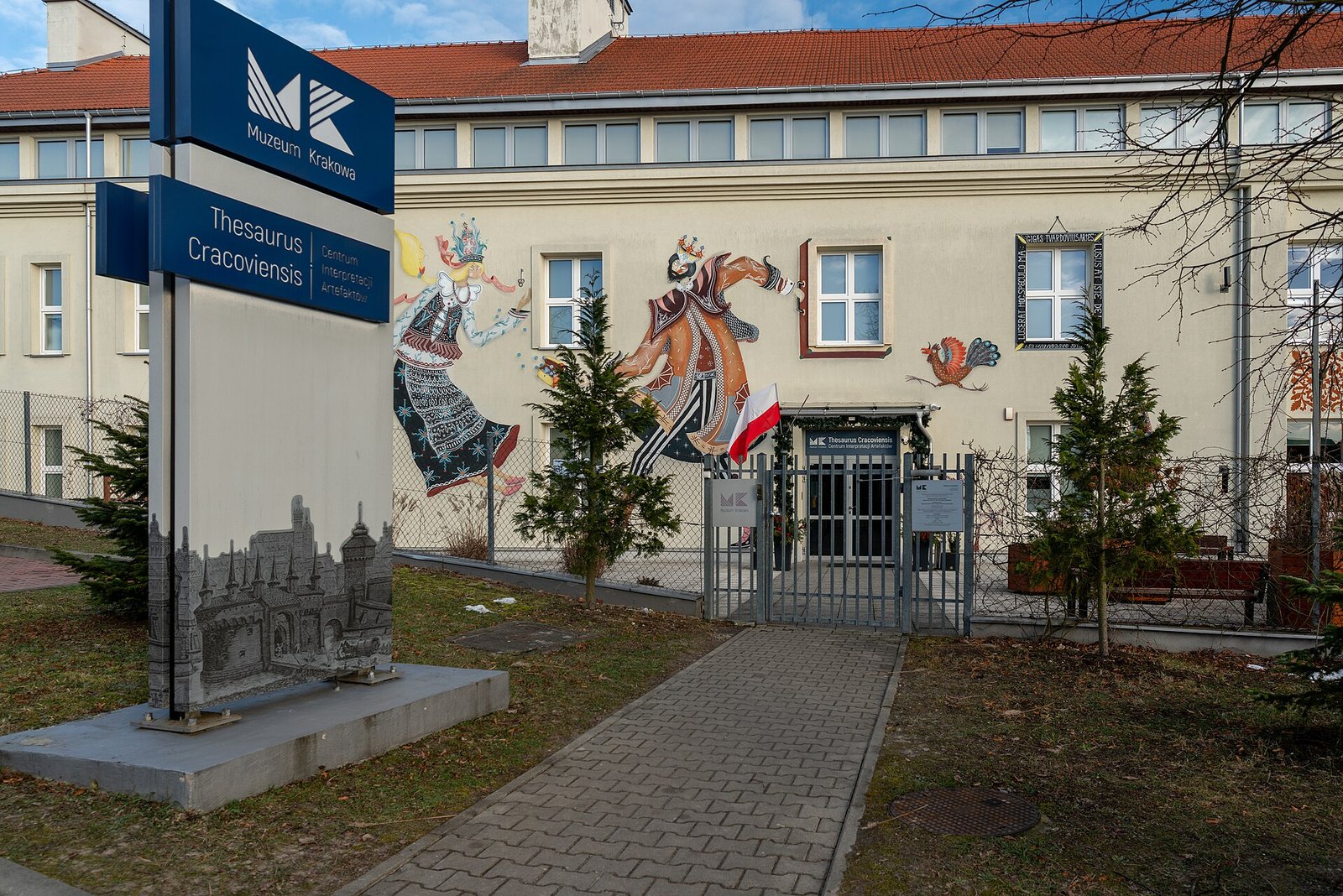
Closest, about 1.1 km in a straight line, at ul. Księcia Józefa 337, is Thesaurus Cracoviensis.
About 1.7 km from the Observatory, at Aleja Kasy Oszczędności Miasta Krakowa 14, is Krakow Zoo, which according to the Polish Wikipedia stands on Pustelnik hill in the Wolski Forest (Las Wolski).
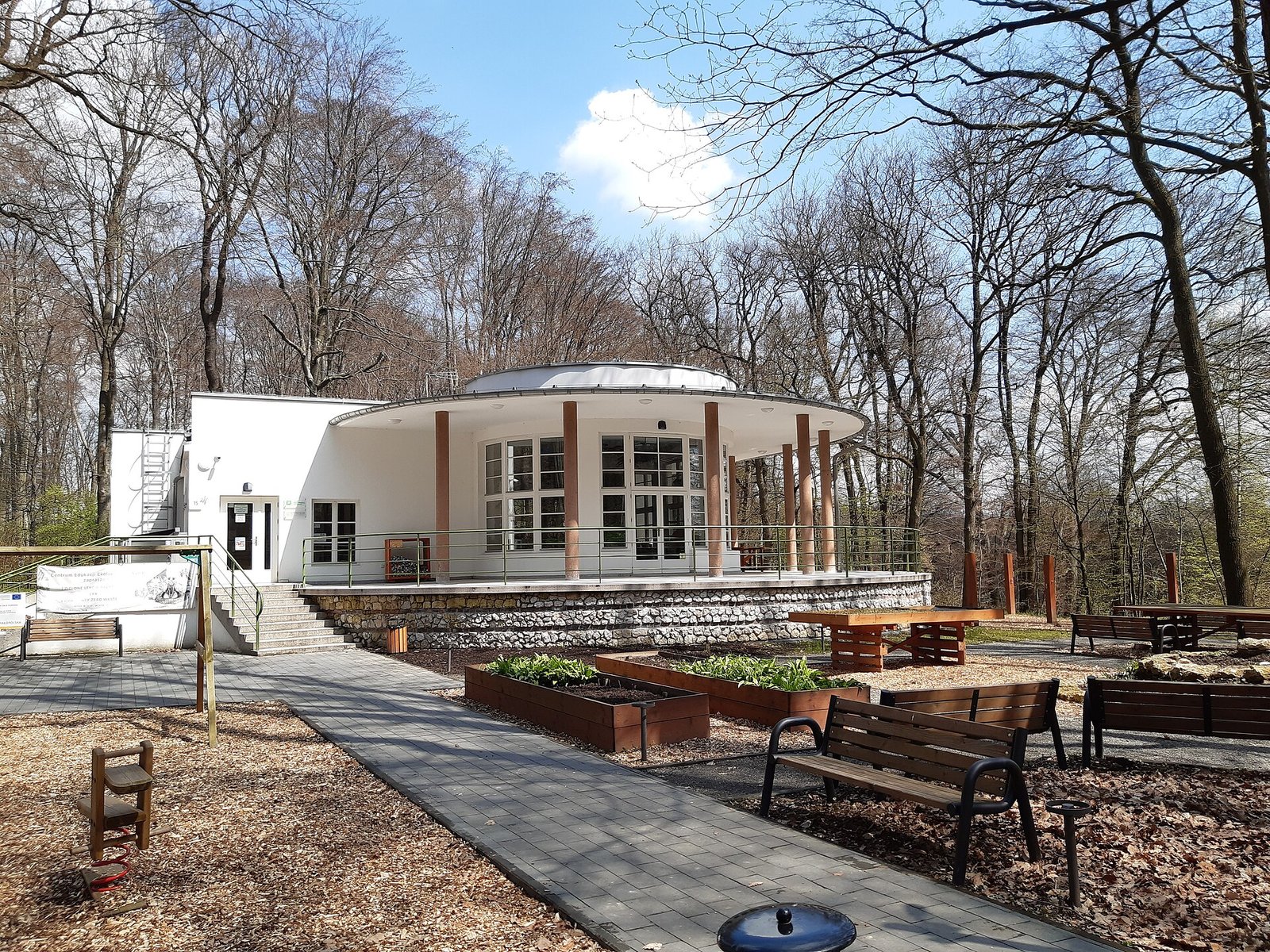
A little further, about 1.8 km, at Aleja Żubrowa 15, is the Symbioza Ecological Education Centre.
Background
The domes and telescopes you see during the evening stand in a former fort, not in a historic university building. The Observatory itself is much older than this seat: according to its website it was founded in 1792, and the Jagiellonian University in 1364.
According to the Polish Wikipedia, in May 1953 Prof. Banachiewicz obtained Fort Skała with the land around it from the military authorities, and in May 1964, for the university’s 600th anniversary, the Nicolaus Copernicus Astronomical Observatory was opened here. Today it is an institute of the Faculty of Physics, Astronomy and Applied Computer Science of the Jagiellonian University.
Outside the series of evenings, in 2026 the Observatory also opened for events: in May, for the Copernicus Festival, it announced a tour of the observation domes, professional telescopes and the 15-metre radio telescope, and in September it invited visitors to the Małopolska Researchers’ Night (Małopolska Noc Naukowców).
Temporary exhibitions on now in Krakow
Tomasz Górnicki and Igor Dobrowolski. Underneath
24 October 2026 - 29 November 2026
Sculpture and painting on homelessness and depression in abandoned palace cellars at Piłsudskiego 4: Bunkier Sztuki, from 24 Oct 2026, booking, adults only.
New Forms, Old Inspirations - An Exhibition of Ceramics and Linocuts
30 October 2026 - 30 November 2026
Ceramics and linocuts by art therapy group participants, inspired by old and contemporary masters. A free exhibition at Krzysztofory Palace, Krakow.
Polish Design: Object Biographies / Designer Biographies
23 September 2026 - 13 December 2026
Sixteen Polish designers and studios, their work shown next to the personal things they live and work with. Bunkier Sztuki, Krakow, until 13 December 2026.
Zofia Kulik. Instead of Sculpture. Footnotes
3 October 2026 - 20 December 2026
Zofia Kulik's 1971 diploma: nearly 500 slides instead of a sculpture, shown in a Polish museum for the first time. MuFo Rakowicka, 3 Oct - 20 Dec 2026, 5 PLN.
Vincent van Gogh: Country Cottages Among the Trees
29 January 2026 - 31 December 2026
The only van Gogh in a Polish public collection: a small 1883 landscape in the National Museum in Krakow, on view until 31 December 2026, on the branch ticket.
In the Paris Atelier of Stanisław Wyspiański and Józef Mehoffer
26 June 2026 - 31 December 2026
Wyspiański and Mehoffer drawing each other in 1890s Paris, plus a pastel of their studio: a small display at the Wyspiański Museum, 18 PLN, until 31 Dec 2026.
Nearby
 History
Thesaurus Cracoviensis
ul. Księcia Józefa 337, 30-243 Kraków
Thesaurus Cracoviensis in Krakow - the Museum of Krakow's visitable collection store in Bielany. Saturday guided tours only, tickets 28 PLN.
Krakow Zoo in the Las Wolski forest - getting there, parking and tips
Aleja Kasy Oszczędności Miasta Krakowa 14, 30-232 Kraków
Krakow Zoo in the Las Wolski forest: feeding shows, an accessible route, bus 134 to the gate and the Łysa Góra car park. Who it suits and …
Not a museum, but worth a visit
 Science
Symbioza Ecological Education Centre
Aleja Żubrowa 15, 30-232 Kraków
Symbioza Ecological Education Centre in Krakow's Wolski Forest. Nature exhibitions, workshops and forest walks. Opening hours, tickets 20/15 …