Andrzej Pawłowski. Kineforms
from 16 February 2026
A one-room show in the flat where Tadeusz Kantor spent his last working years brings back the kineforms. These were abstract moving images of light that Andrzej Pawłowski played live from a hand-operated projector in the 1950s, including on the stage of Kantor’s Cricot 2 theatre. It opened on 16 February 2026, forty years to the day after the artist’s death, and Cricoteka has not announced a closing date.
Cricoteka on the exhibition (translated from the museum’s Polish description; no English page for this exhibition was found on the museum’s site):
Recalling Andrzej Pawłowski’s kineforms, a pioneering phenomenon of Polish modern art from 70 years ago, the exhibition at the Tadeusz Kantor Gallery-Studio shows: the original projector used for their improvised animations on the stage of the Cricot 2 theatre, the author’s own record of them, the film “Kineforms”, and period documents: posters, press articles, photographs, photograms by Pawłowski and memorabilia connected with the history of the kineforms.
What to expect
This is a small exhibition: one gallery next to the room where Kantor worked from 1987 to 1990. That room is the permanent part of the display and shares the ticket. A visit therefore gives you two things at once: Kantor’s studio as he left it, and a machine built by the man who had once been his assistant.
What to look at:
- The original Cricot 2 projector - according to Cricoteka, the stage version of the machine was built of sheet metal and held the models and a set of movable lenses. The image was thrown onto the screen from behind, so the audience never saw the device itself.
- The film “Kineforms” (1957) - camera by Kazimierz Konrad, music by Adam Walaciński. It runs 6 minutes 45 seconds (per the film collection of the Museum of Modern Art in Warsaw); watch it through, because it is the record of what the projector actually put on the screen.
- Period posters and press articles - evidence of how the kineforms were received in the 1950s. Cricoteka notes that the film won an award at Expo 58 in Brussels and was screened at Oberhausen.
- Pawłowski’s photograms - camera-less abstract photographs he was making at the same time. The whole method grew out of the same experiments with light.
Context
Andrzej Pawłowski (1925-1986), born in Wadowice, was a painter, sculptor, photographer and designer. As a student at the Kraków Academy of Fine Arts he assisted Kantor, and he co-founded the post-war Kraków Group of artists. In the early 1960s he set up the Academy’s industrial design studio, which grew into its Faculty of Industrial Forms. He taught there and was twice its dean, the second time until 1986.
The kineforms were live improvisation. Inside the projector he moved scraps of cellophane and paper and a set of distorting lenses by hand. The screen filled with fluid abstract shapes, set to taped music by Bach, Honegger and the Peruvian singer Yma Sumac. At Cricot 2 he was a performer as well as an inventor: he acted in Kantor’s staging of Witkacy’s play “The Cuttlefish”.
Tickets and time
This is not the main Cricoteka building. The Gallery-Studio is at ul. Sienna 7/5 (intercom 8), in the Old Town, on a street leading off the Main Market Square. Cricoteka’s landmark building is across the Vistula in Podgórze - make sure you head for the right address.
Open Monday to Wednesday only, until 18:00, last entry 17:45. The museum gives two opening times: its price list and ticket shop say 11:30, while the Gallery-Studio page and the practical-information page say 11:00. Arrive after 11:30 and you will find the door open whichever is current.
Tickets: 10 PLN regular, 5 PLN reduced, free on Wednesdays. One ticket covers both displays at this branch, Kantor’s room and the kineforms; it is separate from the main building’s ticket. Kraków Card holders pay the reduced price for a regular ticket. Tickets are sold in Cricoteka’s online shop (listed as “Wystawy w Galerii-Pracowni Tadeusza Kantora”). If nobody answers the intercom, the museum asks you to ring again and wait a moment - a guided tour may be in progress inside.
Go on a Wednesday. The main building opens Tuesday to Sunday, so Tuesday and Wednesday are the only days both addresses are open - and on Wednesday Sienna and the main building’s permanent display are free. Allow 30-40 minutes at Sienna, film included.
English on site: Cricoteka does not say whether the labels are in English, and its English website has no page for this exhibition; the online virtual tour of the Gallery-Studio is available in English.
Worth it if you care about Kantor and Cricot 2, early experimental film or the history of Polish design. If you want a large painting show, you will be done in fifteen minutes and wish you had gone elsewhere.
What the press says
e-teatr.pl (12 Feb 2026, material supplied by the museum): an opening announcement based on Cricoteka’s press release, adding the Gallery-Studio’s opening hours and ticket price - link (Polish-language source).
Teatr dla Wszystkich (11 Feb 2026, material supplied by the museum): the same announcement as edited by a theatre portal, which traces the kineforms back to the “creative failure” of an epidiascope theatre - link (Polish-language source).
No review has appeared in the cultural press so far; both pieces are announcements based on the museum’s own material.
Updates
- 22 Sep 2026 - page created. Checked against Cricoteka’s own pages: opening 16 Feb 2026; the show is still on the museum’s price list (“temporary exhibition from 16 February 2026”) and in its ticket shop; no closing date is published (source: ticket prices ).
See also
- Cricoteka - the main building on the Vistula and the permanent display “Kantor. Vision Therapy”; this is where you meet the theatre that took Pawłowski’s kineforms on stage.
- National Museum in Krakow - Main Building - its 20th- and 21st-century gallery hangs Kantor, Jarema and Nowosielski, the circle of the Kraków Group that Pawłowski co-founded.
- I Was Tadeusz Kantor’s Assistant. Andrzej Wajda - until 10 January 2027 Cricoteka shows documents from Wajda’s work on the film of “The Dead Class” in the Galeria Szatnia of its main building. This is the same Wajda who watched Pawłowski’s home trials of the kineforms in 1956 and urged him to keep going.
Tickets, opening hours, and current details are on the Cricoteka website .
Museum profile: Cricoteka .
Curator
Jan Trzupek
Tickets and access
Check ticket prices and opening hours in the Cricoteka - Centre for the Documentation of the Art of Tadeusz Kantor profile.
Nearby
 History
Eagle Pharmacy
plac Bohaterów Getta 18, 30-547 Kraków
Eagle Pharmacy in Krakow - museum of Tadeusz Pankiewicz's pharmacy in the Podgórze ghetto. Opening hours, tickets 22 PLN, free entry on …
 Science
Museum of Engineering and Technology
ul. Świętego Wawrzyńca 15, 31-060 Kraków
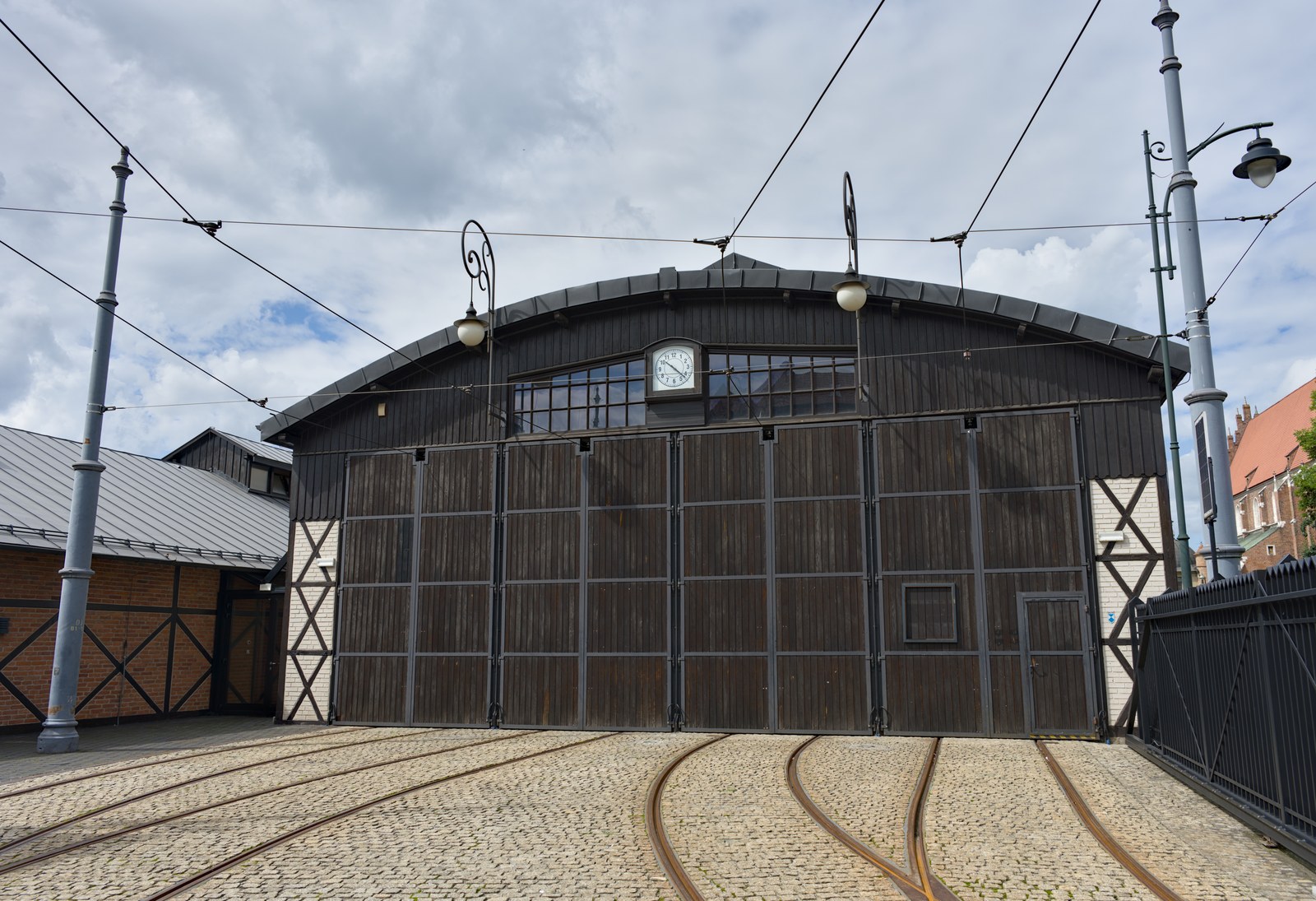
Museum of Engineering and Technology Krakow in a historic tram depot. Hours Tue-Sun 10-18, tickets PLN 35/28, free on Tuesdays.
 History
Galicia Jewish Museum
ul. Dajwór 18, 31-052 Kraków
Galicia Jewish Museum in Krakow's Kazimierz - Jewish Galicia told through photography. Open daily 10:00-18:00, tickets 35 PLN, how to get …
 History
Old Synagogue
ul. Szeroka 24, 31-053 Kraków
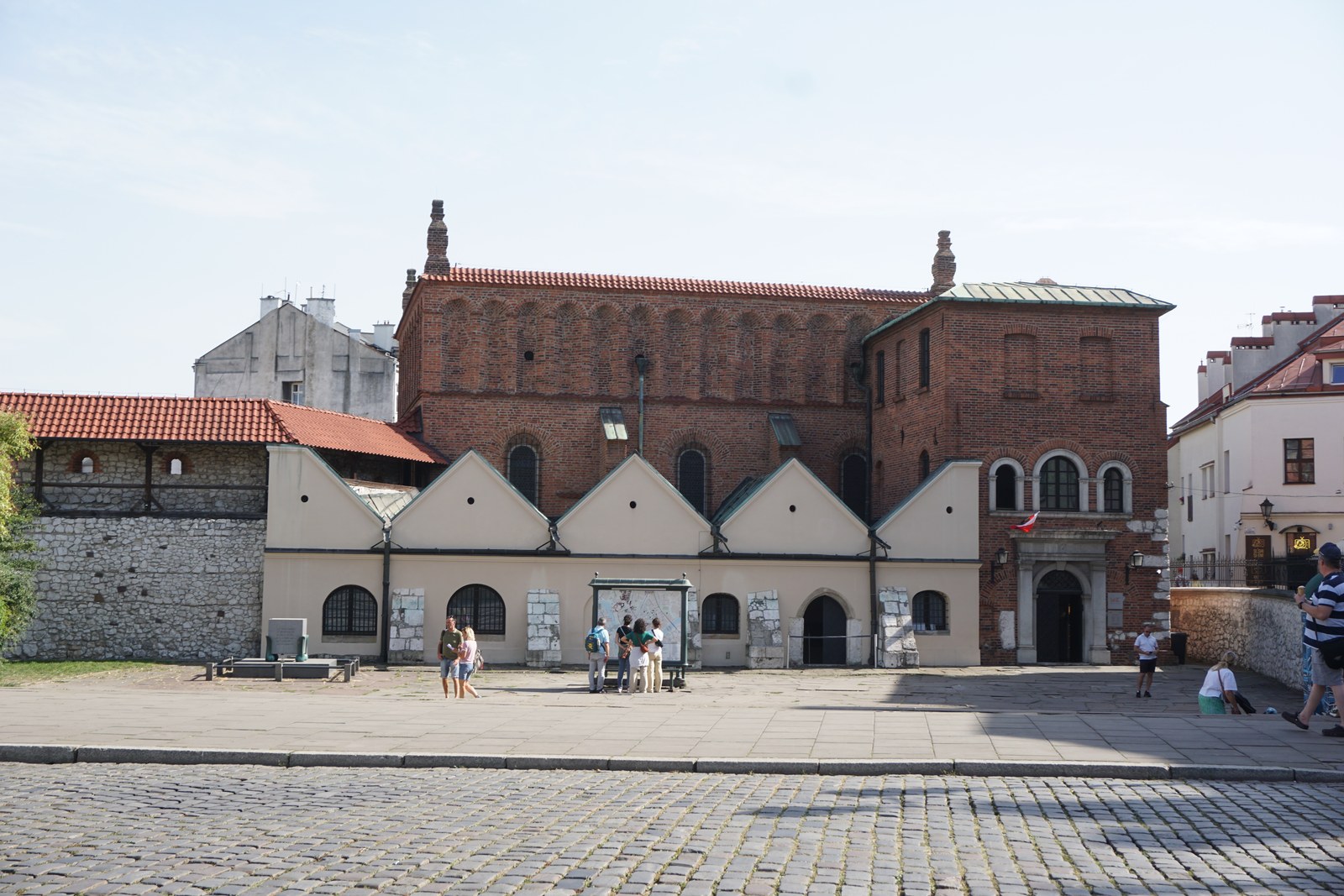
The Old Synagogue in Krakow's Kazimierz - Poland's oldest surviving synagogue, now a museum. Opening hours, tickets 22 PLN, free entry on …
 Culture
Brother Albert Museum in Krakow
ul. Krakowska 43, 31-066 Kraków
Brother Albert Museum in Krakow honours St Adam Chmielowski, painter turned servant of the poor, at the Albertine Friars' house on ul. …
 Culture
Wheels & Heels Barbie and Toy Car Museum in Krakow
ul. Kupa 6, 31-057 Kraków
Barbie museum in Krakow's Kazimierz: nearly 1,000 dolls and over 9,000 toy cars on Kupa Street. Who it suits, how long to allow, family …
Temporary exhibitions on now in Krakow
Nowa Huta - Dimitrovgrad
10 September 2026 - 10 November 2026
An open-air show by the Nowa Huta Museum on Aleja Róż sets Nowa Huta beside Dimitrovgrad in Bulgaria, a town built from 1947. Until 10 November 2026.
Akitsushima. The Island of Dragonflies
19 July 2026 - 11 November 2026
The dragonfly in Japanese culture - from the country's oldest name to samurai symbolism - told through a collection of Japanese armour at the Manggha Museum.
Warrior Women: Japanese Herstories
19 July 2026 - 11 November 2026
Onna bugeisha - women trained in martial arts - in Japanese ukiyo-e prints. An exhibition at the Manggha Museum on strength, strategy and collective memory.
Tomasz Górnicki and Igor Dobrowolski. Underneath
24 October 2026 - 29 November 2026
Sculpture and painting on homelessness and depression in abandoned palace cellars at Piłsudskiego 4: Bunkier Sztuki, from 24 Oct 2026, booking, adults only.
Girls from the Clouds - 95th Anniversary of the 1st Women Aviators’ Rally around Poland
7 March 2026 - 30 November 2026
The 1931 rally of four women pilots around Poland: photographs and Maria Wardasówna's keepsakes in Hangar 5 of the Polish Aviation Museum, until 30 November.
Polish Design: Object Biographies / Designer Biographies
23 September 2026 - 13 December 2026
Sixteen Polish designers and studios, their work shown next to the personal things they live and work with. Bunkier Sztuki, Krakow, until 13 December 2026.