Romanesque Cellar (Branch of the Archaeological Museum in Gdansk)
Piwnica Romańska (Oddział Muzeum Archeologicznego w Gdańsku)
443 m from Długi Targ in Gdansk See museums near Długi Targ in Gdansk
- Wheelchair: No
- English labels: The permanent exhibition is prepared in two language versions, Polish and English.
- Visits start every 30 minutes in groups of up to 10 people.
- The entrance is a green pavilion on plac Dominikański, by the Gdańsk Market Hall (Hala Targowa); the exit is through a second pavilion.
- There is no visitor toilet and no room to leave a pram at the ticket desk; guide dogs are admitted, and there are chairs to rest on.
Location
What to expect
The Romanesque Cellar (Piwnica Romańska) in Gdansk is the underground part of the former Dominican monastery, tucked under Dominikański Square next to the Market Hall and run as a branch of the Archaeological Museum in Gdansk. Polish Wikipedia calls this Romanesque refectory, the monks’ former dining hall, the oldest surviving enclosed interior in Gdansk. It measures 52 m², so this is an intimate visit, not a large exhibition.
The route follows a fixed order: you go down a flight of stairs into the former monastery rooms, see the cellars and the permanent exhibition “Najstarsze dzieje Kępy Dominikańskiej” (The Earliest History of Dominican Island), and come back up by a second flight of stairs, in a separate pavilion. A film about the history of the site is shown in the exhibition, and the whole display comes in Polish and English versions.
The museum writes that the cellar, together with the display of the foundations of the Romanesque St Nicholas church in the Market Hall, forms “a complex unique in Poland presenting the oldest monuments of masonry architecture”. Both displays sit on the same square, so if you came for one, look in on the other too. The Gdansk blog kroplamorza.pl notes that although the monument lies in the city centre, it is easy to miss.
Who it suits: anyone curious about medieval Gdansk and archaeology, visitors from abroad included, since the exhibition is prepared in Polish and English. Small groups of up to ten people make it easier to look around the cramped interior at a calm pace.
Who should skip it: wheelchair users. The route has multi-step stairs, walkways and narrow passages, there is no lift in the building, and the museum itself says the exhibition is practically inaccessible to them. With a small child in a pushchair it will be hard too: there is no room at the ticket desk to leave a pram.
How long: the museum gives no visit time. A single route through a 52 m² interior, with a film along the way, and group entries every half hour make this a short stop that is easy to fit between other points of a walk around the city. Plan to arrive for the next group entry rather than at the end of the day.
Tips
- Entry every half hour. Visits start every 30 minutes in groups of at most 10 people, so arriving just after a group has set off means waiting for the next one. Last entry: 30 minutes before closing.
- Tickets online and at the desk. Prices: standard ticket 10 PLN (about 2 EUR), reduced 7 PLN (about 2 EUR). Normal and reduced tickets can be bought online or at the desk; the family ticket (for at most five people: two adults and one to three children) and all other ticket types are sold only at the museum desk, and its price is in the museum’s price list.
- The no-charge day is desk-only. The museum’s price list gives: free admission on Sundays. You collect the ticket for that day at the desk, because only normal and reduced tickets are sold online.
- Tourist Card and KDR. The Gdansk Tourist Card (Karta Turysty) with the “Odkrywca” or “Odkrywca Premium” package lets you visit without a ticket, and the Karta Dużej Rodziny (the Large Family Card) entitles you to a reduced ticket.
- Look for the green pavilion. The entrance is on Dominikański Square, by the Gdansk Market Hall: you go in through a green pavilion marked with a sign and down to the underground rooms, and you leave through a second pavilion.
- Use the toilet before you come. The branch has no visitor toilet and no facilities for visually impaired visitors. It does have chairs to rest on, and guide dogs are welcome.
- Closing days in the box. Regular closing day: closed on Mondays. The museum also closes the cellar on several holidays; you will find the list in the practical box.
Getting there
- Address: pl. Dominikański 1, 80-844 Gdańsk; according to the e-turysta.pl portal, the cellar lies in the Main Town (Główne Miasto), right under Dominikański Square.
- Bus line 100: according to the ZTM Gdańsk timetable (valid 11-25 November 2026), the nearest stops are “Targ Drzewny 01” (about 214 m), “Targ Chlebowy 01” (about 235 m) and “Katarzynki 01” (about 236 m), and further away “Żuraw 01” (about 379 m); line 100 serves all of them.
- Tram: the stops “Brama Wyżynna 01” (about 419 m) and “Brama Wyżynna 02” (about 439 m) are served by tram lines 2, 3, 6, 7, 8 and 9.
- Other buses: from the “Brama Wyżynna 05” stop (about 399 m) lines including 106, 111, 112, 123, 132, 138, 154, 166, 178, 186, 189, 212 and 289 run, and from “Brama Wyżynna 03” (about 411 m) lines 108, 183 and 208; night buses also serve both.
Nearby
The nearest museums covered on this site (straight-line distances):
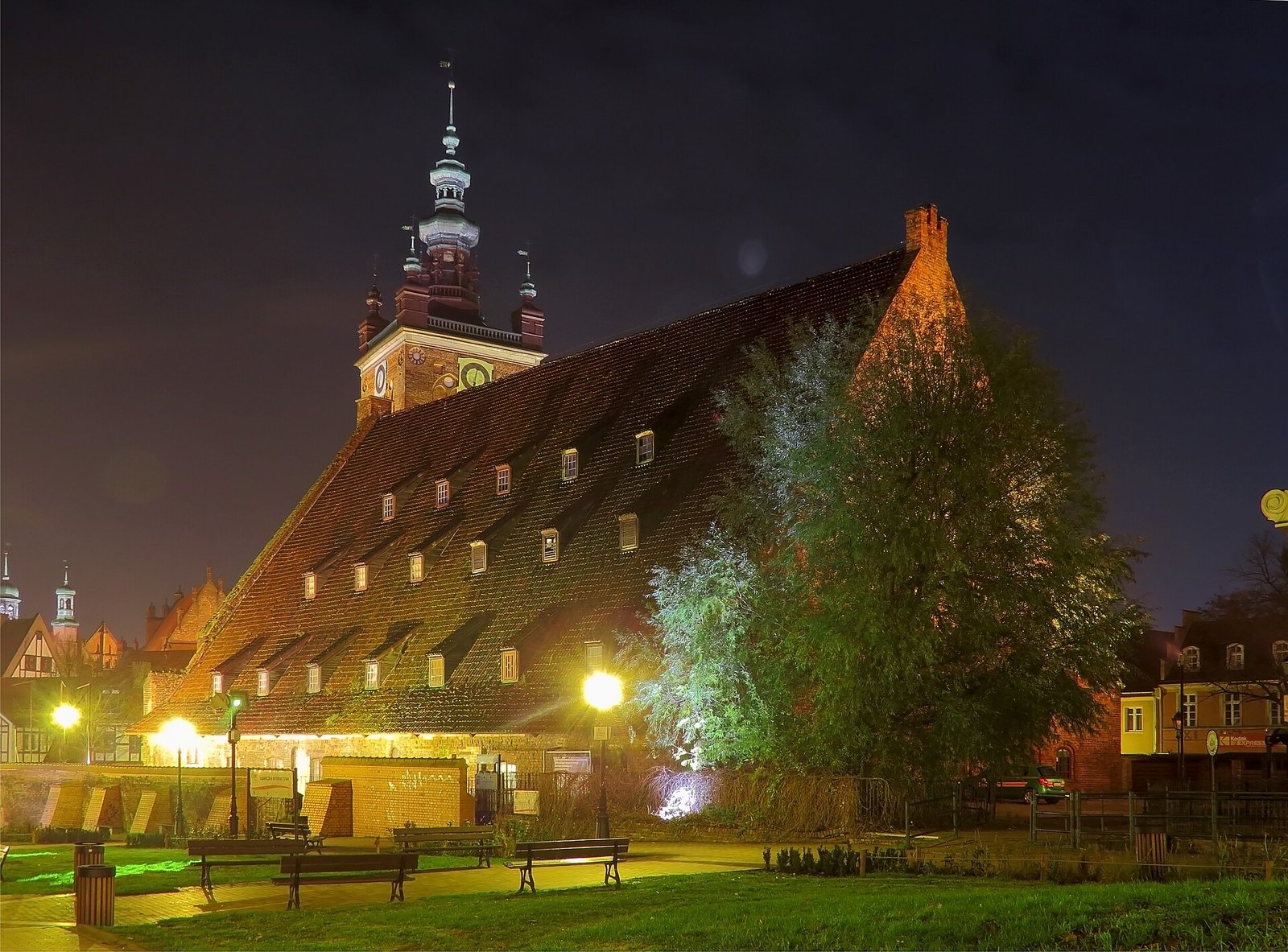
- Museum of Amber, Wielkie Młyny 16 - about 220 m. A second medieval address on the same walk: the Great Mill was built by the Teutonic Knights around 1350, and for the two floors of the exhibition the museum gives a visit time of about 2 hours. Unlike the cellar, the building is accessible to wheelchair users, according to the museum.
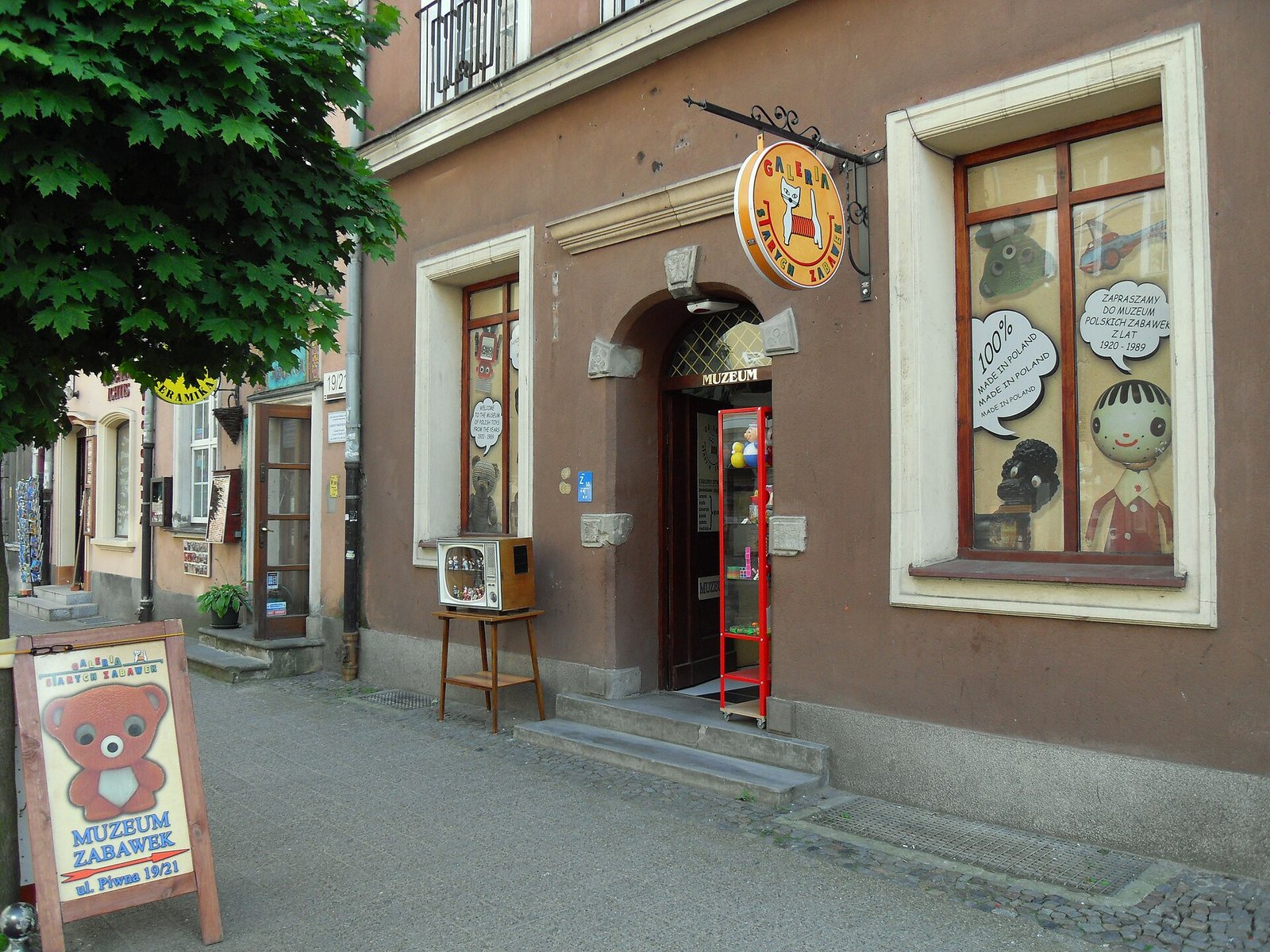
- Gallery of Old Toys, ul. Piwna 19/21 - about 280 m. A private museum of Polish toys from 1920-1989, which presents itself as an attraction for children and a return to childhood for adults; a good follow-up for a family after the archaeology.
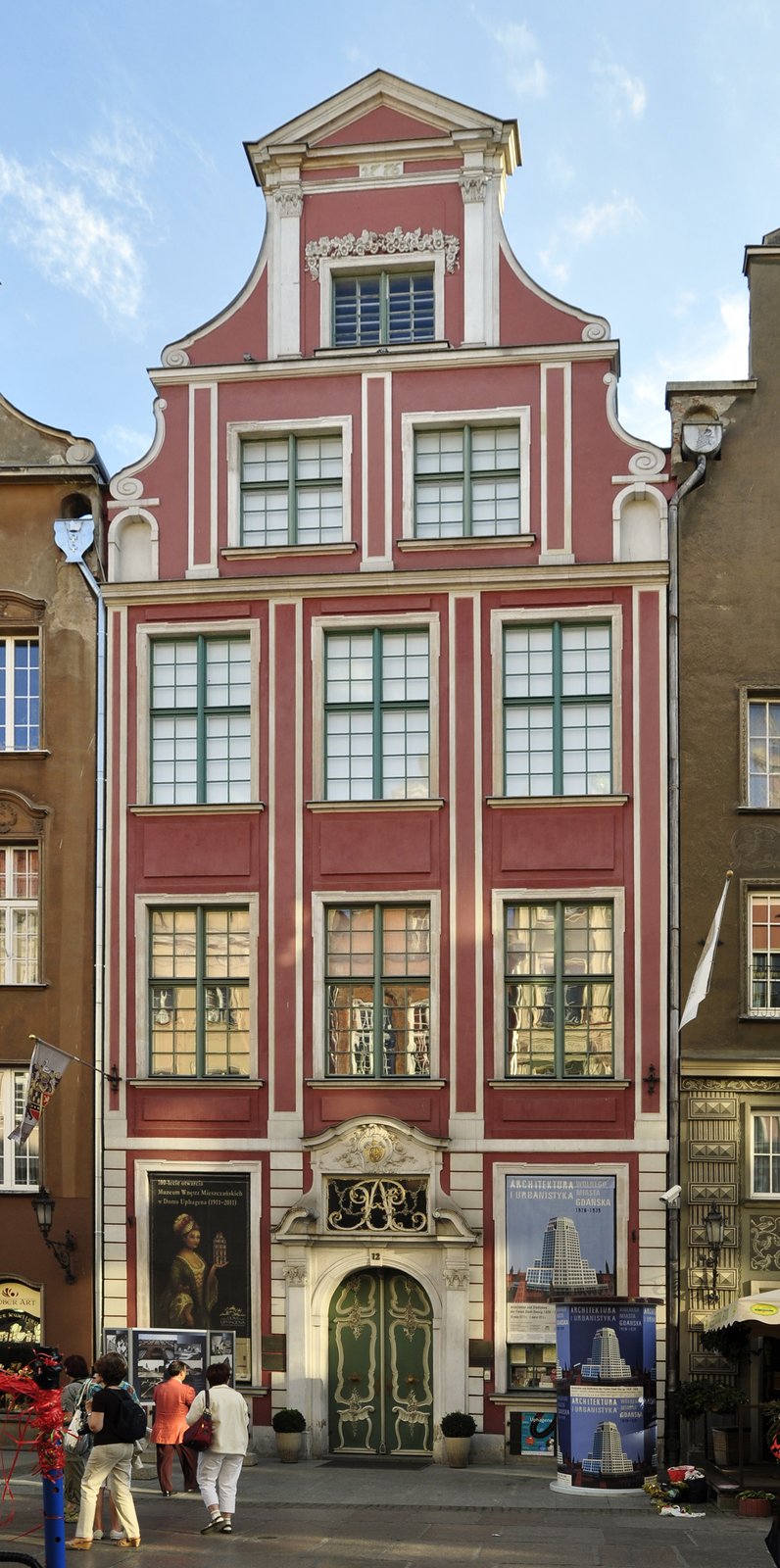
- Uphagen House, ul. Długa 12 - about 380 m. Interiors from a completely different era: according to the museum, it is the only 18th-century burgher townhouse in Poland open to visitors, and it suggests at least 30 minutes for a visit.
Background
What you see under the square today long remained unknown. The museum states that the cellar was discovered at the turn of 2005 and 2006, archaeologically studied in 2007-2008 and opened to visitors on 30 December 2014; Polish Wikipedia dates the discovery itself to 2005.
Wikipedia describes the cellar as a Romanesque refectory, a dining hall that once belonged to the Dominican monastery. The regional portal pomorskie.travel writes of the authentic interior of a 13th-century monastery, hidden below the level of the modern city. The blog kroplamorza.pl calls it a relatively little-known monument, open to visitors since the end of 2014.
Temporary exhibitions on now in Gdansk
Space for Health. Hospitals in Gdansk 1793-1945
9 July 2026 - 31 January 2027
An exhibition on Gdansk hospitals from 1793 to 1945, from the Municipal Lazaret to sanatoria, on the second floor of Uphagen House. Museum of Gdansk.
Nearby
 Science
Amber Museum in Gdansk: the Museum of Amber in the Great Mill
Wielkie Młyny 16, 80-849 Gdańsk
Amber Museum in Gdansk, in the medieval Great Mill: over 1000 exhibits on two floors, from how amber forms to jewellery. What to see and how …
 Culture
Gallery of Old Toys (Galeria Starych Zabawek) in Gdansk - Polish toys 1920-1989
ul. Piwna 19/21, 80-831 Gdańsk
Gallery of Old Toys, Gdansk: a private museum of toys made in Poland in 1920-1989, on ul. Piwna. What you will see, who it suits, how long …
 History
Uphagen House in Gdansk - an 18th-century burgher townhouse on ul. Długa
ul. Długa 12, 80-827 Gdańsk
Uphagen House in Gdansk: an 18th-century burgher townhouse on ul. Długa, its living rooms and kitchen. What you will see, who it suits, how …