Museum of the Second World War in Gdansk
Muzeum II Wojny Światowej w Gdańsku
966 m from Długi Targ in Gdansk See museums near Długi Targ in Gdansk
- Wheelchair: Yes
- Audio guide: 14 language versions, including English, German, Ukrainian and Russian; paid separately, and the museum recommends it for individual visits to the main exhibition
- Guides in sign language and with audio description are available.
- A visiting route in easy-to-read text (ETR).
- The building is adapted for visitors with disabilities, and wheelchairs are available at the information point.
- An underground car park (entry from ul. Wałowa), a restaurant with a café and a bistro bar on site.
Location
What to expect
The Museum of the Second World War in Gdansk is above all one very large main exhibition: according to the museum it covers about 5,000 m² in a building of about 23,000 m² with nine floors. The building stands at pl. Władysława Bartoszewskiego 1, by the Motława river and the Radunia Canal.
You will recognise it from afar by its 40-metre leaning tower with a glass facade; English Wikipedia says the building was designed by the Gdynia studio Kwadrat. The institution was set up in 2008 as the Westerplatte Museum and renamed later that same year, and the main exhibition opened to visitors on 23 March 2017. The main-exhibition ticket also covers the exhibition for children.
The exhibition has a contested past. English Wikipedia records criticism of what it calls excessive interference in the museum by the Law and Justice government in 2015-2023. Several of the exhibition’s original authors sued for copyright infringement when the display was changed without consulting them, and won in October 2020.
Who it is for: anyone interested in the history of the Second World War who wants to give it a large visit of its own. Also families, since the ticket covers the exhibition for children and the museum sells a family ticket for up to five people. Visits by people with disabilities are well provided for too (details in the tips).
Who should skip it: those who want a short stop between other museums along the Motława. If you are interested in one Gdansk episode, the course of the fighting and the fate of the defenders of the Polish Post Office, choose the Museum of the Polish Post Office, about 300 m from here in a straight line.
Scale of the visit: the main exhibition alone is about 5,000 m², and the museum recommends seeing it with an audio guide. Treat it as the main event of the day, not an add-on to another visit. There is a restaurant with a café and a bistro bar on site, so you can take a break without leaving the museum grounds.
Tips
- Online tickets by the hour. The museum sells only a limited pool of tickets online for each time slot; the rest are sold at the ticket offices, where you should be prepared to queue. If a particular entry time matters to you, buy your ticket online.
- No-charge tickets and the queue. The museum’s price list gives: free admission on Tuesdays. Tickets are then collected at the ticket offices, with no booking, up to a limit of 2,500 visitors, and the museum closes earlier that day (on Tuesdays 10:00-16:00). In August 2025 the museum warned that the wait to get in on that day was about two hours; if you do not want to queue, choose another day and an online ticket, and you can ask the information point about current visitor numbers on the phone number in the practical box.
- The ticket offices close earlier. The ticket offices stop selling before the exhibition closes, and the museum does not state a last-entry time; the ticket office hours are on the museum’s website. A ticket bought half an hour before the ticket offices close is cheaper, but with an exhibition of this scale it is a way to return to a chosen part, not for a first visit.
- Audio guide in 14 languages. The museum recommends individual visits to the main exhibition with an audio guide, paid separately. It comes in 14 language versions, including English, German, Ukrainian and Russian, which makes the visit easier for visitors from abroad.
- Accessibility. The building is adapted for visitors with disabilities, and you can borrow a wheelchair at the information point. The museum has prepared guides in sign language and with audio description, as well as a visiting route in easy-to-read text (ETR).
- Groups and schools. A group of more than 10 people buys a group ticket, and one carer per 10 participants gets in at no charge. Preschools and schools can book educational sessions, with carers attending at no charge; the prices are in the museum’s price list.
- Closure days. The days the museum is closed are in the practical box.
- Westerplatte separately. The exhibition in the Power Station (Elektrownia) on Westerplatte is a branch of the museum with its own opening hours, different from those of the building by the Motława, so check them separately on the museum’s website.
Getting there
- Address: pl. Władysława Bartoszewskiego 1, 80-862 Gdańsk.
- Buses 130 and 208: according to the ZTM Gdańsk timetable, the stops closest to the museum are “Muzeum II Wojny Światowej 01” (about 200 m) and “Muzeum II Wojny Światowej 02” (about 233 m), both served by lines 130 and 208. At “01” buses only set passengers down; for the return journey you board at “02”.
- Further stops: according to the same timetable, lines 130 and 208 also stop at “Rybaki Górne 01” (about 421 m), and line 100 at “Targ Rybny 01” (about 336 m).
- By car: the museum has an underground car park with its entrance from ul. Wałowa.
Nearby
Three museums that are easy to combine with this visit (distances in a straight line from pl. Władysława Bartoszewskiego 1):
- Museum of the Polish Post Office, plac Obrońców Poczty Polskiej 1/2 - about 300 m. The exhibition shows the course of the fighting and the fate of the defenders of the Polish Post Office, and according to trojmiasto.pl the museum reopened on 5 October 2026, after 15 months of work, with an exhibition twice the size of the previous one.
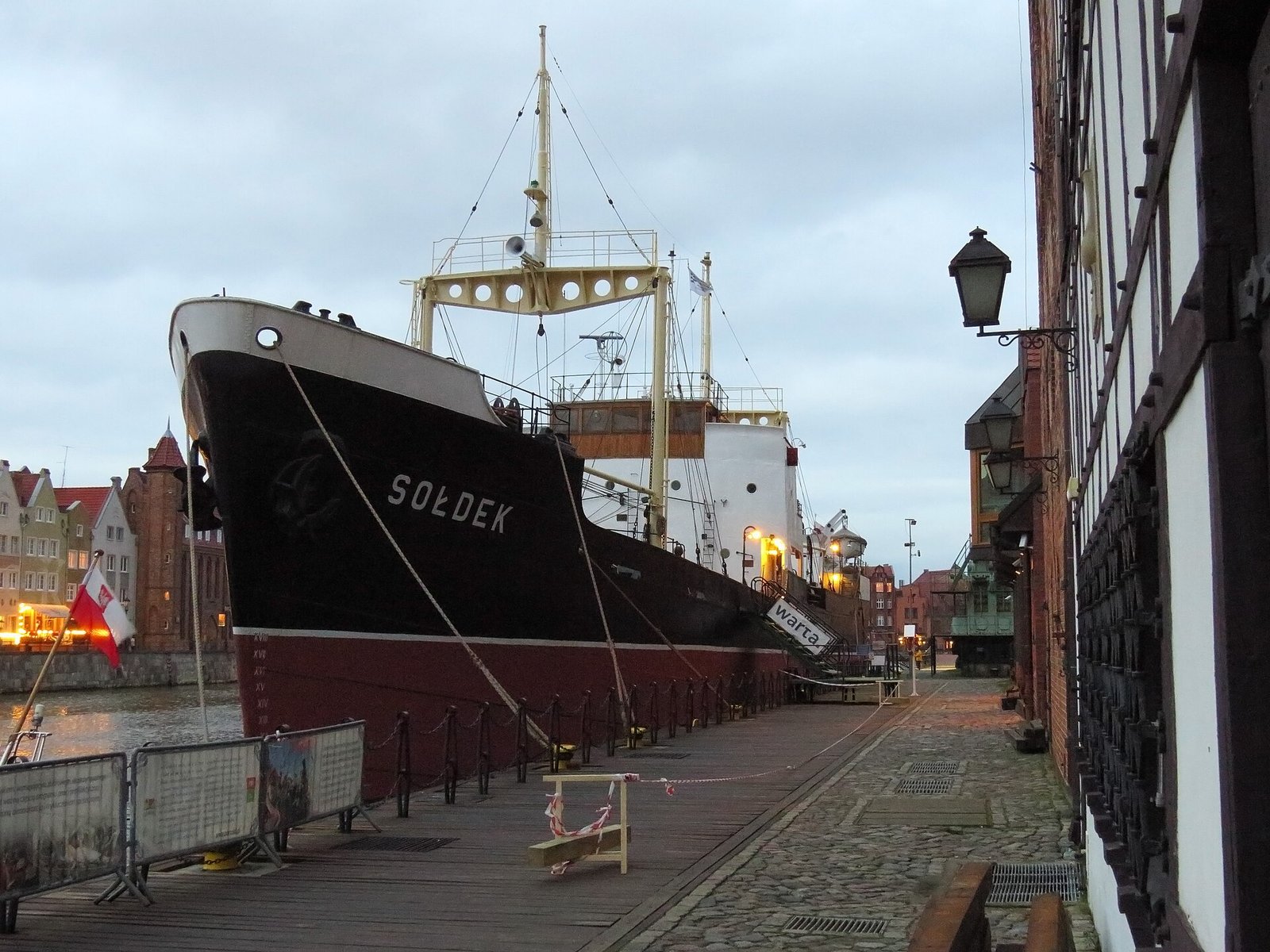
- Sołdek - museum ship, ul. Ołowianka 9-13 - about 515 m. According to English Wikipedia it is the first ship built in Gdansk after the Second World War, so its theme pairs well with this visit.
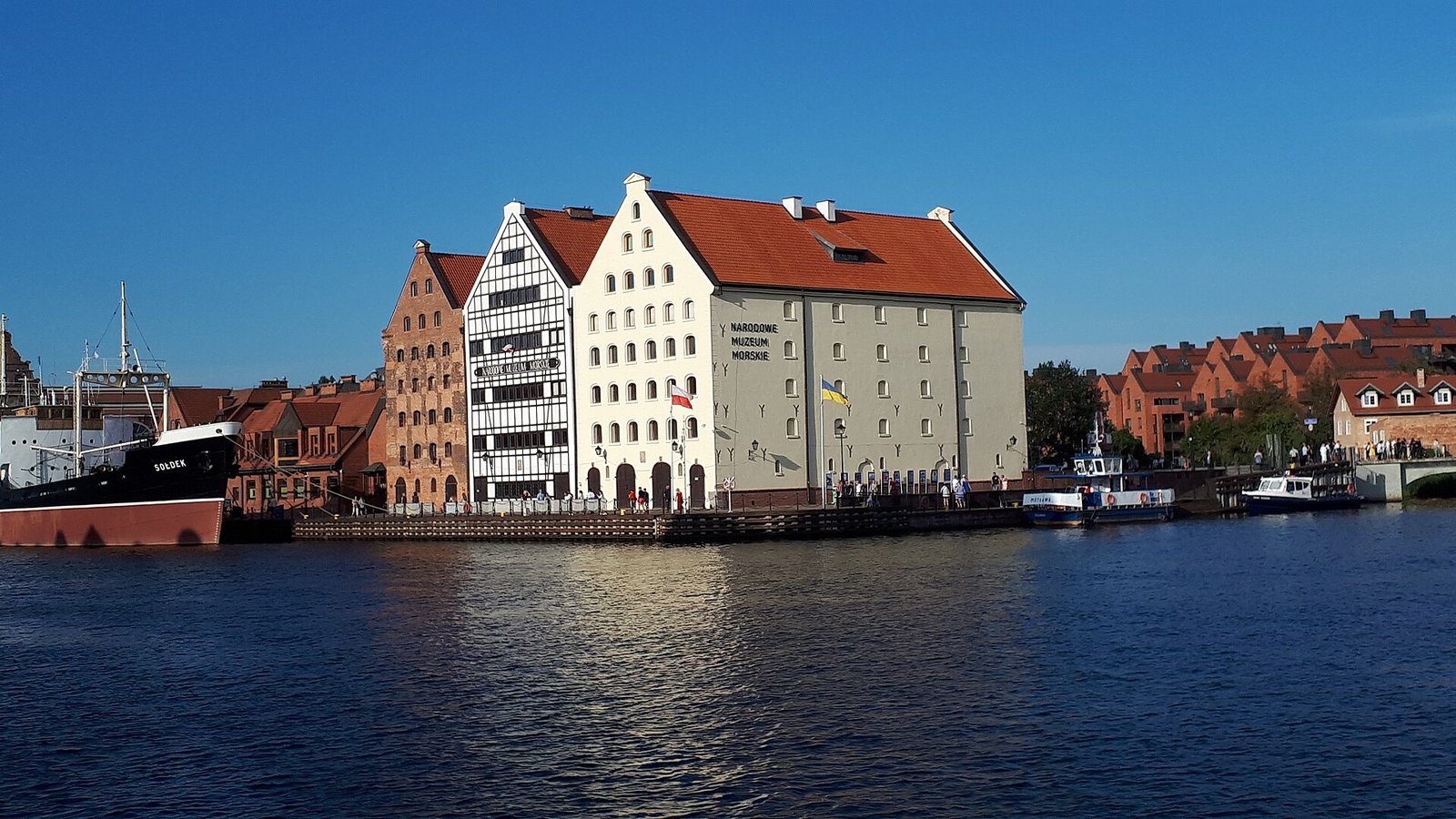
- National Maritime Museum - main site, Ołowianka 9-13 - about 570 m. The route leads through three historic granaries and ends at the Maritime Gallery, so it makes a good change of subject after an exhibition about the war.
Temporary exhibitions on now in Gdansk
Space for Health. Hospitals in Gdansk 1793-1945
9 July 2026 - 31 January 2027
An exhibition on Gdansk hospitals from 1793 to 1945, from the Municipal Lazaret to sanatoria, on the second floor of Uphagen House. Museum of Gdansk.
Nearby
 History
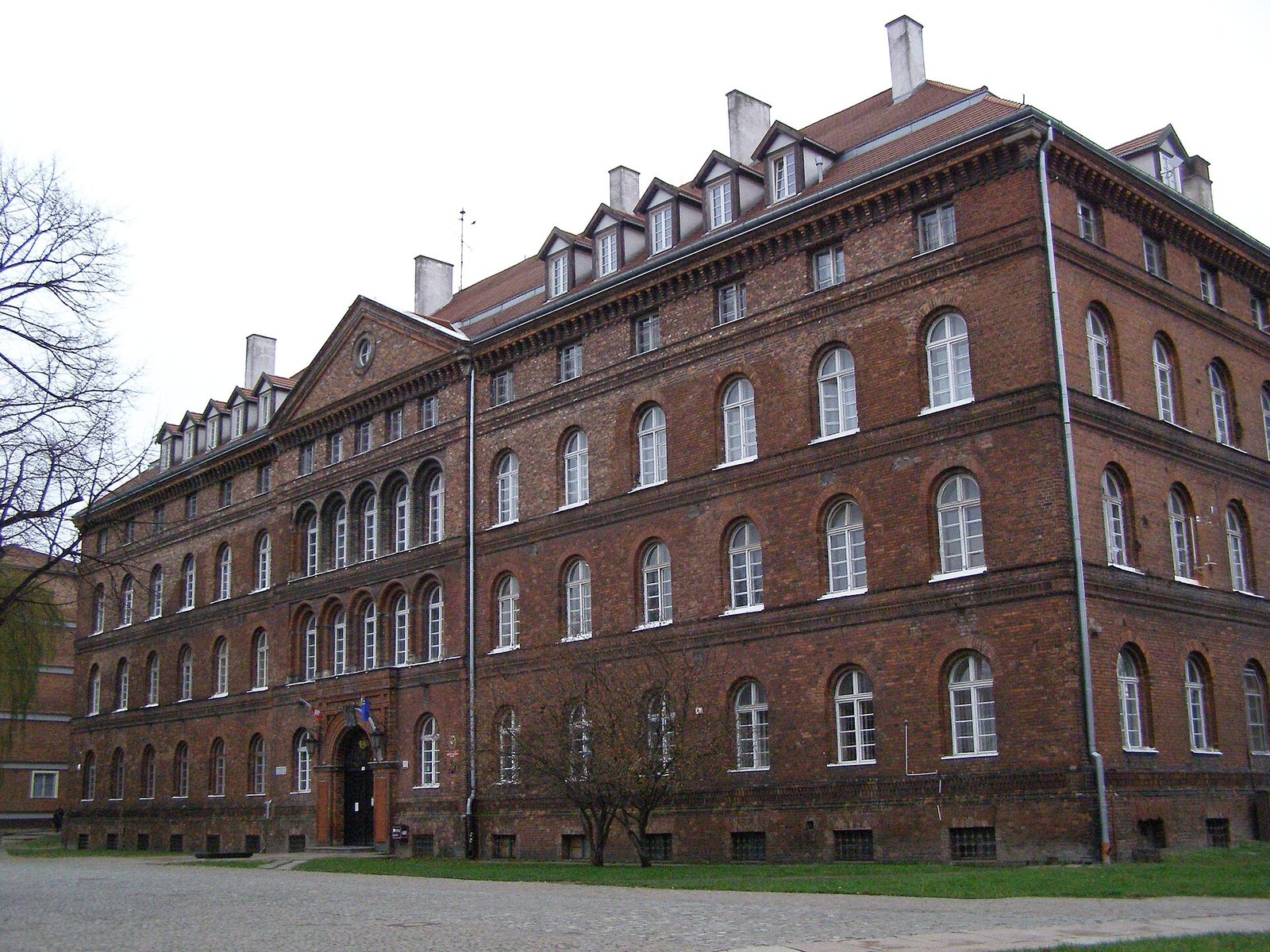
Polish Post Office Museum in Gdansk: the Defence of 1939
plac Obrońców Poczty Polskiej 1/2, 80-800 Gdańsk
Polish Post Office Museum in Gdansk, reopened in October 2026: the defence of 1 September 1939, the defenders' fate and cellars open for the …
 History
Sołdek Museum Ship in Gdansk (National Maritime Museum)
ul. Ołowianka 9-13, 80-751 Gdańsk
Sołdek in Gdansk: a steam ore-and-coal carrier, a museum ship since 1985. Holds, engine room and crew quarters - what you will see, who it …
 History
National Maritime Museum in Gdansk - the granaries on Ołowianka and the Maritime Gallery
Ołowianka 9-13, 80-751 Gdańsk
National Maritime Museum in Gdansk: a route through three granaries on Ołowianka ending in the Maritime Gallery. What you will see and how …