Main Town Hall (Museum of Gdansk branch)
Ratusz Głównego Miasta (Oddział Muzeum Gdańska)
51 m from Długi Targ in Gdansk See museums near Długi Targ in Gdansk
- Audio guide:
- The audio guide is hired at the ticket desk.
- The town hall also hosts official ceremonies; the museum asks you to check on its website or by phone that the branch is open to visitors before you go.
- One of the ticket desks has an induction loop.
Location
What to expect
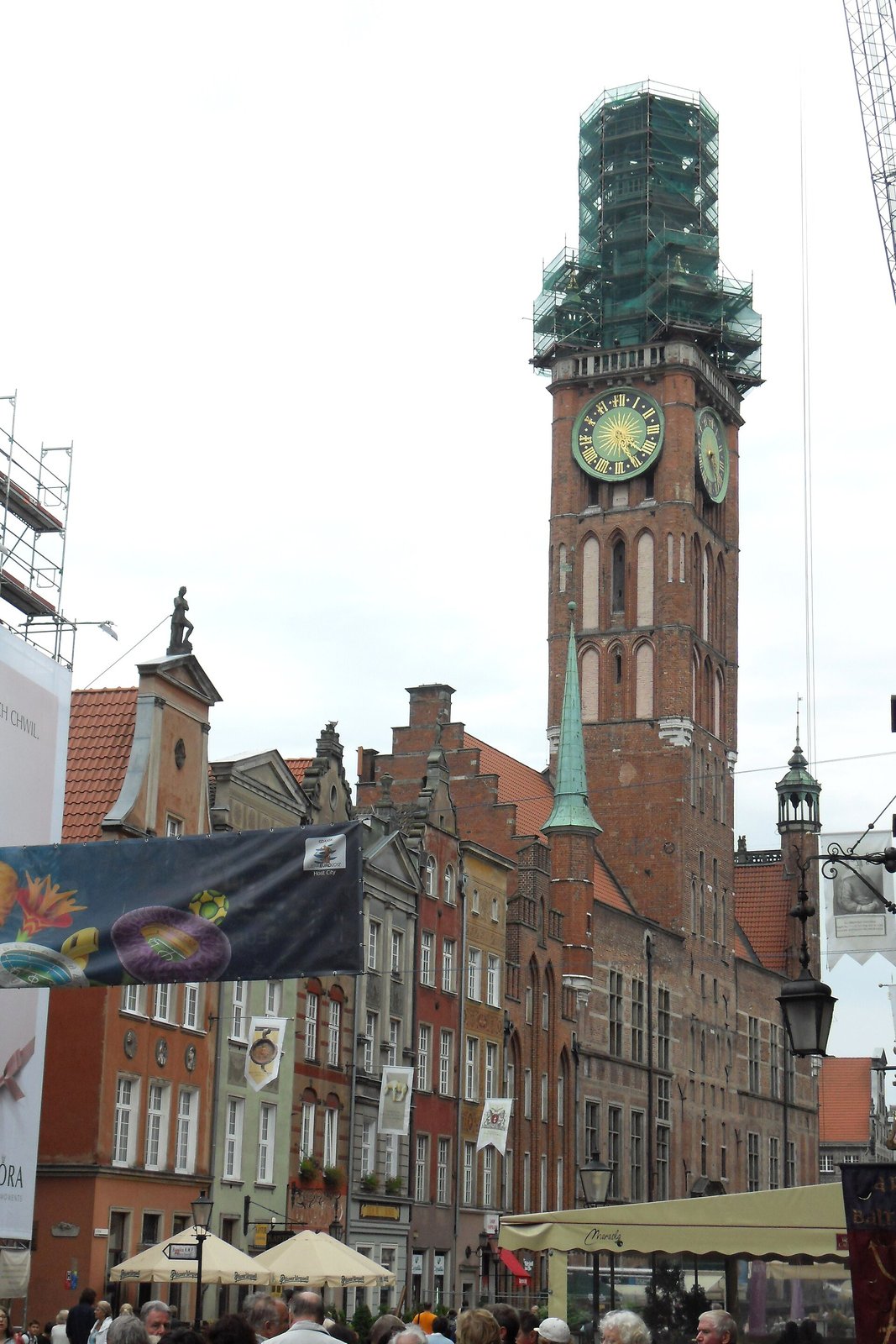
The Main Town Hall in Gdansk is a museum whose most important exhibit is the building itself: the historic town hall on ul. Długa, for centuries the seat of the city authorities and today a branch of the Museum of Gdansk (Muzeum Gdańska). So you walk into the place from which Gdansk was governed, not into rooms built for an exhibition.
Inside you tour the exhibition rooms, among which the museum lists the Galeria Palowa, the Kamlaria, the Depozyt, the Sień Górna (Upper Hall) and the Sala Morska (Maritime Hall); there are also rooms for temporary exhibitions. Among the town hall’s interiors is the Great Council Hall, since the 17th century also called the Red Hall after the colour of its upholstery. According to an essay by Jakub Jagiełło on culture.pl, it gives perhaps the best insight into Gdansk painting around 1600. Its ceiling was dismantled in 1942, which according to the same essay probably saved it from destruction; after years of conservation it returned to its place together with seven older paintings.
Visitors rate the town hall highly: on Google Maps it has 4.6 out of 5 from 2239 reviews (read on 25 October 2026).
Who it suits: anyone curious about old Gdansk and its rulers who wants to see the interiors of the town hall, not just its facade from ul. Długa, and lovers of Gdansk painting of the late 16th and early 17th centuries, for whom the Red Hall is the goal. Who should skip it: anyone who is mainly after the view from the tower. According to the museum’s website, the viewing tower is closed for renovation (read on 25 October 2026), so check before your visit whether it has reopened.
How long: the museum says the exhibition rooms alone take at least 45 minutes, climbing to the viewing point another 30 minutes and a temporary exhibition about half an hour. With the tower closed, allow at least 75 minutes if you want to see the exhibition rooms and the temporary exhibition. It is a visit easily added to a walk along ul. Długa, not a destination for a whole day.
Tips
- Check before you set out. The town hall also serves as a venue for important city, regional and national ceremonies, so the museum asks you to make sure on its website or by phone before your visit that the branch is open. The ticket desk number is in the practical information box.
- Not every room at once. In autumn 2026 the museum announced that successive rooms, from the Galeria Palowa to the Sień Górna, would be closed to visitors in stages, and that the Sala Morska would stay closed until further notice. The current list of closed rooms is on the Town Hall tab of the museum’s opening hours page.
- The no-charge day has conditions. Once a week admission is at no charge: free admission on Mondays. The museum warns, however, that on that day some temporary exhibitions may be unavailable, and the rule does not cover the Galeria Palowa.
- Thursday is the longest. On Thursdays the town hall is open longer than on other days (on Thursdays 10:00-18:00), and once a week it is closed (closed on Tuesdays). The list of public holidays on which the branch is closed is on the museum’s website.
- Tickets and concessions. Prices: standard ticket 26 PLN (about 6 EUR), reduced 19 PLN (about 4 EUR). Reduced tickets are for pupils, students, pensioners and annuitants with a valid ID; the museum counts children up to the age of 7 and people with disabilities with their carers among the groups who enter without a ticket. The price list also includes a family ticket for at most 2 adults and 6 children and a 90-day pass.
- Audio guide in three languages. At the ticket desk you can hire a paid audio guide in Polish, English or German; a good option for visitors who do not read Polish. Its price is in the museum’s price list.
- Bells from the tower. The museum invites you every week to half-hour concerts played on the bells of the town hall tower, each weighing several hundred kilograms; the day and time are on its website. It is worth timing a walk along ul. Długa around one.
- Induction loop and walking frames. One of the ticket desks has an induction loop, and a walking frame can be borrowed for the duration of the visit.
Getting there
- Address: ul. Długa 46/47, 80-831 Gdańsk.
- Line 100: according to the ZTM Gdańsk timetable, the stop closest to the town hall is “Targ Chlebowy 01”, about 173 m away; farther off are “Żuraw 01” (about 364 m) and “Targ Drzewny 01” (about 367 m). All three are served by line 100.
- Public transport: according to the ZTM Gdańsk timetable, lines 112, 138, 166, 178, 186, 212, C80 and N8 stop at “Żabi Kruk 03”, about 246 m from the town hall, and lines 8 and 9 at “Żabi Kruk 02” (about 266 m) and “Żabi Kruk 01” (about 276 m).
Nearby
A visit to the town hall is easy to combine with one of these museums (distances in a straight line):
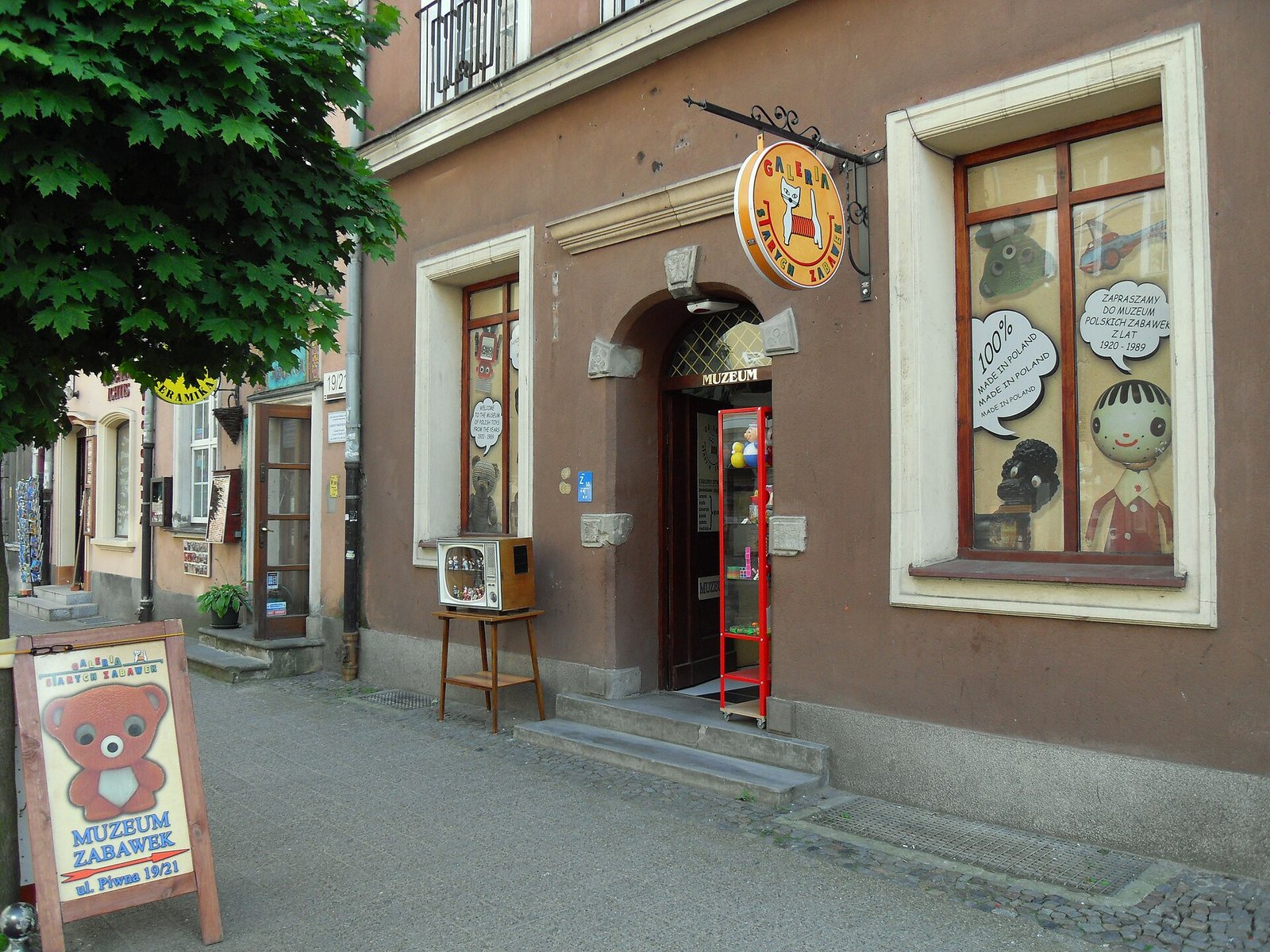
- Gallery of Old Toys, ul. Piwna 19/21 - about 150 m. After the town hall it is a good change for children: the gallery shows toys made in Poland in 1920-1989.
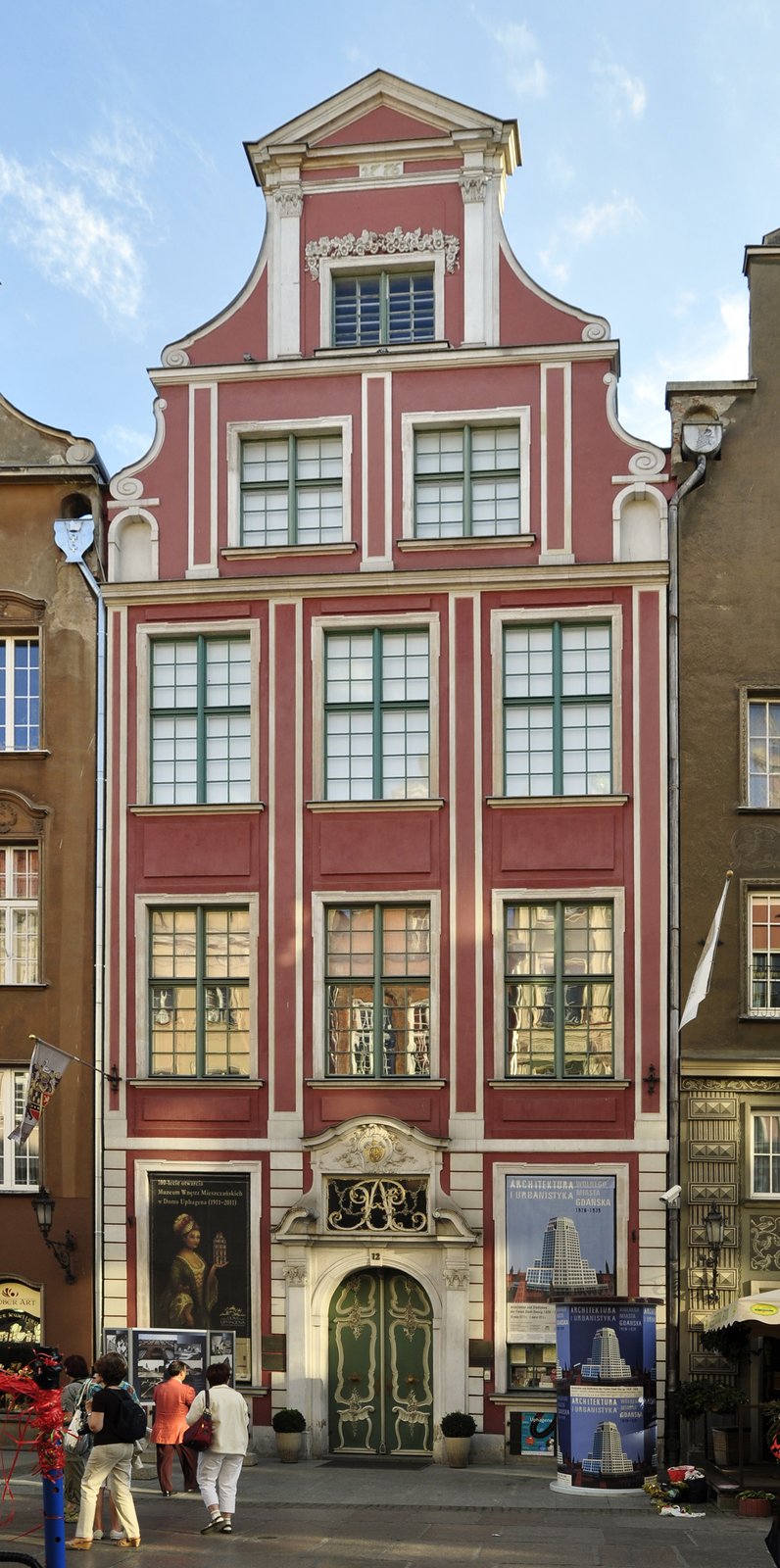
- Uphagen House, ul. Długa 12 - about 230 m. Another branch of the Museum of Gdansk on the same street: after the seat of the city authorities you will see the living and service rooms of an 18th-century burgher townhouse.
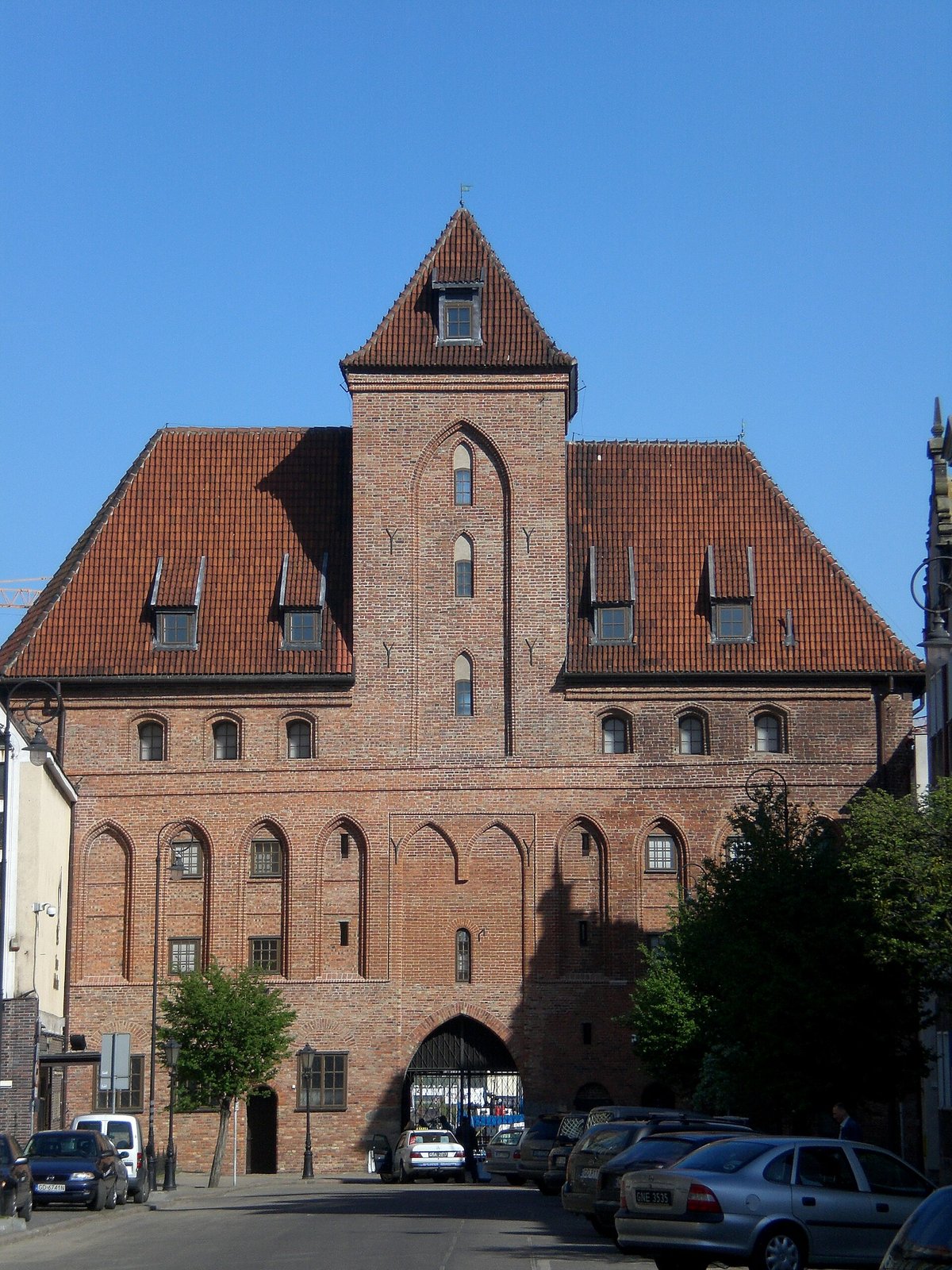
- Gdansk Crane (Żuraw), ul. Szeroka 67/68 - about 360 m. A port crane built in 1442-1444, with an exhibition on the port of Gdansk in its 17th-century “golden age”, it completes the picture of the city that was governed from the town hall.
Background
The town hall you see today on ul. Długa has been a museum since 2 April 1970: after extensive masonry and conservation work, the rebuilt building was handed over as the seat of the Museum of the History of the City of Gdansk. Before that, for centuries, it was a seat of power.
It housed the authorities of the Main Town, the most important part of Gdansk, and from the mid-15th century the town hall was the centre of power for the whole agglomeration on the Motława. It remained the seat of the city authorities until 1921.
According to the English Wikipedia, after a fire in 1556 the town hall was rebuilt and expanded under Renaissance influence, with Dutch architects and master-builders working on it. The ceiling of the Red Hall, which culture.pl links with Gdansk painting around 1600, survived according to that site probably because it had been dismantled from 1942.
Nearby
 Culture
Gallery of Old Toys (Galeria Starych Zabawek) in Gdansk - Polish toys 1920-1989
ul. Piwna 19/21, 80-831 Gdańsk
Gallery of Old Toys, Gdansk: a private museum of toys made in Poland in 1920-1989, on ul. Piwna. What you will see, who it suits, how long …
 History
Uphagen House in Gdansk - an 18th-century burgher townhouse on ul. Długa
ul. Długa 12, 80-827 Gdańsk
Uphagen House in Gdansk: an 18th-century burgher townhouse on ul. Długa, its living rooms and kitchen. What you will see, who it suits, how …
 History
Gdansk Crane Museum (Żuraw), a Medieval Port Crane
ul. Szeroka 67/68, 80-835 Gdańsk
Gdansk Crane museum (Żuraw): a medieval port crane with six-metre treadwheels, a National Maritime Museum branch. What you'll see, who it …