Modern Art Department in the Abbots' Palace (National Museum in Gdansk)
Oddział Sztuki Nowoczesnej w Pałacu Opatów (Muzeum Narodowe w Gdańsku)
9.2 km from Długi Targ in Gdansk See museums near Długi Targ in Gdansk
- Elevator: No
- The entrance is from ul. Cystersów, on the right just inside the gate to Oliwa Park on the Oliwa Cathedral side; one step leads down to it, and the ticket desk opposite the door has an induction loop.
- Only part of the exhibition rooms on the ground floor is accessible to wheelchair users; the other floors are reached by stairs only.
- A coat rack and self-service lockers are in the public area of the building.
- A 7-day ticket gives one entry to the permanent and temporary exhibitions of every branch of the National Museum in Gdansk within seven days of purchase.
Location
What to expect
The Abbots’ Palace in Oliwa (Pałac Opatów w Oliwie) is a rococo residence in Oliwa Park (Park Oliwski), where the Modern Art Department of the National Museum in Gdansk permanently shows Polish painting of the 19th and early 20th centuries. Despite the department’s name, you come here above all for Olga Boznańska and her era. The entrance is from ul. Cystersów 18, just inside the park gate on the cathedral side.
The museum lists two permanent exhibitions for the palace: “Olga Boznańska i… malarstwo polskie XIX i początku XX wieku z kolekcji Muzeum Narodowego w Gdańsku” (Olga Boznańska and… Polish painting of the 19th and early 20th centuries from the collection of the National Museum in Gdansk) and the open-air Gallery of Contemporary Gdansk Sculpture (Galeria Współczesnej Rzeźby Gdańskiej) in Oliwa Park. The Museums Atlas portal describes the collection as Polish art of the 19th and 20th centuries, that is painting, sculpture and ceramics, shown in the palace’s historic interiors.
The department has four sections, but only two of them are based in the palace: the Modern Art Collection and the Theatre Section. The Gdansk Photography Gallery (Gdańska Galeria Fotografii) and NOMUS work in the separate NOMUS building, so you will not see them in the palace.
Who it suits: anyone interested in Polish painting of the turn of the 19th and 20th centuries, and anyone combining the museum with a walk in Oliwa Park, because the open-air sculpture gallery belongs to the same department. Young people too: according to the museum’s price list, pupils and students aged 8-26 have a separate ticket, many times cheaper than the reduced one.
Who should skip it or come prepared: wheelchair users will see only some of the rooms on the ground floor, because the other floors are reached by stairs only, and the building has no toilet adapted to their needs. Parents with a baby will find no baby-changing table and no play area for children.
Tips
- Planning the week. According to the museum’s price list, free admission on Tuesdays. The palace’s weekly rhythm: closed on Mondays. The free day goes well with a walk in the park and a look at the sculptures in the open air. The dates of holiday closures are in the practical box.
- One ticket for several branches. The museum sells a 7-day ticket: for seven days from purchase it gives one entry to the permanent and temporary exhibitions of every branch of the National Museum in Gdansk. There is also an annual bearer ticket; the prices are in the museum’s price list.
- Family and group tickets. A family or friends in a group of three to eight people pay less per person than the normal ticket, according to the price list; so do organised groups of ten or more.
- Entrance from ul. Cystersów. The door is on the right just inside the gate to Oliwa Park on the Oliwa Cathedral side. One step leads down to the entrance, and the ticket desk stands opposite the door and has an induction loop.
- Wheelchairs on the ground floor only. Part of the ground-floor rooms is accessible; you reach the upper floors by stairs only. The building has no tactile maps, Braille signs or sound navigation; an assistance dog or guide dog may enter without restriction.
- A hook for your coat. The public area of the building has a coat rack and self-service lockers.
Getting there
- Address: Cystersów 18, 80-330 Gdańsk, in Oliwa Park in the Oliwa district.
- Train: according to the museum, the nearest station is Gdańsk Oliwa, from where you walk in about 10-15 minutes along ul. Pomorska or ul. Opata Jacka Rybińskiego towards Oliwa Park.
- Tram: according to the ZTM Gdańsk timetable, the closest stops are “Obrońców Westerplatte” (about 325 m in a straight line) and “Oliwa 02” (about 378 m), both served by lines 2, 5, 6, 8 and 12. A little further away is “Opacka” (about 471-488 m), with lines 2, 6, 8 and 12.
- Bus: in the same timetable the closest stop is “Stary Rynek Oliwski 01” (about 279 m in a straight line), with lines 117, 169, 171 and 179; further away are “Cmentarz Oliwski 01” (about 347 m, line 117) and “Oliwa 08” (about 353 m, lines 117 and 143, while 169, 171 and 179 only set passengers down there).
- On foot through the park: from the main park entrance on ul. Opata Jacka Rybińskiego the museum gives a walk of about 5 minutes.
- By car: the museum has no parking space for people with disabilities; the nearest spaces are in the strip by the wall of the Oliwa Cathedral, and there are paid spaces on the surrounding streets.
Nearby
The nearest museums covered on this site lie outside Oliwa (straight-line distances):
- Gdansk Arcade Museum, Al. Grunwaldzka 229, Gdańsk - about 2.8 km. A change from the paintings in the palace: there, according to the museum, every machine can be played without restriction.
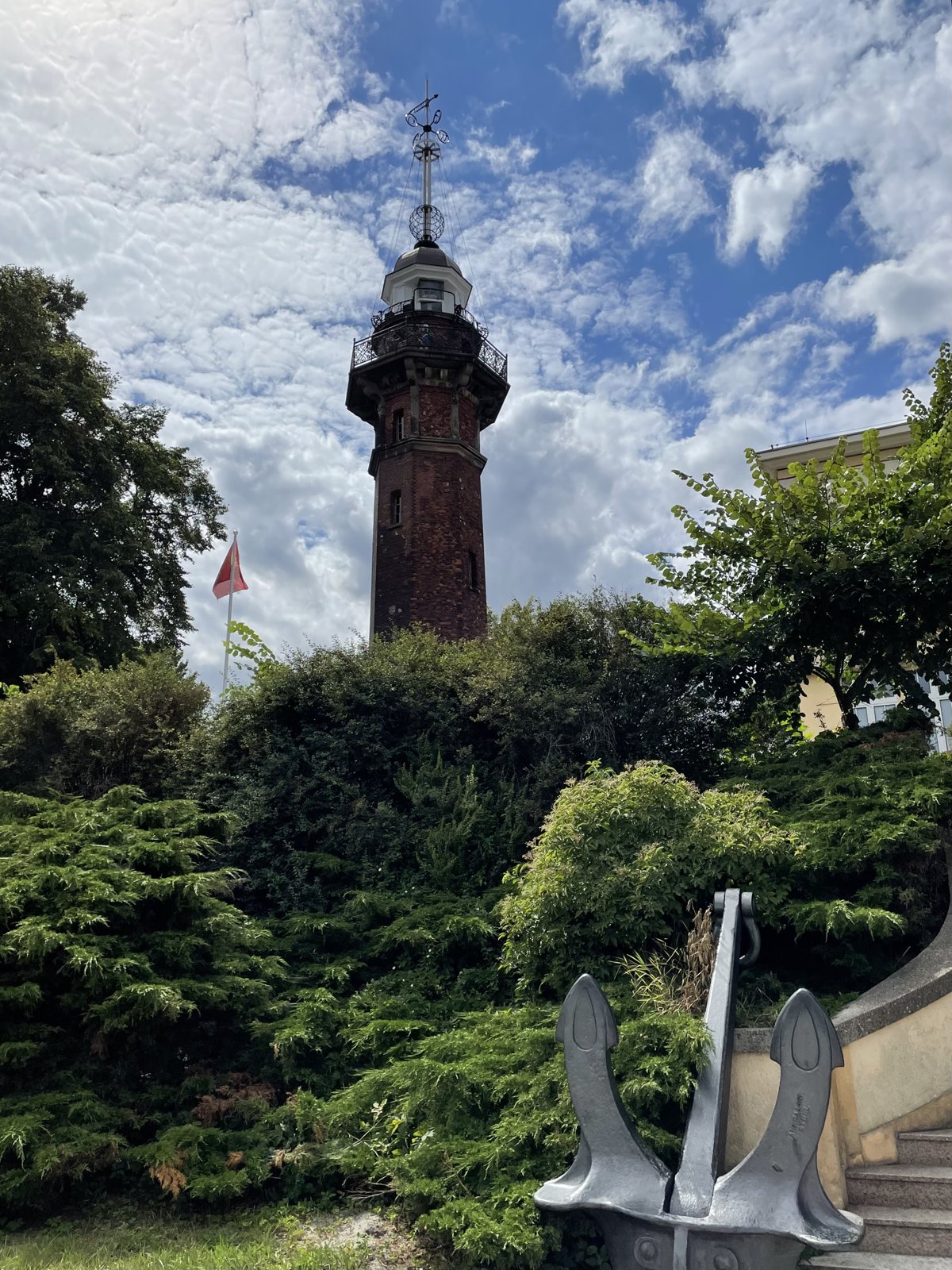
- Gdańsk Nowy Port Lighthouse, ul. Przemysłowa 6a, 80-542 Gdańsk - about 6.5 km. The lighthouse directs visitors from Oliwa to take tram 5 to the “Latarnia Morska” stop, and tram 5 also stops at “Obrońców Westerplatte” next to the park.
Background
The palace you enter from the park gate has two parts. The main body is the New Abbots’ Palace (Nowy Pałac Opacki), built in the rococo style in 1754-1756 on the orders of the last Polish abbot, Józef Jacek Rybiński. The side wing is the Old Abbots’ Palace (Stary Pałac Opacki), according to the museum probably from the 15th century; the Polish Wikipedia also dates the older east wing to the 15th century.
The English Wikipedia calls the building a rococo palace which, together with the Cistercian cathedral complex, is a Historic Monument of Poland (Pomnik Historii). The blog wenecjusz.pl calls it “a pearl of 18th-century architecture”.
Sources date the start of the department in the palace differently. The museum says that the Gallery of Contemporary Gdansk Art (Galeria Gdańskiej Plastyki Współczesnej) was placed in the building rebuilt in 1965, raised in 1990 to the rank of the Contemporary Art Department, and named the Modern Art Department since 2008. The Polish Wikipedia writes that the palace was rebuilt in 1965 after the fire of 1945 and that it has housed the Modern Art Department since 1989.
Temporary exhibitions on now in Gdansk
Space for Health. Hospitals in Gdansk 1793-1945
9 July 2026 - 31 January 2027
An exhibition on Gdansk hospitals from 1793 to 1945, from the Municipal Lazaret to sanatoria, on the second floor of Uphagen House. Museum of Gdansk.
Nearby
Gdansk Arcade Museum - a video game museum where you play the exhibits
Al. Grunwaldzka 229, Gdańsk
Gdansk Arcade Museum on Al. Grunwaldzka: a video game museum with classic arcade machines you can play. Who it suits, which ticket to pick, …
 History
Gdansk Nowy Port Lighthouse - views over the port and Westerplatte
ul. Przemysłowa 6a, 80-542 Gdańsk
Gdansk Nowy Port Lighthouse: an 1893 tower with historic optical devices, an exhibition on lighthouse keeping and a view over the port. How …