Museum of Sport and Tourism
Muzeum Sportu i Turystyki
- Wheelchair: Yes
- Stroller: Yes
- Elevator: Yes
- Recommended age: 7+
- Stroller access: Yes
Location
What to expect
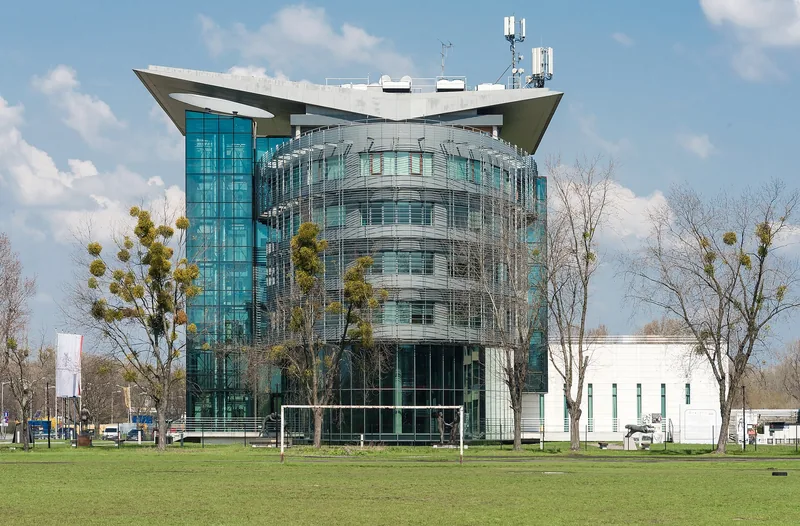
Inside the seven-story Olympic Center on the Vistula embankment - a building whose elevator shaft is shaped like an Olympic torch and whose roofline echoes stadium architecture - sits Poland’s only museum dedicated to sports history. Founded in 1952, it is one of the oldest sports museums in Europe and one of just 22 worldwide belonging to the Olympic Museums Network.
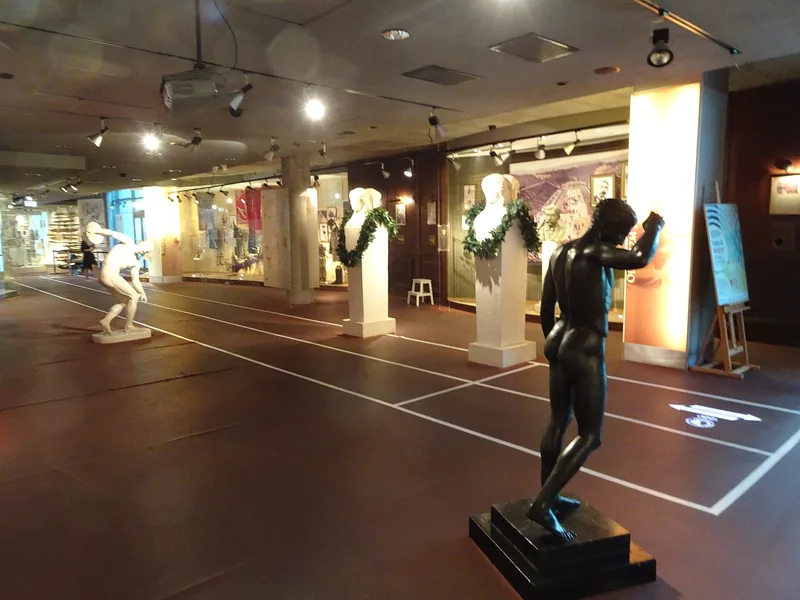
The permanent exhibition, “The History of Polish Sport and the Olympic Movement,” occupies around 1,000 square meters on the second floor. The chronological path begins with ancient Greek Olympic disciplines, moves through the birth of the modern Games (including a recording of Pierre de Coubertin’s voice), and arrives at contemporary Polish champions. Between those bookends lies one of the most remarkable segments: memorabilia from the Secret International POW Olympic Games of 1940 - clandestine athletic competitions organized by Polish soldiers in Stalag XIII A Langwasser near Nuremberg.
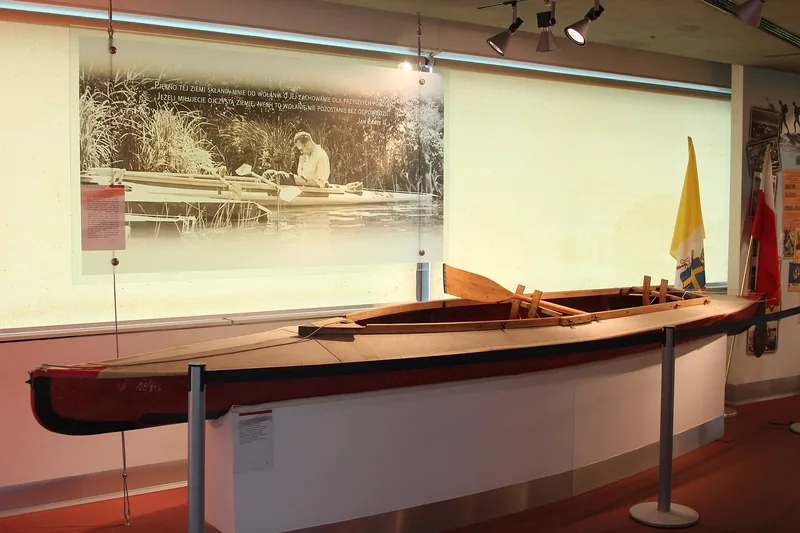
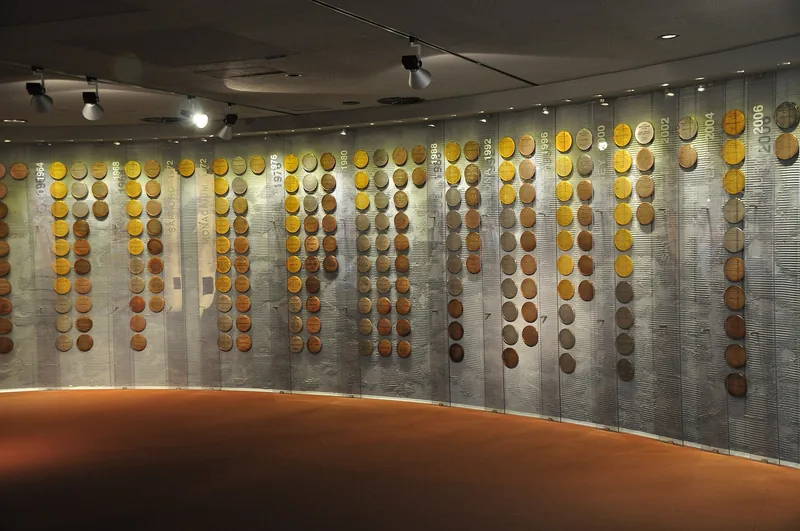
The museum’s most famous artifact is Karol Wojtyla’s kayak - the future Pope John Paul II paddled it across the Masurian Lakes. You don’t need to be a sports fan to appreciate it. Alongside it: Olympic medals won by Polish athletes across 90-plus years, Robert Lewandowski’s jersey, Irena Szewinska’s sprinting memorabilia, Adam Malysz’s ski jumping equipment, Natalia Partyka’s Paralympic table tennis racket. The full collection spans 46,000 to 60,000 items, 85 percent of which were donated.
The approach is traditional - display cases, labels, background multimedia. There are no interactive stations or hands-on exhibits. A free audio guide in Polish and English compensates for the limited English signage on the exhibition floor - take it, especially if you don’t read Polish.
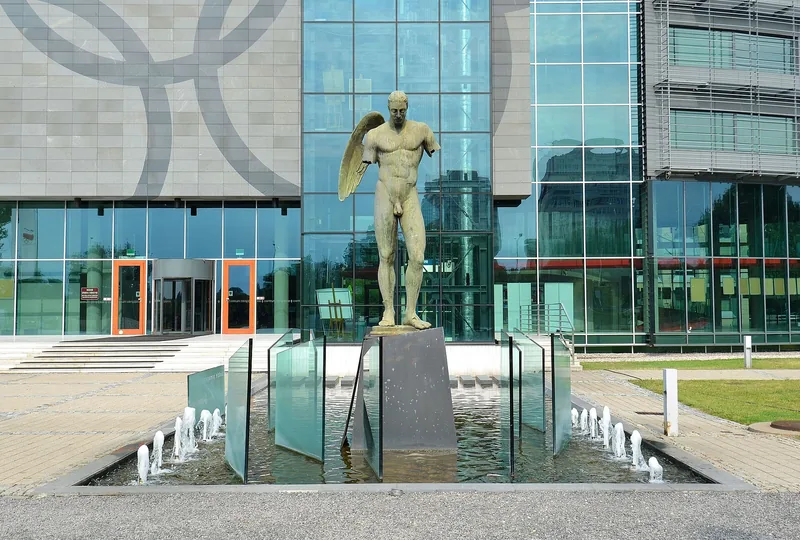
Allow 1-2 hours. Outside the building, Igor Mitoraj’s sculpture Ikaro Alato is worth a moment of your time.
Tips
- Free on Saturdays. Full free admission all day - the best deal.
- Get the audio guide. Free, available at the ticket desk with an ID document or 50 PLN deposit. Pick it up before 16:00.
- Tickets are sold on level -1, the exhibition is on floor 2. Elevator and wide corridors throughout.
- Wednesday evenings. The only day open until 20:00, last entry 19:30 (16:30 on other days) - quieter than weekends.
- Tickets: 35 PLN standard / 25 PLN reduced / 60 PLN family (up to 5 people, at least 1 adult). Children up to age seven free (per the Polish ticket page).
- English guided tours - 250 PLN per group, book in advance.
- With children: most rewarding for ages 7 and up, especially sports-interested kids. Younger children may last about 30 minutes.
- Combine with the Citadel. About 1.1 km south - the Polish Army Museum, Museum of Polish History, and Katyń Museum are all there. Together, a solid half-day outing.
Getting there
Bus: Lines 114 and 185, stop “Centrum Olimpijskie” (on-demand - press the button). Right outside the building.
Metro: M1 line, Plac Wilsona station - about 1.2 km south on foot, or transfer to bus 114/185.
Train: Warszawa Gdańska station (commuter rail) - about 1.5 km south along Wybrzeże Gdyńskie.
Cycling: A bike path runs directly past the Olympic Center. Bike racks at the building. Nearest Veturilo bike-share station about 800 m south.
Walking: From the Warsaw Citadel - north, about 1.1 km. From the Old Town - about 35-40 minutes along the Vistula embankment.
By car: Limited free parking nearby. One accessible parking space directly in front of the building.
In the neighbourhood
- Museum of the Tenth Pavilion of the Warsaw Citadel - ul. Skazańców 25, about 900 m south. An authentic political prison through which about 40,000 people passed from 1833; the corridors and cells are the original ones.
- Polish History Museum - ul. Gwardii 1, about 1.1 km, inside the Citadel. The building, winner of the Prix Versailles 2024, is a reason to visit in itself.
- Polish Army Museum - Warsaw Citadel, about 1.2 km. Since 2023 in a restored 19th-century fort: hussar armour, tanks and aircraft.
Background
The Museum of Sport and Tourism was founded in 1952, making it one of the earliest sports museums on the continent. Its first home was a building on ul. Rozbrat. In 1966 it moved to the KS Skra stadium complex on ul. Wawelska, where it remained for nearly four decades.
Since 2005 the museum has been housed in the John Paul II Olympic Center, designed by architect Bogdan Kulczynski. The seven-story building also houses the Polish Olympic Committee. Its architectural symbolism is deliberate: the torch-shaped elevator shaft, the stadium geometry of the roofline, and Igor Mitoraj’s Ikaro Alato sculpture at the entrance.
The museum is a cultural institution of the Mazovian Voivodeship self-government. Its collection of 46,000 to 60,000 items includes Olympic medals, historic sports equipment, art, 56,000 photographs, and 37,000 books and periodicals. It has organized more than two hundred temporary exhibitions, both in Poland and internationally.
Each May, the building hosts the Wanda Rutkiewicz Alpine Film Festival - a mountaineering film review named after Poland’s legendary Himalayan climber, the first European woman to summit Everest.
Current exhibitions
See also temporary exhibitions in Warsaw across all museums.
Nearby museums
 History
The Polish Army Museum in Warsaw
ul. Gwardii 4 (Pawilon Południowy), 01-519 Warszawa
Free admission Thursdays: hussar armour, tanks and MiGs at the Warsaw Citadel. Polish Army Museum - hours, tickets, visiting tips.
 History
Polish History Museum in Warsaw
ul. Gwardii 1, 01-538 Warszawa
Polish History Museum at the Warsaw Citadel, Prix Versailles 2024 winner. Hours, tickets, free Fridays, temporary exhibitions, how to get …
 History
Katyń Museum
ul. Jana Jeziorańskiego 4 (Cytadela Warszawska), 01-521 Warszawa
Katyń Museum in Warsaw - the only museum in the world dedicated entirely to the Katyń massacre. Free admission, opening hours, how to get …
 History
Museum of the Tenth Pavilion of the Warsaw Citadel
ul. Skazańców 25, 01-532 Warszawa
Tenth Pavilion of the Warsaw Citadel - authentic 19th-century political prison. Piłsudski's cell, Sochaczewski paintings, Execution Gate.