Museum of the Congregation of Sisters of Our Lady of Mercy
Muzeum Zgromadzenia Sióstr Matki Bożej Miłosierdzia
- Wheelchair: No
- Stroller: No
- Elevator: No
- Recommended age: 10+
- Stroller access: Partial
- Interactive exhibits: Yes
Location
What to expect
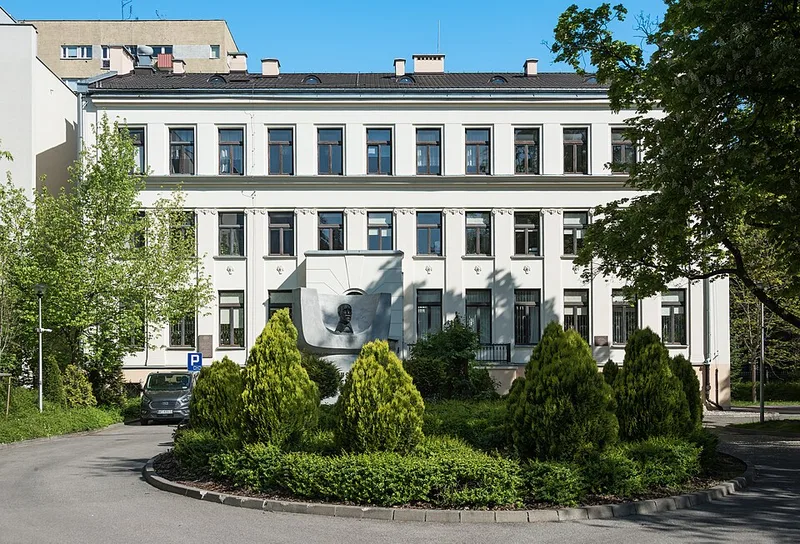
Żytnia 3/9, the convent gate. On 1 August 1925, twenty-year-old Helena Kowalska knocked on this door and was accepted into the Congregation of the Sisters of Our Lady of Mercy. We know her as St. Faustina - the Apostle of Divine Mercy, the source of the Divine Mercy Chaplet and the “Jesus, I Trust in You” image that now hangs in millions of homes worldwide. It all started here.
The museum is a small exhibition in the preserved basement of the convent, opened in 2012 for the congregation’s 150th anniversary. Inside: a reliquary of St. Faustina, her religious habit from her period of service, embroidered liturgical vestments made by former residents of the House of Shelter, a manuscript from 1862 by Mother Teresa Potocka (the foundress), historical documents, photographs. At the end, a multimedia presentation on the life of the Apostle of Mercy and her family.
Faustina worked here in the kitchen, at the gate, in the garden, at the bakery. In her cell she experienced a vision - an anguished face of Christ appeared on the window curtain, with tears dripping onto her bed. She returned to Żytnia multiple times: in 1928, 1929, 1932-1933 (third probation before final vows), 1935-1936. In March 1936, the Blessed Mother appeared to her at this location, commissioning her to spread the message of Divine Mercy.
The congregation was founded in 1862 by Countess Teresa Ewa Potocka at the initiative of Archbishop Feliński - the same man whose museum stands 500 metres south. The current chapel occupies the spot where the kitchen once stood - the kitchen where Faustina worked. The symbolism of that transformation is not lost on residents.
Tips
- Visits by prior phone arrangement - call 22 838 38 44. The museum is inside an active convent.
- Free entry (confirm by phone).
- Exhibition in the convent basement - limited wheelchair access.
- Next to the convent (Żytnia 1) stands a sanctuary with 24/7 Eucharistic Adoration (uninterrupted since 2000).
- Annual “Żytnia do nieba” (Żytnia to Heaven) street festival since 2005.
- In August 1944, German forces burned the entire complex after expelling approximately 200 residents and sisters. The church stood in ruins for nearly 30 years.
- During martial law, the chapel became an important centre of independent culture - exhibitions (the famous “Sign of the Cross” with 106 artists, 1983), Andrzej Wajda’s theatrical production “Wieczernik” (1985).
Getting there
Tram: Lines 1, 20, 27 - Żytnia and Młynarska stops, approximately 4 minutes walk.
Bus: Lines 136, 190 - Leszno stop, approximately 4 minutes.
Metro: Rondo Daszyńskiego (M2) - approximately 1 km south.
In the neighbourhood
Sacred Wola: St. Zygmunt Feliński Museum (97 Żelazna Street, 500 m south - the archbishop who invited the Sisters to Warsaw, in Bogusławski Palace), Wola Museum (12 Srebrna Street, 1.5 km southeast), Pawiak Museum (24/26 Dzielna Street, 1 km east).
Nearby museums
St. Zygmunt Feliński Museum
ul. Żelazna 97, 01-017 Warszawa
Museum of the Archbishop of Warsaw in Bogusławski Palace, Wola - saint canonized in 2009, friend of poet Słowacki, Siberian exile. Free …
 History
Limited access
History
Limited accessKorczakianum Documentation and Research Centre
ul. Jaktorowska 6, 01-202 Warszawa
Korczakianum in the historic Orphans' Home where Korczak lived - archive, permanent exhibition, digital repository. Branch of Museum of …