St. Zygmunt Feliński Museum
Muzeum św. Zygmunta Felińskiego
- Wheelchair: Yes
- Stroller: Yes
- Elevator: No
- Recommended age: 6+
- Stroller access: Yes
- Interactive exhibits: Yes
Location
What to expect
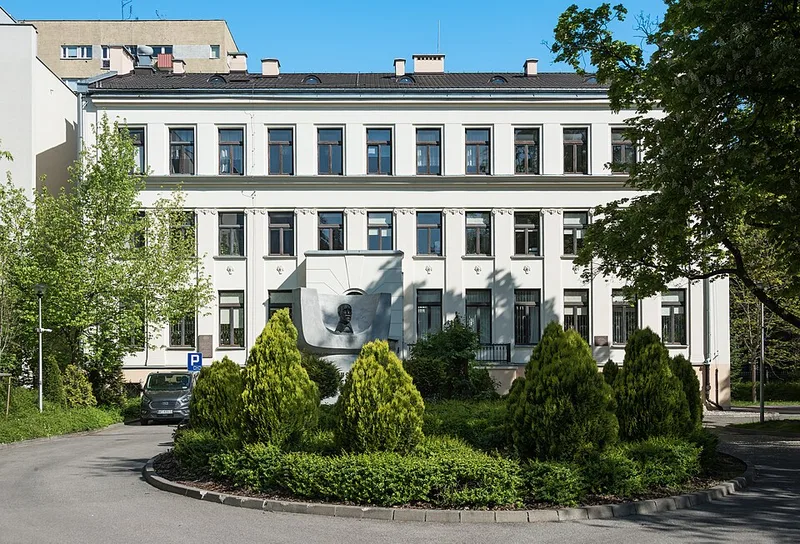
Żelazna 97, Bogusławski Palace. The same address where in 1780 the famous occultist Count Cagliostro held seances and founded an Egyptian Masonic lodge - today it houses a Franciscan convent and a museum dedicated to a canonized archbishop. The contrast is striking.
Zygmunt Szczesny Feliński (1822-1895) packs enough storylines for several biographies. Friend of Juliusz Słowacki in Paris - he was at the great poet’s deathbed in 1849 and left the most detailed eyewitness account of Słowacki’s final days. Participant in the Greater Poland Uprising of 1848. Student at the Sorbonne and College de France. Priest ordained in St. Petersburg. Archbishop of Warsaw appointed by Pius IX in 1862 - he held office for just 16 months before the Tsar exiled him for 20 years to Yaroslavl on the Volga for defending the January Uprising insurgents. His famous “Non possumus” - a refusal to yield to Tsarist demands - became the phrase that Cardinal Wyszyński would adopt a century later against the Communists.
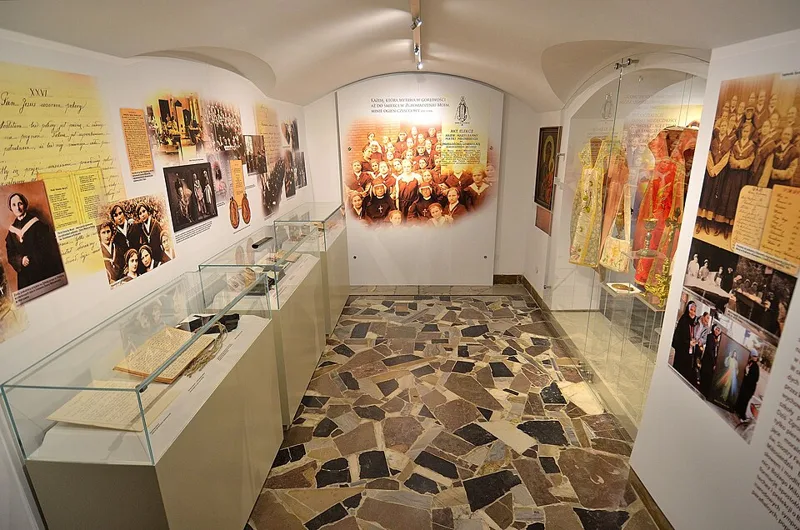
The permanent exhibition is titled “Non possumus” and occupies a wing of the palace in an enfilade layout. Archbishop’s vestments - copes, mitre, chasubles, zucchetti. His personal Bible, carried everywhere. Copies of letters describing Słowacki’s death. 19th-century archival materials, relics, sacred art. Plus interactive multimedia stations - surprisingly modern for a convent museum, designed with younger visitors in mind.
Canonized on 11 October 2009 by Benedict XVI. Founder of the Congregation of Franciscan Sisters of the Family of Mary (1857), which today numbers 756 sisters in 114 houses across seven countries. A statue of Feliński with two children stands in front of the palace (2007).
Tips
- Visits by prior phone or email arrangement - call +48 538 190 800 or email muzeum.felinski@gmail.com.
- Free entry.
- Historic building (Bogusławski Palace, 1807), no lift. The museum is on the ground floor.
- Descriptions in Polish and English. Website available in 11 languages.
- Inscription on the facade: “Parva sed apta” (Latin: “Small but fitting”).
- During the war, the Sisters sheltered approximately 11 Jewish children in this building. The entire Congregation saved over 700 Jewish people.
Getting there
Tram: Okopowa stop - lines 13, 22, 23, 27, approximately 1 minute walk.
Bus: Lines 106, 157, 171, 190 - stops nearby.
Metro: Rondo Daszyńskiego (M2) - about 1.2 km south.
In the neighbourhood
Sacred and historical Wola: Museum of the Congregation of Sisters of Our Lady of Mercy (3/9 Żytnia Street, about 150 m west - convent where St. Faustina began her religious life), Wola Museum (12 Srebrna Street, about 1.4 km south - Museum of Warsaw branch in Sikorski Palace), Pawiak Museum (24/26 Dzielna Street, about 700 m northeast).
Nearby museums
 History
Limited access
History
Limited accessMuseum of the Congregation of Sisters of Our Lady of Mercy
ul. Żytnia 3/9, 01-014 Warszawa
Small museum in the convent basement on Żytnia Street - where St. Faustina Kowalska knocked on the gate in 1925. Relics, habit, multimedia.
 History
Limited access
History
Limited accessKorczakianum Documentation and Research Centre
ul. Jaktorowska 6, 01-202 Warszawa
Korczakianum in the historic Orphans' Home where Korczak lived - archive, permanent exhibition, digital repository. Branch of Museum of …