Museum of Evolution, Institute of Paleobiology PAS
Muzeum Ewolucji Instytutu Paleobiologii PAN
- Wheelchair: No
- Stroller: No
- Elevator: No
- Recommended age: 5+
- Stroller access: No
Location
What to expect
The Museum of Evolution is one of the strangest things hiding inside Warsaw’s Palace of Culture and Science - and that building has no shortage of strange things. Tucked into the Youth Palace wing, with an entrance on the Świętokrzyska street side, it holds a collection you will not find anywhere else in Europe: original dinosaur skeletons brought back from the Gobi Desert during the legendary Polish-Mongolian paleontological expeditions of 1963-1971. These are not catalogue replicas or fibreglass casts. These are real bones, excavated by Polish scientists under Professor Zofia Kielan-Jaworowska, one of the most important palaeontologists of the twentieth century.
The museum occupies three exhibition halls and several smaller spaces. The main hall is dominated by a massive skeletal reconstruction of Opisthocoelicaudia - a plant-eating sauropod that weighed over ten tonnes in life. Here is a detail palaeontology enthusiasts will appreciate: the skull mounted on this skeleton actually belongs to a different species, Nemegtosaurus, found kilometres away in the Gobi. That is the reality of fieldwork - you assemble what you can from what you find.
The second hall belongs to the predators. Two Tarbosaurus skeletons - the Asian cousin of Tyrannosaurus - stand side by side, replica and original together, both now posed with backbones parallel to the ground, reflecting current scientific understanding of how these predators actually moved. Until recently, one was frozen in the outdated “kangaroo posture” from the 1960s, when researchers believed theropods walked upright - the display has since been updated. In the same room, you will find Deinocheirus - for decades known only from its colossal front limbs (discovered in 1965), until a 2014 study revealed it was a giant, ostrich-like dinosaur.
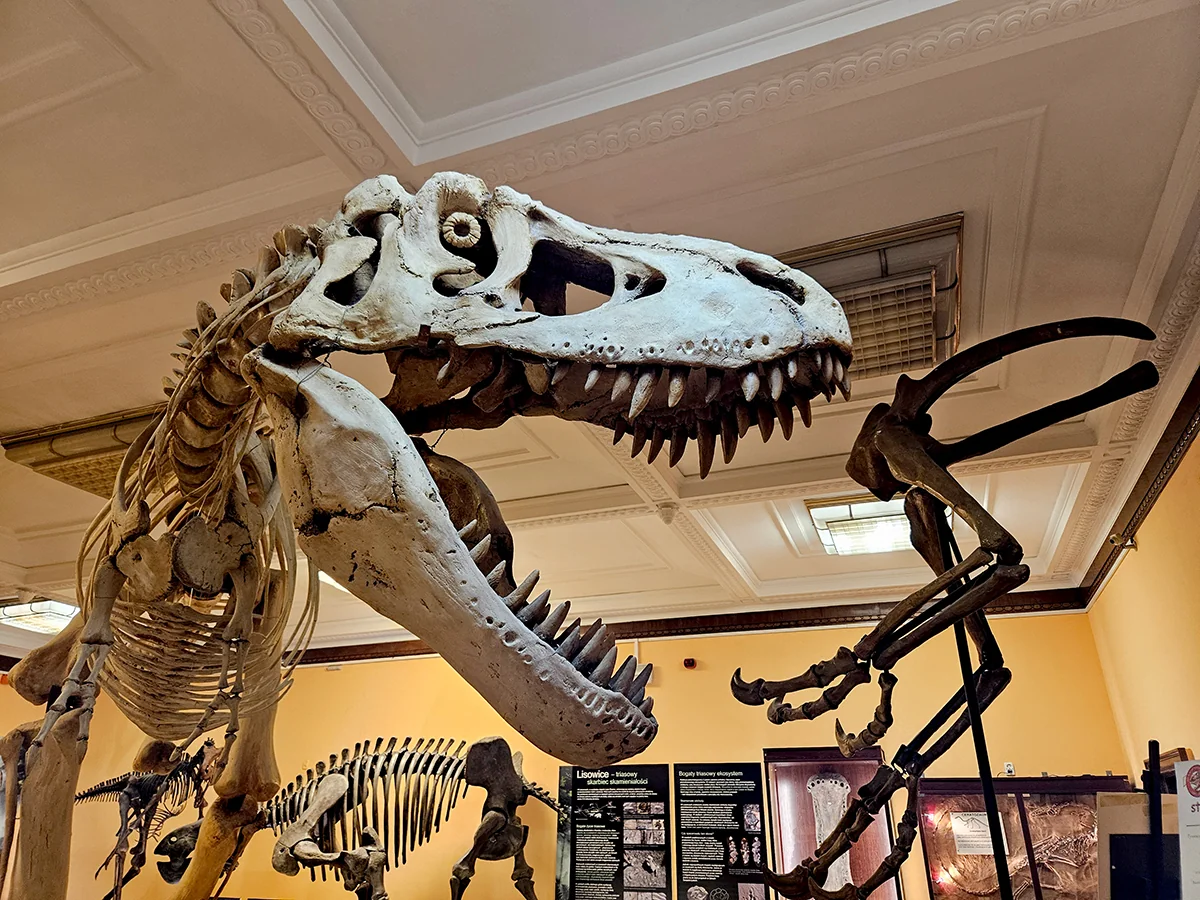
The remaining spaces cover Polish palaeontological discoveries. Silesaurus from Krasiejów near Opole - a Late Triassic dinosaur relative. Smok wawelski and Lisowicia bojani from Lisowice - the latter being the largest known dicynodont, a creature most people have never heard of but should have. There is the earliest known frog skeleton, from Triassic rocks near Kraków. A life reconstruction of “Lucy,” the 3-million-year-old Australopithecus. Fossilised dinosaur eggs. Trackways from the Holy Cross Mountains. Ankylosaur and early ceratopsian remains.
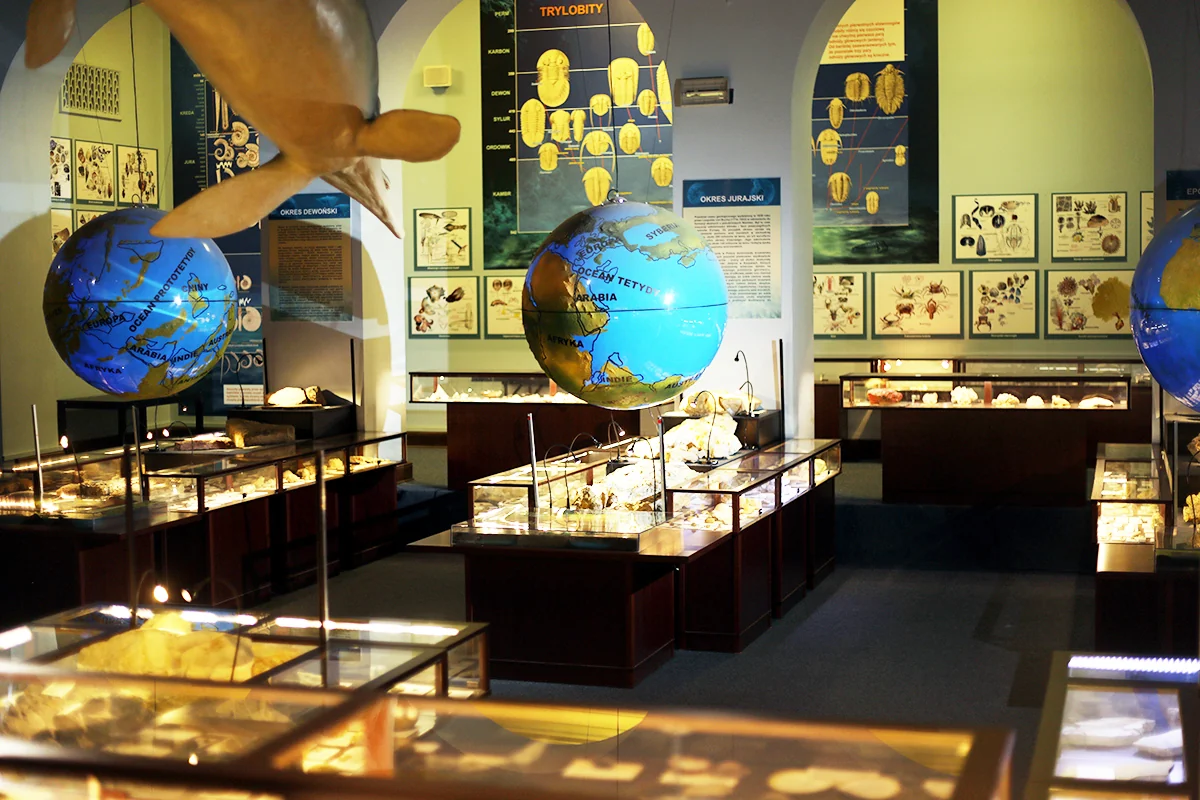
This is not a slick, modern museum. Labels are in Polish only, there are no interactive screens, no audio guide, and the displays have a distinctly underfunded feel. A new permanent exhibition on ocean evolution is under construction, but the Institute of Paleobiology’s budget means it is progressing slowly. And yet - or perhaps because of this - the place has something that polished multimedia centres lack: authenticity. You stand mere centimetres from the bones of an animal that lived 70 million years ago - the originals sit in small glass display cases - and nobody is in your way, because you are probably one of a handful of visitors.
Tips
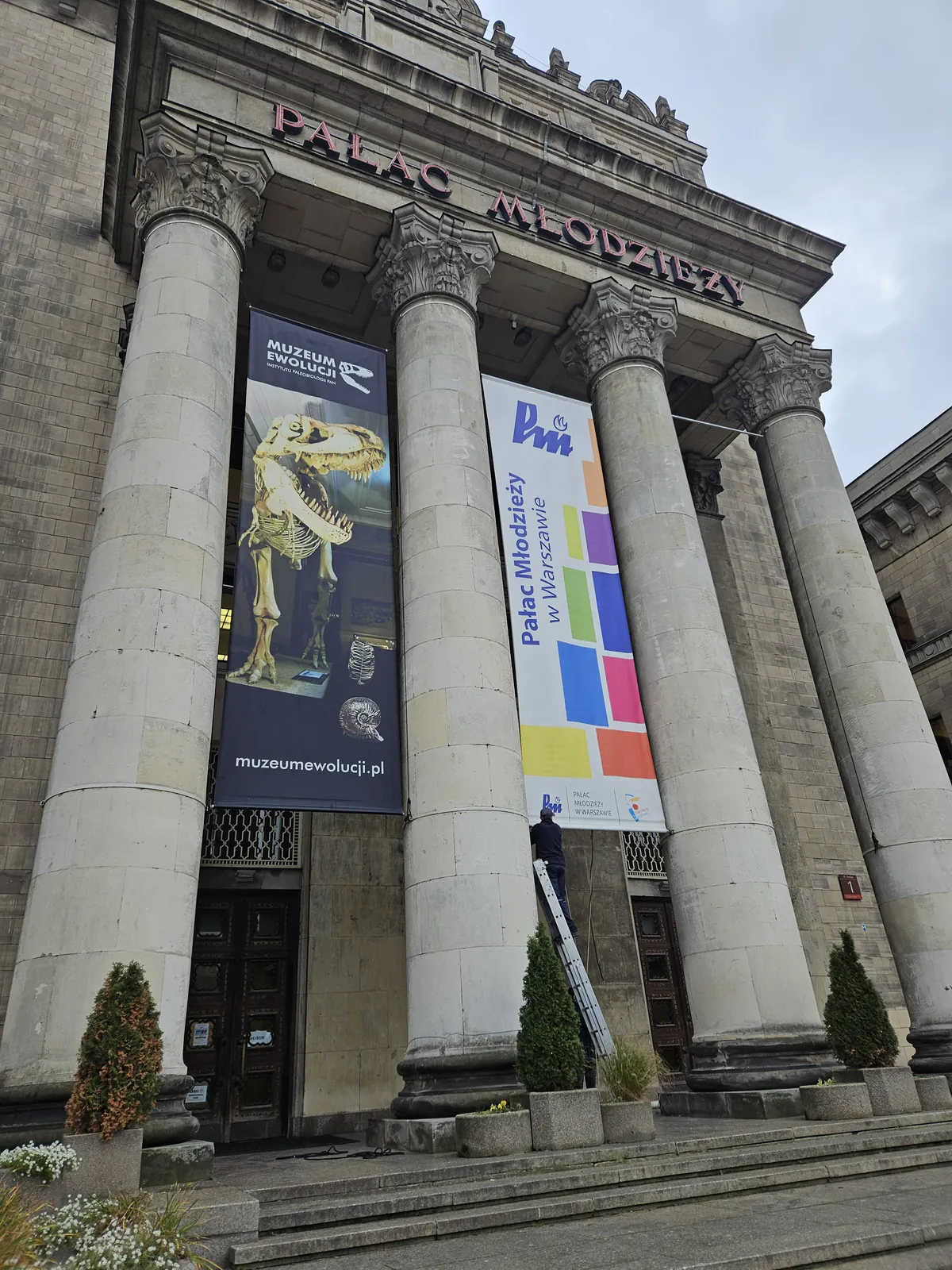
- The entrance is hard to find. Do not look for the main PKiN entrance. You need the Świętokrzyska street side, through the Youth Palace (Pałac Młodzieży) doors on the north side of the building. Ask at the PKiN information desk if lost.
- Ticket office closes at 15:30 (Tuesday-Saturday). Sunday hours are 9:00-15:00. Closed Mondays and public holidays.
- Tickets only on site. No online sales, no reservations. Cash and card accepted.
- Expect queues on weekends and school holidays. Weekend and holiday visitor numbers are very high - plan for a ticket-counter line. Weekday mornings are quietest.
- Family ticket 50 PLN (~11 EUR) covers parents plus up to 5 children. Good value.
- Children from age 3 enter free. Official recommendation is 5+, but younger preschoolers (from age 3) also love the dinosaurs and visit at no charge.
- Warsaw Pass and ISIC cards accepted for discounts. Large Family Card (Karta Duzej Rodziny) too.
- Everything is in Polish. All exhibit descriptions, all labels. The museum website has an English guidebook available for download - grab it before you visit. Without it, you will be guessing.
- Not accessible. The museum officially states it is not adapted for visitors with disabilities. No lift, no ramps.
- Pushchairs fit, but carrying required. Pushchairs for older children do fit - you can carry them down to the coat check or leave them at the top of the stairs (some visitors do).
- Assistance dogs welcome. Small dogs on leash or in carriers are also allowed.
- Allow 45-60 minutes. Even dinosaur-obsessed children will not need more than 90 minutes here. It is compact.
- Museum shop sells plush dinosaurs and palaeontology publications - decent souvenirs for kids.
Getting there
The museum is inside the Palace of Culture and Science, dead centre of Warsaw. Enter from Świętokrzyska street, through the Youth Palace wing on the north side of the building.
Metro: Świętokrzyska station (M1 + M2 interchange) - 5-minute walk. The most convenient option by far. Centrum station (M1) is about 8 minutes on foot.
Tram: Multiple lines run along Marszałkowska street (stop “Centrum”) and Świętokrzyska street - 3-5 minutes’ walk to the entrance.
Bus: Many lines in the PKiN area. Stops “Dw. Centralny,” “Metro Świętokrzyska,” or “Marszałkowska” are all within walking distance.
Car: No dedicated museum parking. Nearest underground car parks: Złote Tarasy shopping centre or PKiN’s own parking. Central Warsaw is best navigated by public transport.
In the neighbourhood
- National Museum of Technology - Palace of Culture and Science, Plac Defilad 1, in the same building. The successor of Warsaw’s old Museum of Technology, with more than 15,000 exhibits; its two flagship permanent exhibitions cover the history of transport and the history of computers.
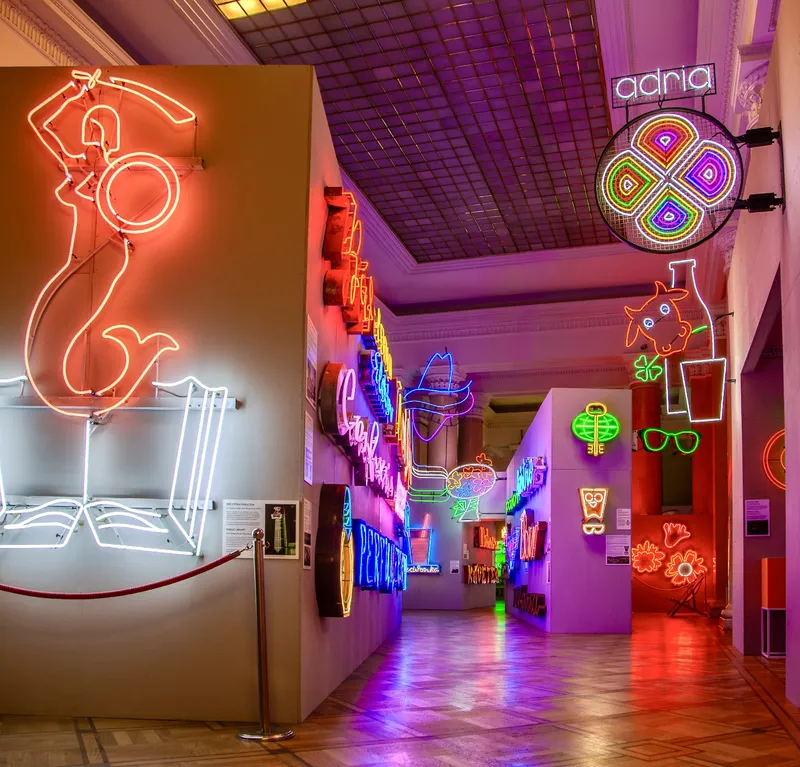
- Neon Museum - Palace of Culture and Science, 4th floor, in the same building. The first museum in Europe dedicated to Cold War-era neon signs: more than 200 rescued signs and 500 letters, in the Palace since 2025 after the move from Soho Factory in Praga.
- Museum of Modern Art in Warsaw - ul. Marszałkowska 103, about 200 m. A new building on Plac Defilad, opened in October 2024: a white structure by Thomas Phifer next to the Palace of Culture and more than 4,500 sq m of exhibition space.
Background
It all started in the Gobi Desert. Between 1963 and 1971, the Polish Academy of Sciences ran joint palaeontological expeditions with the Mongolian Academy of Sciences to the Gobi. They were led by Professor Zofia Kielan-Jaworowska - one of the first women to head a major palaeontological expedition, and one of the most important researchers of early Mesozoic mammals in the history of science. The expeditions yielded spectacular finds: complete dinosaur skeletons, eggs, and critically important early mammal specimens.
In 1968, the exhibition “Dinosaurs of the Gobi Desert” opened in the Palace of Culture and Science, showcasing these discoveries. It proved enormously popular and ran for sixteen years. In 1984, the Institute of Paleobiology formally took over the exhibition halls from the Institute of Zoology in the Youth Palace wing, establishing the Museum of Evolution as a dedicated department. The permanent exhibition “Evolution on Land” opened in 1985. Since then, the museum has gradually expanded: Triassic discoveries from Krasiejów (2001), the Lucy reconstruction (2003), modernised dinosaur skeletons reflecting updated anatomy (2005), and a vertebrate transition-to-land display marking Darwin’s 150th anniversary (2009). A multi-year project to build a marine evolution exhibition is currently underway - progressing at the pace Polish science budgets allow.
Nearby museums
 Art
ArtNeon Museum
Palace of Culture and Science, Plac Defilad 1, 4th floor, 00-901 Warszawa
Neon Museum in Warsaw - Europe's only museum of Cold War-era neon signs. Opening hours, tickets, how to get to the Palace of Culture.
 Science
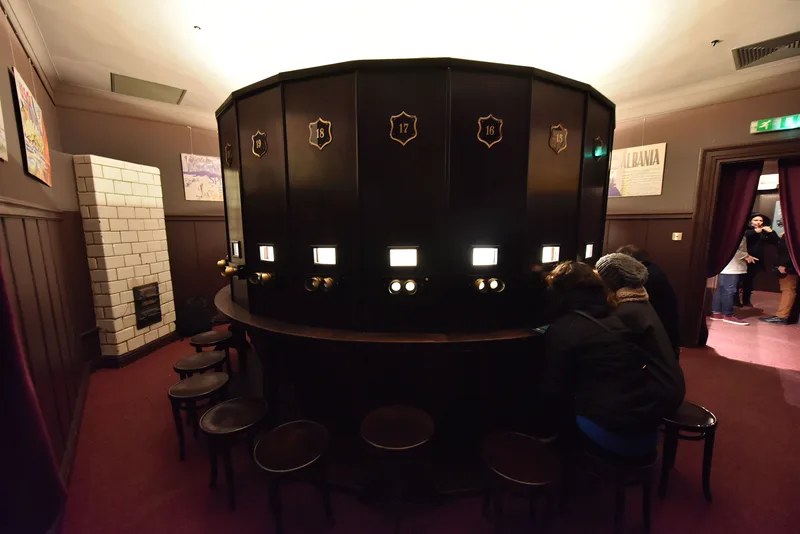
Warsaw Fotoplastikon
Al. Jerozolimskie 51, 00-697 Warszawa
Warsaw Fotoplastikon - the last working Kaiserpanorama in Europe. Stereoscopic photos, hours, tickets, directions.
 Culture
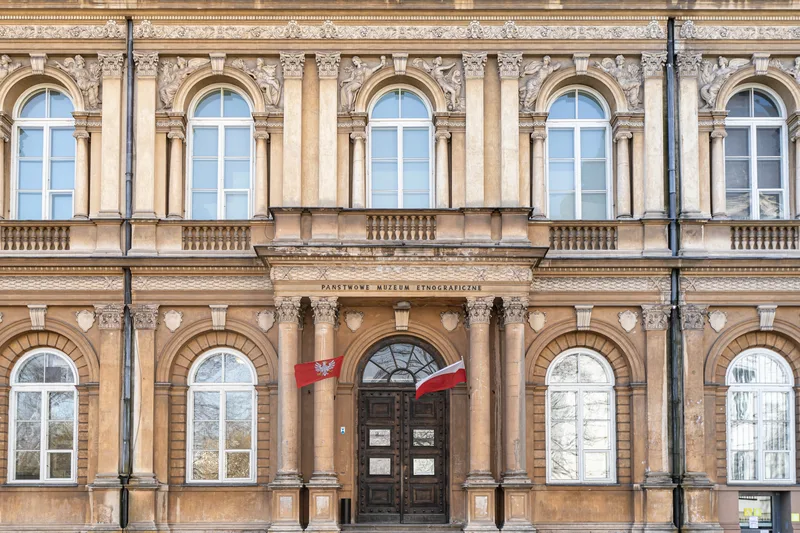
State Ethnographic Museum
ul. Kredytowa 1, 00-056 Warszawa
State Ethnographic Museum in Warsaw - Poland's oldest. 80,000 objects, folk costumes, African art. Tickets, hours, free Thursdays.