Maria Kownacka Memorial Room
Izba Pamięci Marii Kownackiej
- Wheelchair: No
- Stroller: No
- Elevator: No
- Recommended age: 6+
- Stroller access: Partial
Location
What to expect
You walk into a fourth-floor apartment in a Żoliborz housing cooperative block and for a moment you cannot tell whether you are in a museum or someone’s home. That is the point. Maria Kownacka moved here in 1930, when Colony V of the Warsaw Housing Cooperative (WSM) was a freshly built utopia - functionalist apartment blocks, communal laundries, kindergartens, libraries - and she stayed at this address until her death in 1982. Over fifty years in the same flat.
The Memorial Room occupies her former apartment, preserved as close to its original state as possible. Furniture, the desk where she wrote, a bookcase, personal memorabilia. On the shelves sit successive editions of “Plastusiowy pamietnik” (Plastus’s Diary, 1936) - a book that literally every Polish child has read - and “Rogos z Doliny Roztoki”. Kownacka also edited the children’s magazines “Plomyczek” and “Plomyk” for decades, and copies are part of the collection.
This is not a large exhibition - one apartment, one main room with memorabilia. But that is exactly why it works. You sit in the place where those books were written, surrounded by objects the author touched every day. The atmosphere is intimate, quiet, slightly melancholic. The 1930s WSM block itself is an architectural landmark - Bruno Zborowski and cooperative architects designed these buildings with a social mission.
The Memorial Room is a branch of the Warsaw Public Library (Biblioteka Publiczna m.st. Warszawy). Librarians guide visitors through the exhibition and share stories about Kownacka - her ties to Żoliborz, friendships with cooperative neighbours, the daily life of a writer.
Tips
- Visits by prior arrangement only - phone the Warsaw Public Library: 22 537 60 50. The Memorial Room has no fixed public opening hours.
- Free entry.
- Fourth floor, no lift. Narrow staircase typical of 1930s WSM blocks.
- Ideal for families with children who have read “Plastusiowy pamietnik” - they can see the desk where Kownacka wrote it.
- The surrounding area is worth a stroll: WSM colonies in Żoliborz (I-IX) are a unique interwar housing development, protected as an urban planning monument.
Getting there
Tram: Lines 6, 17, 27 - pl. Wilsona stop, 8 minutes walk along ul. Mickiewicza and Słowackiego westward.
Metro: Plac Wilsona (M1) - 10 minutes on foot westward. Exit toward ul. Mickiewicza.
Bus: Lines 116, 152, 185 - pl. Wilsona or Mickiewicza-Czarnieckiego stop.
By car: Street parking on Słowackiego or nearby WSM colony streets. Limited spaces.
In the neighbourhood
Żoliborz is not museum-dense, but several worthwhile institutions are within walking distance or a short ride. Polish History Museum (Warsaw Citadel, 2 km northeast - new building, opened 2024), Museum of the Tenth Pavilion of the Warsaw Citadel (Citadel, 2 km - tsarist prison, Piłsudski’s cell), Katyń Museum (Citadel, 2.5 km). To the south: Museum of Sport and Tourism (4 Wybrzeże Gdyńskie, 1.5 km - by the Vistula).
Nearby museums
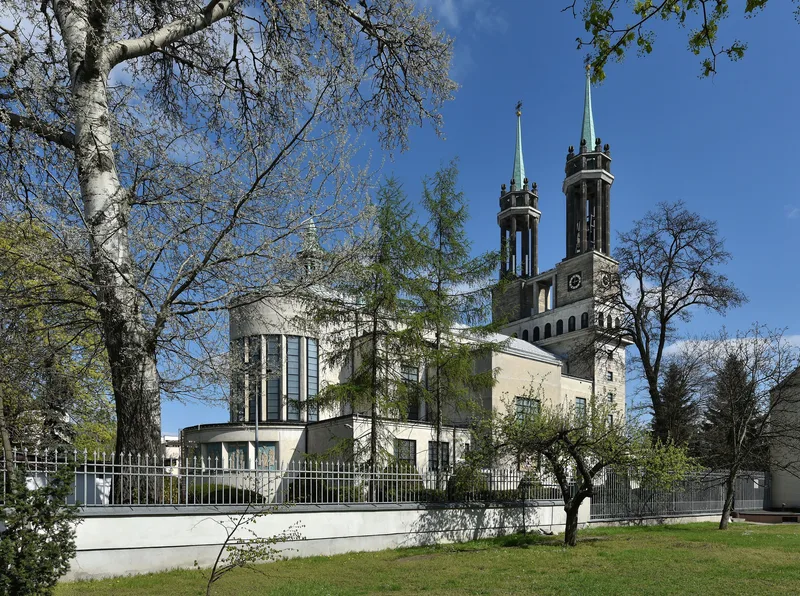 History
Museum of Blessed Fr. Jerzy Popiełuszko
ul. Kardynała Stanisława Hozjusza 2, 01-565 Warszawa
Museum of Fr. Popiełuszko - Solidarity chaplain murdered by secret police in 1984. Original artifacts, 9 rooms, grave. Hours, tickets.
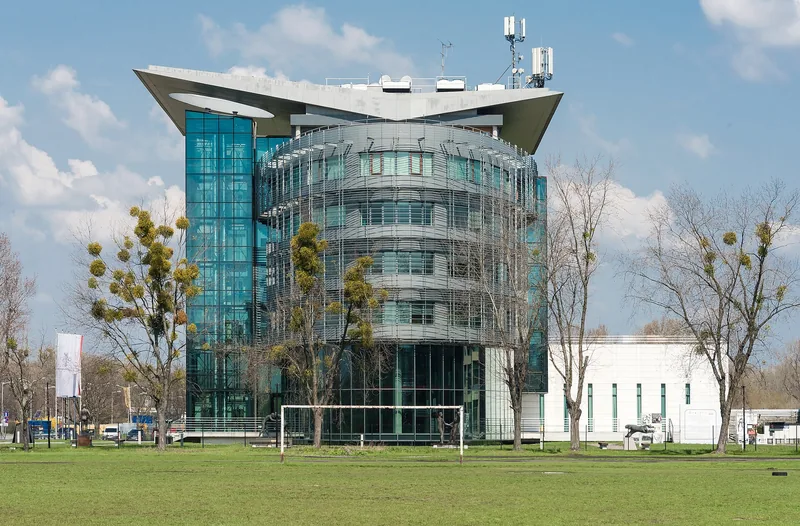 Culture
Museum of Sport and Tourism
ul. Wybrzeże Gdyńskie 4, 01-531 Warszawa
Poland's only sports museum, inside the Olympic Center. Pope's kayak, Olympic medals, secret 1940 POW Olympics. Hours, tickets.