State Ethnographic Museum
Państwowe Muzeum Etnograficzne
- Wheelchair: Yes
- Stroller: Yes
- Elevator: Yes
- Recommended age: 5+
- Stroller access: Yes
- Interactive exhibits: Yes
Location
What to expect
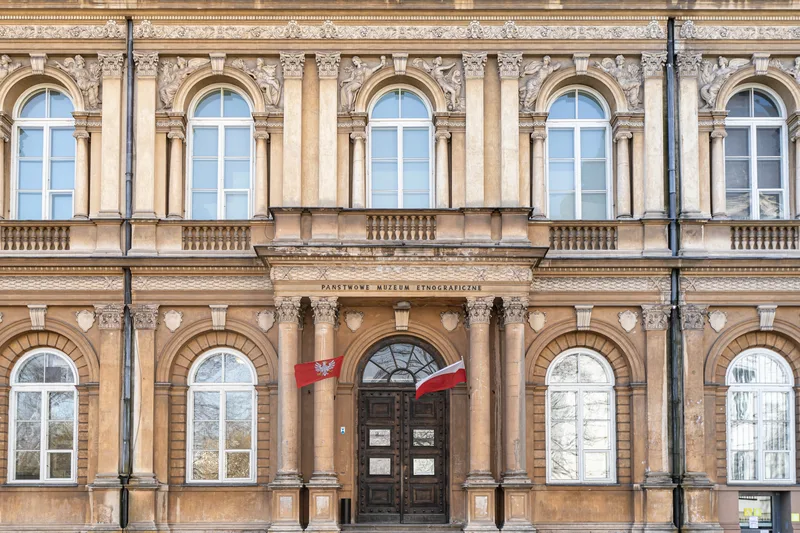
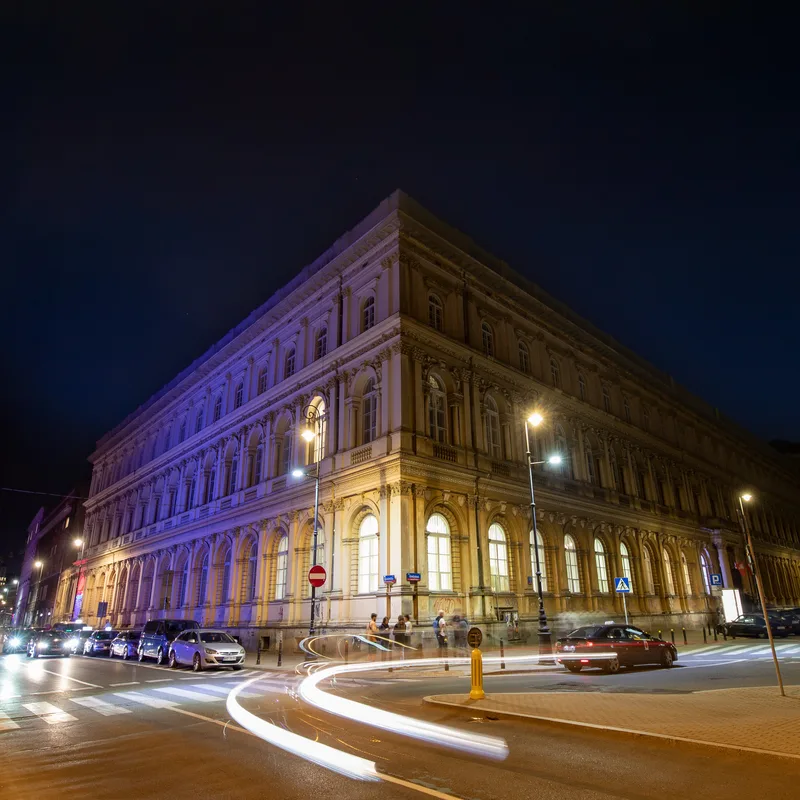
The State Ethnographic Museum is the oldest ethnographic museum in Poland - it has been operating since 1888. It occupies a neo-Renaissance building designed by Enrico Marconi on Kredytowa Street, in the heart of the city centre. Over 80,000 objects and over 200,000 archival items - and most Varsovians have never set foot inside. Their loss.
The main permanent exhibition now is “Clay, Sinter, Form” - built around the museum’s ceramics collection, one of the largest in Poland at over 6,000 objects. Everyday pottery from village and small-town workshops sits alongside pieces made for folk-art competitions, drawn from production centres like Stary Sącz, Chmielno, and Iłża. Clay as a material you understand through touch - the exhibition is permanent, but the objects on display will rotate over time. (The previous flagship show, “Celebration Time,” closed for good in June 2025 ahead of renovation works.)
“African Expeditions, Asian Ways” is the other major exhibition - masks, royal garments, and magical objects from Sub-Saharan Africa (the African collection alone numbers over 11,700 objects) alongside an Asian section focused on self-improvement and spiritual development. There’s also a Korean Gallery with 19th and 20th-century furniture and ceramics.
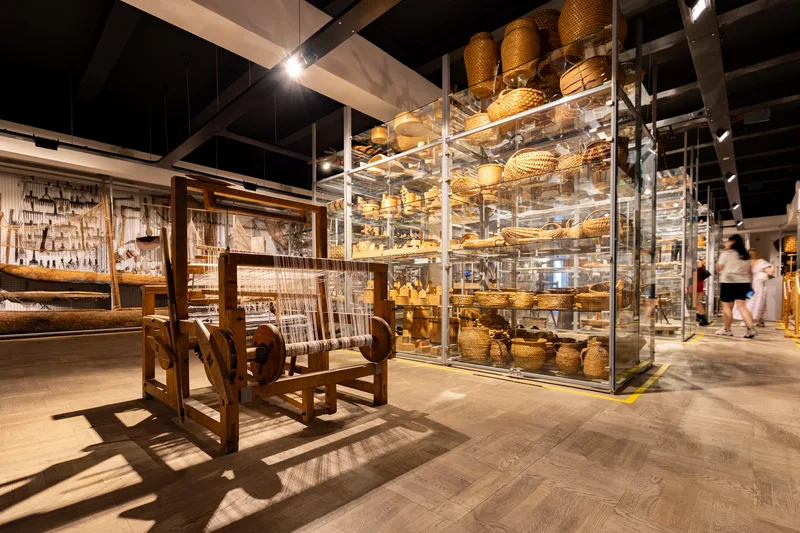
“The Order of Things” showcases tools from the Polish countryside - agriculture, beekeeping, fishing, handicrafts - from the mid-19th century through the 1970s. Multimedia presentations show these tools in action.
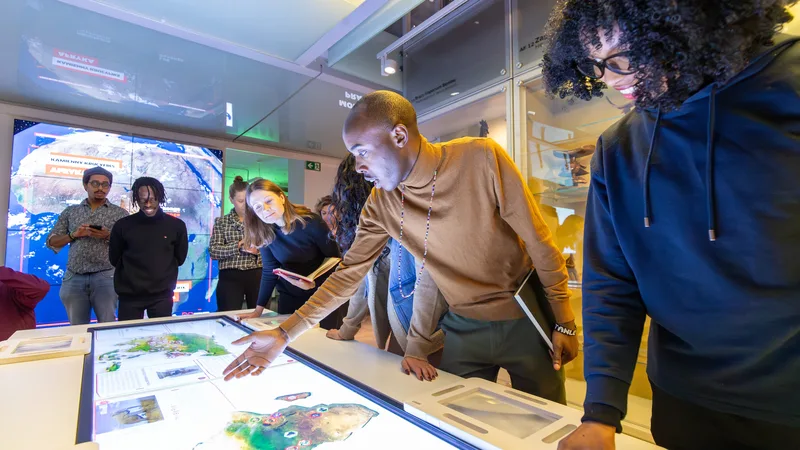
The museum also runs a children’s and family programme - interactive family exhibitions on the ground floor, tailored for the youngest visitors (see the “For children and families” section below).
Tips
- Free admission on Thursdays. The one day you don’t pay for a ticket. It gets busier, but it’s the best chance for a first encounter with the museum.
- Regular ticket is 21 PLN, reduced 16 PLN. Pupil and student tickets 5 PLN, Large Family Card holders 25% off.
- Koleje Mazowieckie passengers get 20% off individual tickets through the end of 2026 (show a valid rail ticket).
- Last entry at 17:30 - don’t show up at 17:45 hoping for a quick look.
- Allow 1-1.5 hours for your visit. If you’re into folk art or the African collection, budget more.
- The building itself is worth noticing - a neo-Renaissance structure originally built for the Land Credit Society, one of the handsomer historic buildings on Kredytowa Street.
For children and families
On the ground floor, the museum runs a programme for children and families - interactive family exhibitions where, unlike in the main displays, everything can be touched, tried on and explored. The exhibitions rotate every so often (the current ones are listed in the exhibitions section of this profile). The current family exhibition is “A Home Together / Спільні домівки” - a multisensory show about home and a sense of security, prepared in Polish, English and Ukrainian.
Beyond exhibitions, the museum offers lessons for schools and kindergartens, weekend family workshops, birthday parties, holiday camps, and ceramics workshops for children on the autism spectrum. This part of the programme was nominated for the European Museum of the Year Award 2016.
- Thursdays - free admission to the main displays (does not cover paid workshops).
- Ages: birthday parties at the museum are for children aged 5-12.
- Booking lessons, workshops and parties: rezerwacje@ethnomuseum.pl, tel. 510 336 571 or 22 827 76 41 ext. 247. Current family-offer prices are on the museum’s website.
Getting there
Metro: Świętokrzyska station (M1 and M2 lines) - 8-10 minute walk. Nowy Świat-Uniwersytet station (M2 line) is also within reach.
Tram: Królewska and Metro Świętokrzyska stops (lines 4, 15, 16, 18, 36). The museum is in the dead centre, so tram access is straightforward.
Bus: Uniwersytet, Królewska, and Metro Świętokrzyska stops - a few minutes’ walk.
By car: While the building is being renovated, parking next to it is limited; the museum recommends the underground car park at plac Powstańców Warszawy. Public transport is incomparably better.
In the neighbourhood
- Europa Experience Warsaw - ul. Jasna 14/16a, about 150 m. The European Parliament’s multimedia exhibition: interactive stations on how the EU works, all in the 24 official EU languages, and a 360-degree cinema.
- Zachęta - National Gallery of Art - pl. Stanisława Małachowskiego 3, about 200 m. The first building in Warsaw constructed specifically to exhibit art; no permanent collection, exhibitions change every 2-3 months.
- Academy of Fine Arts Museum - ul. Krakowskie Przedmieście 5, about 400 m. The Baroque Czapski Palace and a collection of 27,000 objects from one of Europe’s oldest art academies, shown in rotating thematic exhibitions.
Background
The museum was founded in 1888 at the Warsaw Zoological Garden - a modest ethnographic collection. In 1921, museologist Eugeniusz Frankowski took charge and transformed it into a modern research museum. By 1922 the collection held around 9,000 objects; by 1939 it had grown to 30,000.
World War II was catastrophic. The collections stored at the Museum of Industry and Agriculture burned during the defence of Warsaw in September 1939. The entire pre-war collection - gone.
Rebuilding began in 1946. The first post-war exhibition opened in 1949. In 1960, the museum took over a new home - a damaged 19th-century building of the Land Credit Society at Kredytowa 1. Restoration took years - the ceremonial opening in the new location came on December 15, 1973.
The collection has grown steadily since. Today it encompasses over 80,000 objects - Polish folk costumes, a Hutsul collection (3,000 specimens), ceramics (over 6,000 objects), and one of Europe’s larger collections of African art. The library holds around 26,000 volumes. In 2011, the museum received grants to establish a dedicated children’s programme within its walls.
Current exhibitions
- Everything Will Change 5 June 2026 - 27 October 2026
- A Home Together / Спільні домівки 18 April 2026 - 30 June 2028
See also temporary exhibitions in Warsaw across all museums.
See it before you go
State Ethnographic Museum publishes a selection of objects from its collection and a virtual walk through its interiors on Google Arts & Culture. Online exhibits include:
Virtual walk on Google Arts & Culture · The museum's collection on Google Arts & Culture
Nearby museums
 History
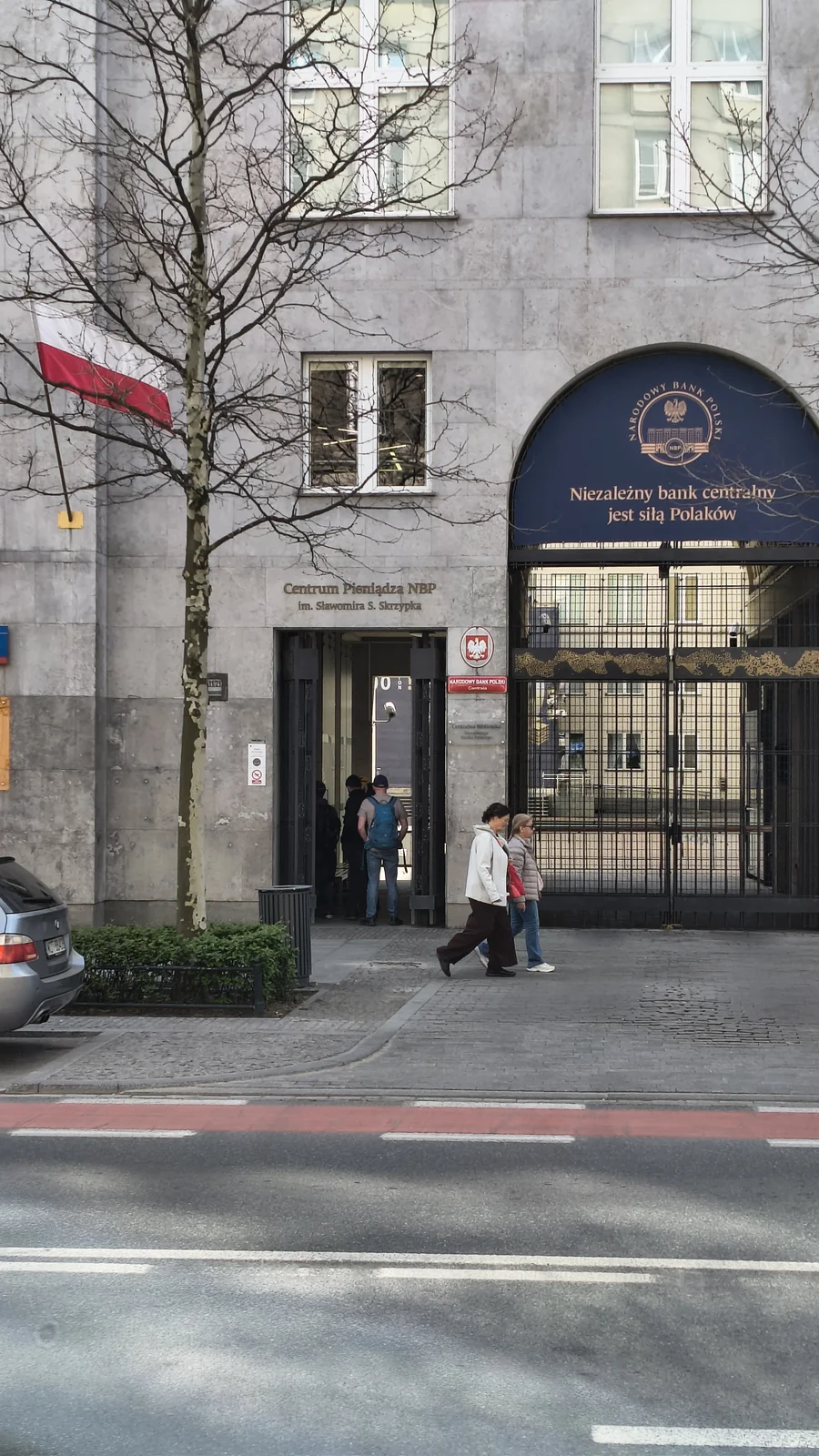
NBP Money Centre
ul. Świętokrzyska 11/21, 00-919 Warszawa
NBP Money Centre in Warsaw - free interactive museum at the National Bank of Poland. 10,000 exhibits, 16 rooms, gold bar. Hours, directions.
 Art
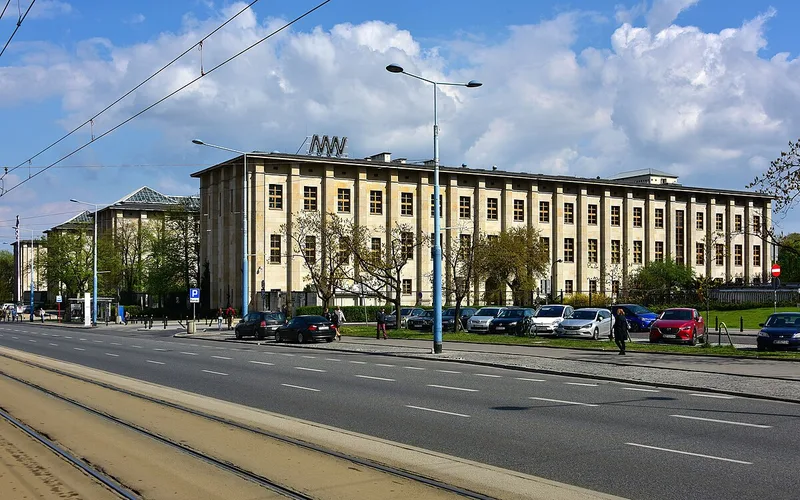
ArtNational Museum in Warsaw
Al. Jerozolimskie 3, 00-495 Warszawa
Matejko's Battle of Grunwald, Botticelli, Faras frescoes - Poland's largest art museum. Permanent galleries free Tuesdays. Hours, tickets, …